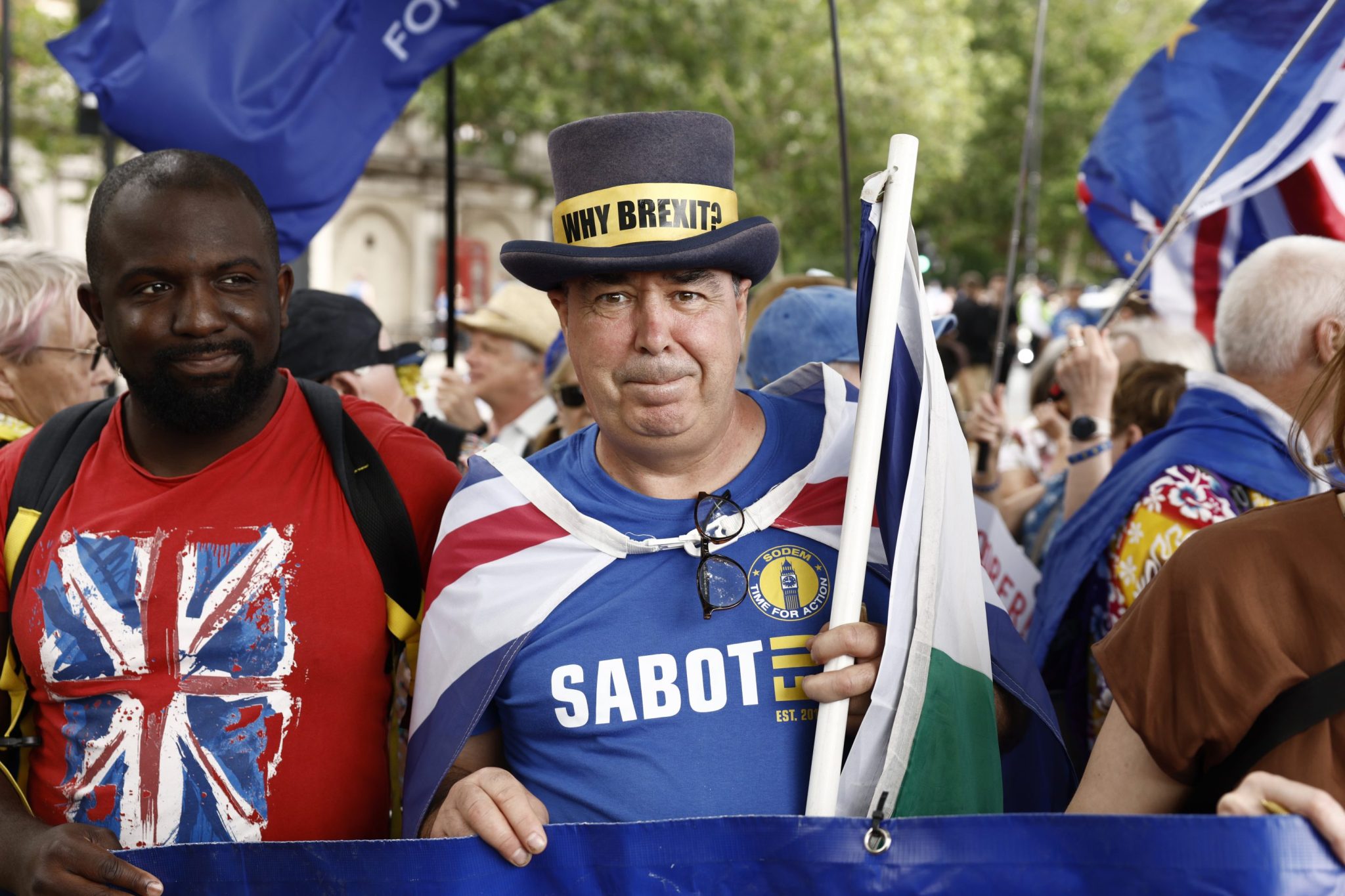
Britain marks Brexit’s 10th anniversary with an economy 4%-8% smaller than if it never voted to leave
Ten years ago, the United Kingdom voted to leave the European Union in a referendum that forges political identities to this day and that shattered a half-century project to get closer to the continent. Brexit, short for British exit, became a reality on June 23, 2016, when 52% — or more than 17 million people — voted to leave the EU. Though the margin was narrow, the vote led to the most dramatic shake-up of the U.K. economy and society since World War II. But like any divorce, the paperwork and process of completing the breakup was not swift: It took nearly five years. Brexit was born out of a growing sense of frustration not only with the EU but over the global financial crisis of 2008. Supporters were able to tap into that frustration, and argued that the U.K. on its own, would be revitalized and able to focus just on domestic priorities. Opponents warned that Brexit would lead to an economic disruption and that it risked the country’s standing in the world. A decade on, here is where Brexit stands. Brexit ushered in a harsh economic reality Backers of Brexit — commonly known as Brexiters — held out a vision that the British economy could thrive outside the EU by harnessing the buccaneering spirit that had once made it the world’s biggest. Though the COVID-19 pandemic and the wars in Ukraine and more recently, the U.S.-Israeli war on Iran have not helped, it’s clear that the British economy has not been revitalized. Merchants have complained about the hurdles that they now have to clear when trading with their European neighbors — the 27-nation EU remains by far the U.K.’s biggest trading partner. And though there are no tariffs imposed on British goods entering the EU, there is a raft of non-tariff barriers, such as cumbersome customs paperwork, border certifications, and visa restrictions. Many of the trade deals that the Brexiters touted, most notably one with the United States, have not materialized. Experts say the British economy is between 4% and 8% small