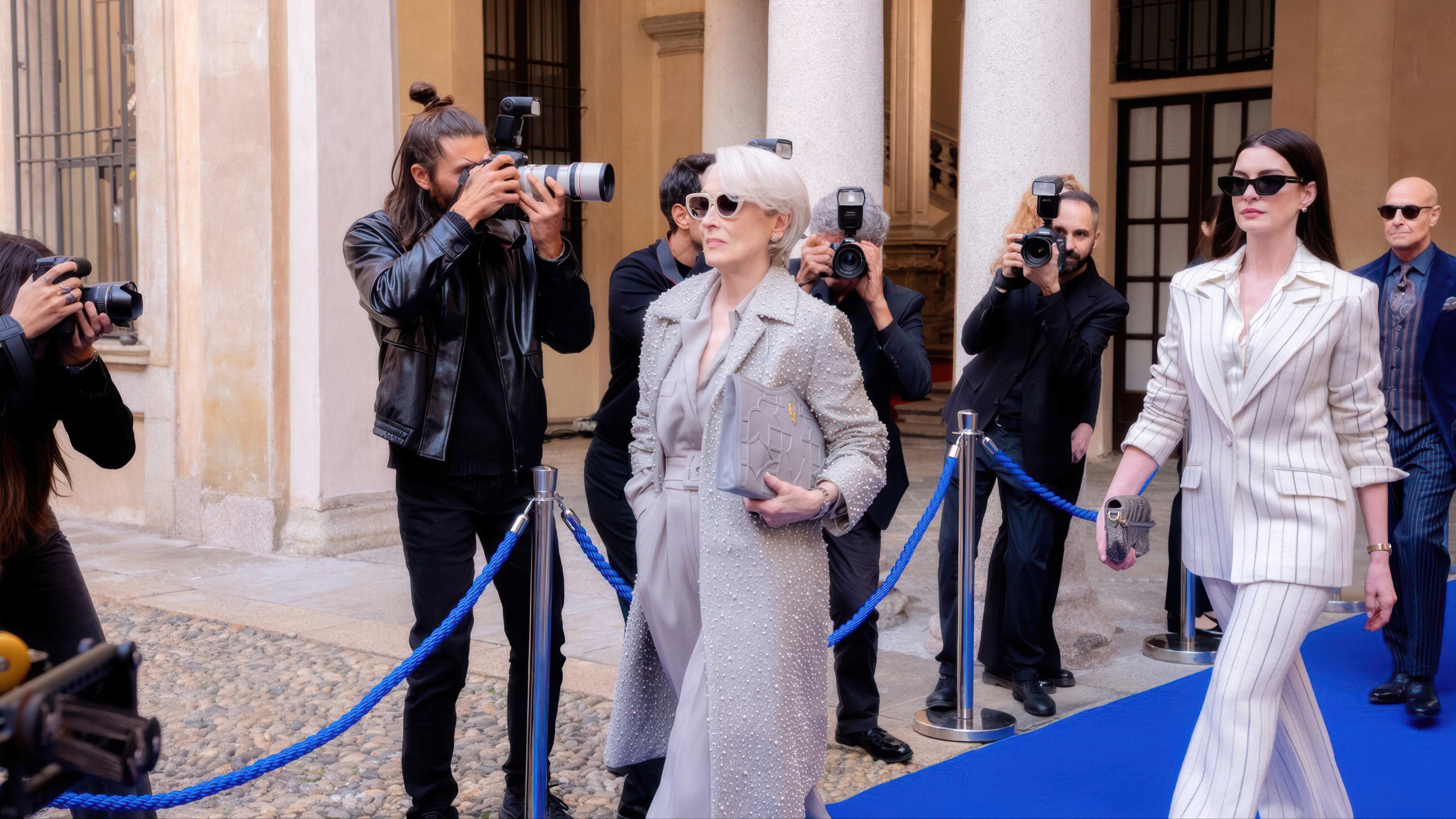
Miranda Priestly Hangs Up Her Own Coat Now
The Devil Wears Prada took place amid the glorious roar of capitalism. The hit 2006 comedy took place in a world where magazines were still triumphant, with Runway, a fictional, Vogue-esque publication the film was centered on, sitting firmly atop the heap. The only concern was whether Andy Sachs, a plucky aspiring journalist played by Anne Hathaway, could survive working as the assistant to Runway’s imperious editor in chief, Miranda Priestly (Meryl Streep), without totally losing her sense of self. But in The Devil Wears Prada 2, Hollywood’s latest nostalgia-baiting follow-up film, the crisis is no longer personal—it’s existential.Ahead of watching the sequel, I worried about what I thought would be a lazy parade of fan service; I feared that the movie would lob catchphrases and cameos at the audience like dead fish to a herd of clapping seals. (This often seems to be Hollywood’s view of its customer base too.) At first, the story is a bit of a retread: 20 years later, Runway still exists, and Miranda still rules it with a relatively iron fist. But the magazine’s budgets are no longer limitless, the September issue is not quite as thick with glossy ads, and dreaded words such as content and traffic are bandied about during meetings that used to be focused on which passed appetizers would be served at an upcoming gala. The sequel thus finds a good reason to exist: It has plenty of breezy fun probing the dilemmas of modern media, without abandoning the glitz that made the original so enduring.I’m as surprised as anyone. The director, David Frankel, has mostly specialized in mediocre dramedies since the success of the first Prada, while the screenwriter, Aline Brosh McKenna, has done her best work in television since then. Yet they’ve managed to land on an enticing premise as well as assemble an impressive lineup of on-screen talent. Stanley Tucci returns as Miranda’s right-hand man, Nigel Kipling; so too does Emily Blunt, who plays Andy’s former rival and colleague,