The Strange History of the Word Equal
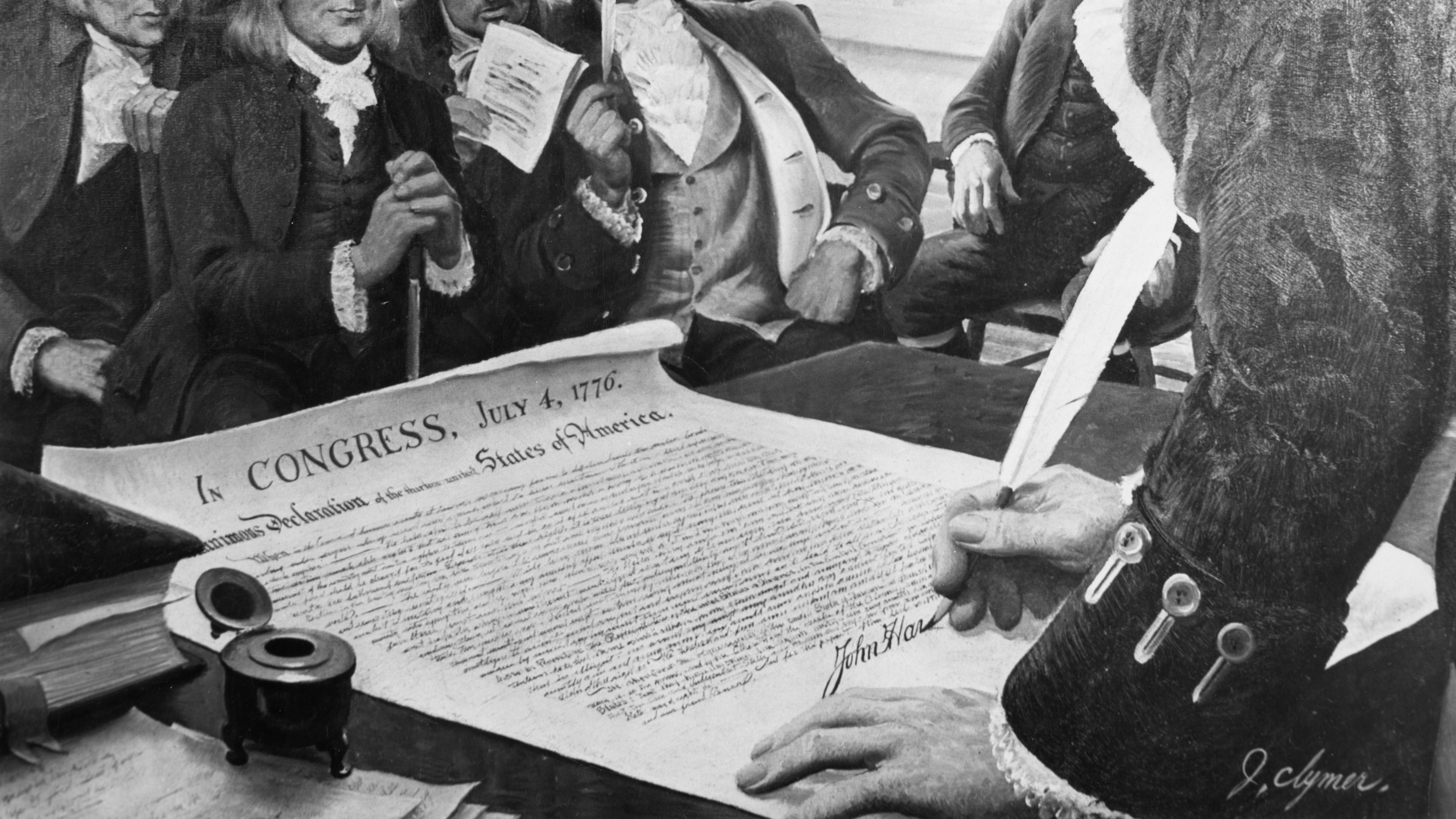
To many Americans, this may sound like an eccentric misunderstanding of “all men are created equal.” After all, the egalitarian arithmetic of the Declaration’s claim seems clear enough: Every person carries the same weight. How else could colonists claim equality with the King and hold him to account?But this Japanese translator realized something important: When Thomas Jefferson set pen to paper in the summer of 1776, the meaning of the adjective equal was less self-evident than its mathematical associations suggest. Samuel Johnson’s 1755 A Dictionary of the English Language had listed no fewer than eight definitions, including “like another in bulk, excellence, or any other quality that admits comparison,” “in just proportion,” and “upon the same terms.” Applied to political matters, many of Johnson’s definitions directly contradicted one another—in ways that still matter today. “In just proportion” summarizes what modern liberals and progressives have in mind when they argue for policies such as affirmative action. Respecting people as equals, they believe, sometimes means taking racial differences into account. Meanwhile, many conservatives gravitate toward “upon the same terms.” In their view, being equal means that people are the same in all ways that matter legally; policies built on group differences must therefore be rejected as treating people unequally before the law.Many contemporary controversies boil down to a simple disagreement over which particular definition of equal applies. And there is much to debate, given how many social inequalities Jefferson and his co-authors left behind.The Founders were hardly the first or the last egalitarians to conclude that some members of society were, as George Orwell put it, “more equal than others.” The Declaration’s r