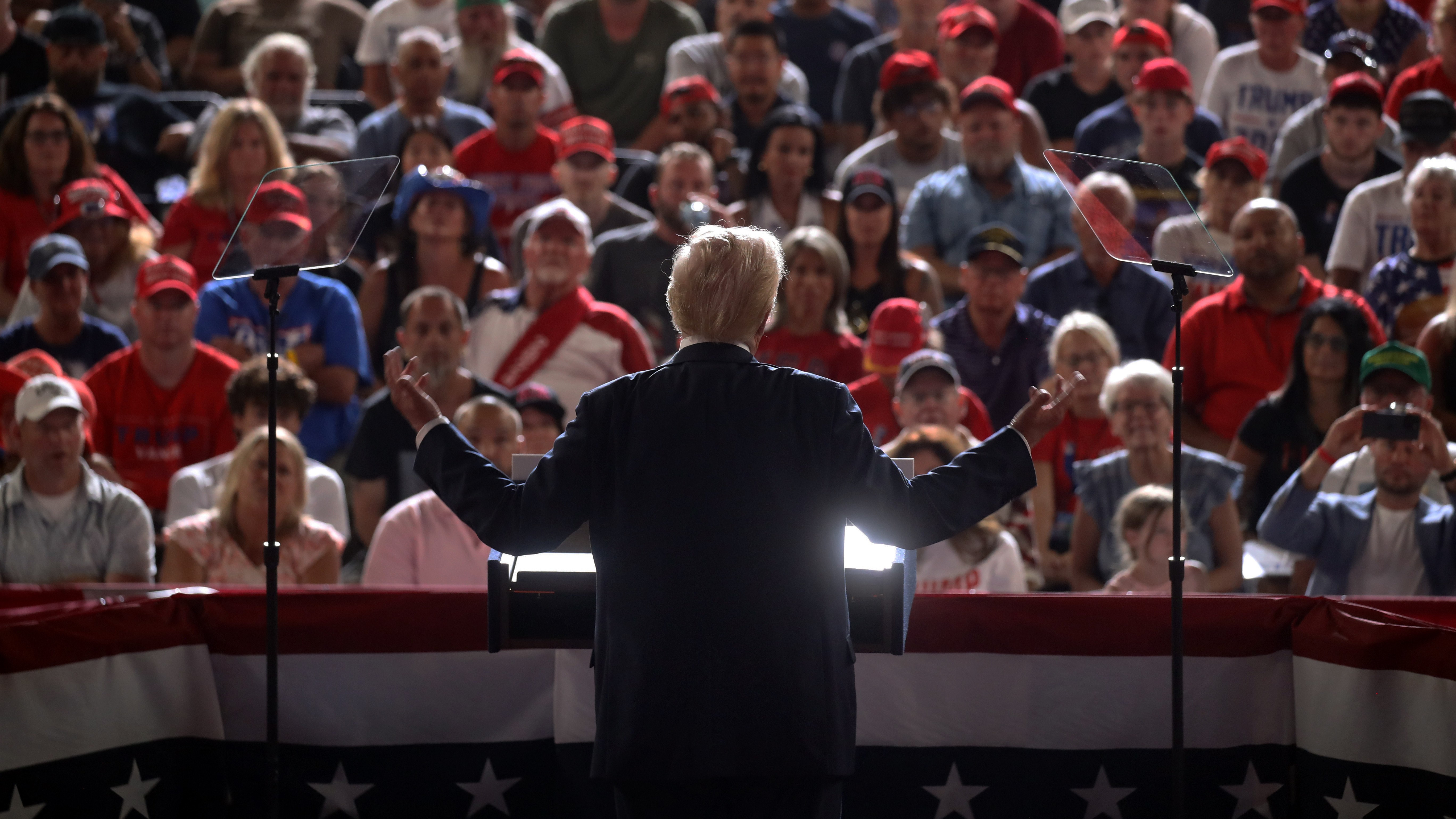
Why July 4 Turned Into a Trump Rally
The president of the United States announced last month that, in place of performances by Martina Mc Bride, Young MC, the surviving members of the Commodores, one member of Poison, and other sought-after musicians who had dropped out after being recruited on apparently false pretenses, he would personally provide the entertainment for a 250th-anniversary celebration of American independence.“On Wednesday, June 24th, at 7 P.M., in magnificent Washington, D.C., now totally beautified, and one of the Safest Cities anywhere in the World, and in celebration of our Country’s 250 Year History, we will be bringing you, LIVE, the Greatest Rally, EVER!” Donald Trump wrote on Truth Social. “It will be special at every level—A Rally to end all Rallies!”This week, he announced another rally, to take place July 4. “We are going to host the most spectacular TRUMP RALLY of them all, a ‘TRIBUTE TO AMERICA.’” The Rally to end all Rallies will apparently end them for a mere week and a half.The shambolic decision to turn the quarter-millennium anniversary of the Declaration of Independence into yet another rally is, perhaps, an inevitable outgrowth of Trump’s megalomania, which renders him unable to keep separate the functions of party leader and head of state. In merging the two, he has trashed the latter.Head of state and leader of the governing party are two different roles that, in many countries, are held by different people. In the United Kingdom, the head of state is a monarch. In Israel, it is a president. Both positions differ from the more political role of the prime minister.The United States gives both roles to the president. Traditionally, presidents have responded to this burden by tailoring the part to the occasion. They would act as a party leader when, say, giving a routine press conference, but as head of state when, for example, meeting foreign leaders or addressing the country during a national disaster or a war. In some cases, the division is marked by rules or norm