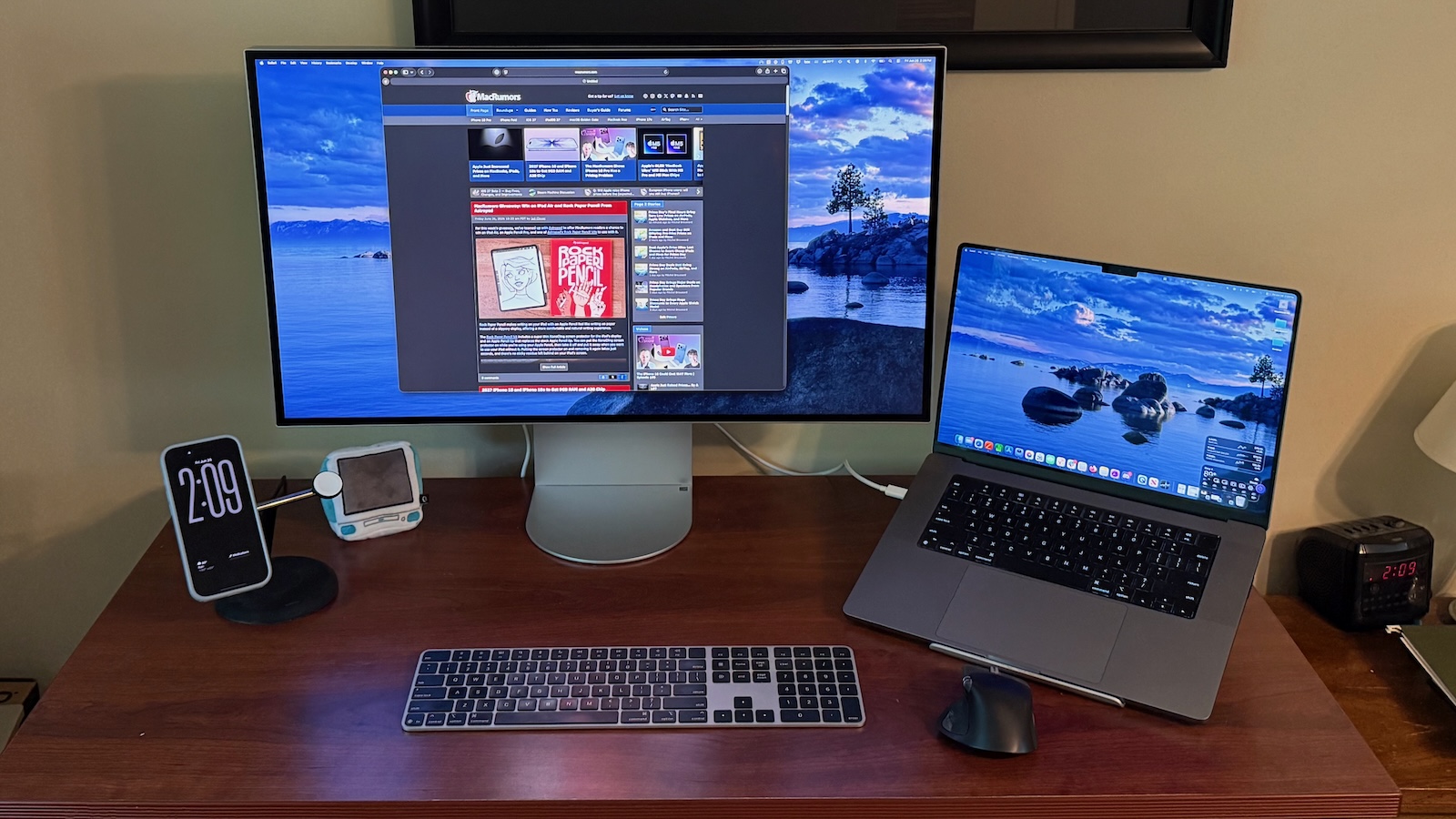
LG UltraFine 6K Review: A Premium 6K Display Designed With Mac Users in Mind
With Apple's discontinuation of the Pro Display XDR earlier this year, Mac users looking for a larger high-resolution display suddenly found themselves with fewer options on the market. Apple's current display lineup now includes its 27-inch Studio Display and ‌Studio Display‌ XDR, both of which offer excellent image quality and tight mac OS integration, but neither provides the larger 32-inch form factor that some users prefer. LG's Ultra Fine 6K (32U990A) display helps fill that gap. The display, which was unveiled way back in January 2025 but didn't launch until last October, features a 32-inch 6K Nano IPS Black panel, Thunderbolt 5 connectivity, and a design that feels more Apple-inspired than previous UltraFine displays. After using it for several weeks in my daily setup, I've found it to be a compelling alternative to Apple's own displays, albeit with a few tradeoffs. The first thing that stands out about the UltraFine 6K is simply how much workspace it provides. Compared to Apple's 27-inch displays and my trusty 27-inch UltraFine 5K displays that have anchored my workspace for nearly a decade, the extra screen area is immediately noticeable. Multiple apps can sit side by side in large windows without feeling cramped to support my typical "command center" view of our editorial operations, while creative apps that need the canvas all to themselves benefit from the additional room for toolbars and timelines. Unlike many larger displays, the UltraFine 6K doesn't compromise on sharpness. The 6,144 x 3,456 resolution delivers a true Retina experience, with crisp text and interface elements sized appropriately for the typical viewing distance. That's one of the biggest advantages the display has over most monitors in this size class that deliver only 4K resolution. While those displays can often yield a similarly sized desktop through scaling, the result sometimes lacks a bit of sharpness while the UltraFine 6K feels completely native due to its higher pixel