Q&A: How will the World Bank’s abandoned finance goal affect climate action?
Why this matters: environmental and climate reporting with long-term consequences.
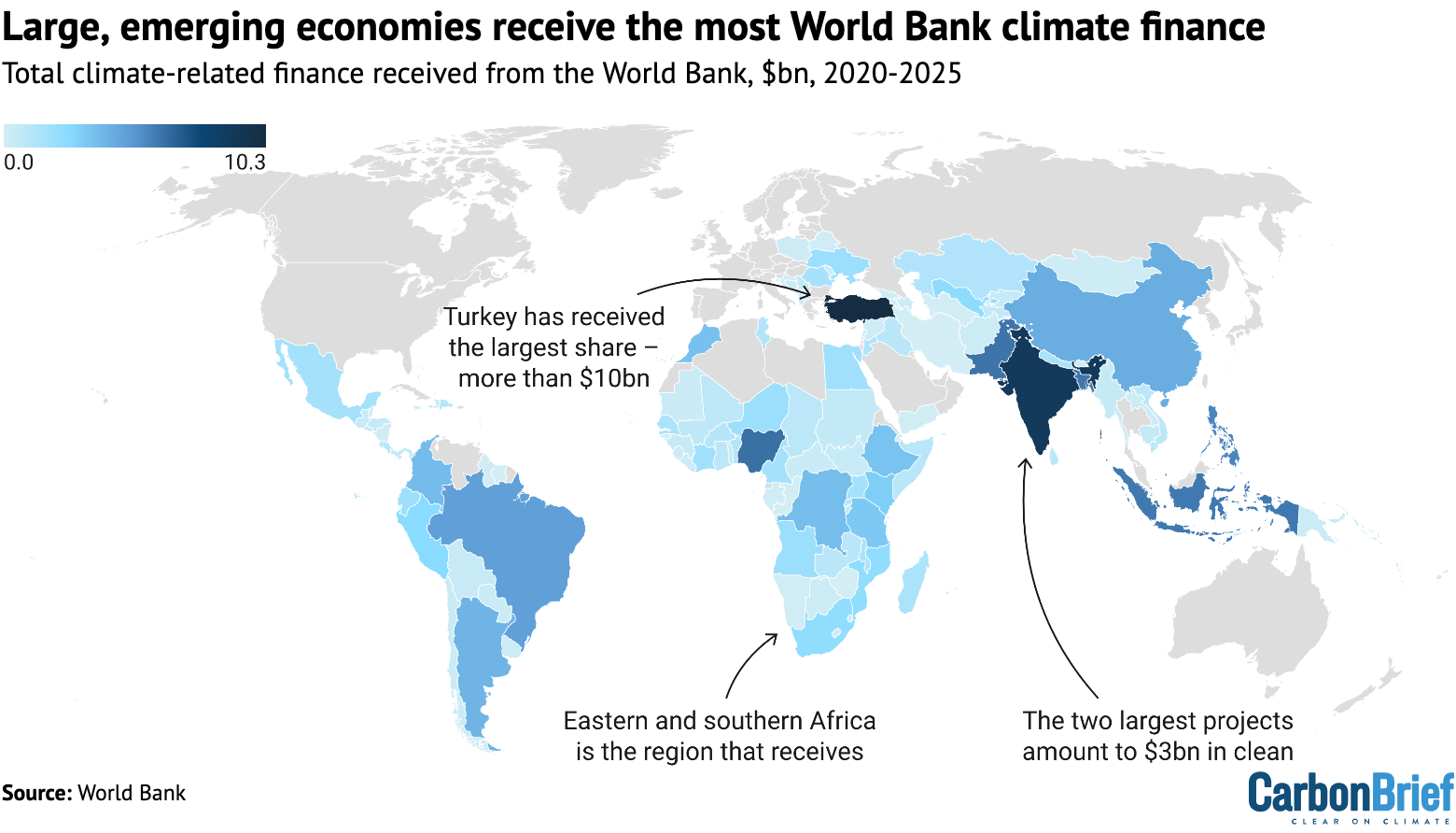
The World Bank has abandoned a target for 45% of the funding it gives developing countries to be “climate finance”, following months of pressure from the Trump administration in the US. However, a concerted effort by developed- and developing-country shareholders has seen the bank hold onto its “action plan” for tackling climate change. The multilateral development bank (MDB) – which is headquartered in Washington DC – is the single largest provider of climate finance globally, distributing $39.2bn in 2025 alone, primarily as loans. Amid widespread aid cuts by developed countries, the World Bank and other MDBs have previously pledged to significantly scale up their climate finance over the next decade. Despite scrapping its central target, the bank says it will continue to support the demands of its “clients”, many of which have explicitly stated their need for climate-related investment. Here, Carbon Brief looks at the likely impact of the World Bank’s policy shift and whether it is – as one expert puts it – “mostly a symbolic victory” for the US. How does the World Bank support climate action? Why has the World Bank abandoned its climate-finance target? Why is the World Bank important for international climate finance? How will these changes affect global climate action? How does the World Bank support climate action? The World Bank is the oldest and largest MDB. It is tasked by its 189 member governments – the bank’s shareholders – with supporting development projects around the world. The US is the bank’s largest shareholder, followed, in order, by Japan, China, Germany, France and the UK. Every year, the bank provides billions of dollars – predominantly as loans – to developing countries. (One part of the World Bank, the International Development Association – IDA – specifically distributes grants to lower-income nations, as well as lower-interest loans.) Through its financing, the World Bank also has an important role in “mobilising” private investments in dev