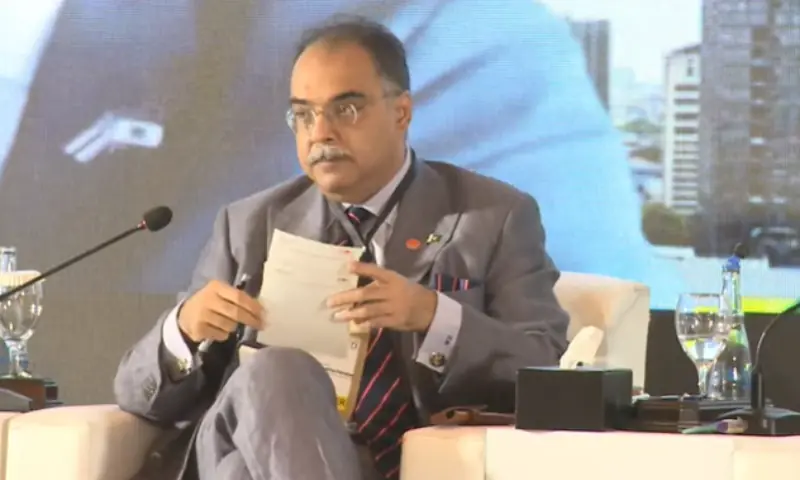
Breathe Pakistan: BoP CEO Zafar Masud calls for ‘climate emergency’ to be declared
Why this matters: local context for readers following news across Pakistan and the region.
The second edition of The Breathe Pakistan International Climate Change Conference, organised by Dawn Media, is currently underway in Islamabad. Despite contributing minimally to global emissions, Pakistan remains among the most climate-vulnerable nations, underscoring the critical need for coordinated, locally grounded, and globally informed responses. The two-day conference brings together policymakers, experts, and stakeholders from across sectors to examine intersecting challenges and chart a path forward. The first edition of Breathe Pakistan sparked national dialogue and global collaboration around vital climate challenges — from climate justice and finance to renewable energy transitions, disaster risk reduction, and inclusive public-private partnerships. View the full agenda here. 1:18pm — Climate minister calls for investment in youth-led projects The climate minister called on investors to fund youth-led climate projects. “Come to the table, listen to these guys, and if it makes sense, give them money,” Musadik Malik said, stressing the need for investing in youth. He stressed that the solutions had to “come from the youth and for the youth”. 1:02pm — Conversations do not save people, something real has to happen: Musadik Malik In his closing remarks of the session, minister Musadik Malik asserted that the gap between what we are talking about and the reality” needs to be acknowledged. “Conversations do not save people. Conversations do not improve air quality. Something real has to happen between all of these billions and billions of dollars of conversations and the reality that I’m struck with when I go to Gilgit-Baltistan,” he said. WATCH: A glimpse into this year’s Breathe Pakistan conference 12:58pm — Banker Zafar Masud calls for ‘climate emergency’ to be declared Zafar Masud called for a climate emergency to be declared, “not just as a policy statement but as an action”. He asserted that this was the right time as there was a “feel-good factor” in the