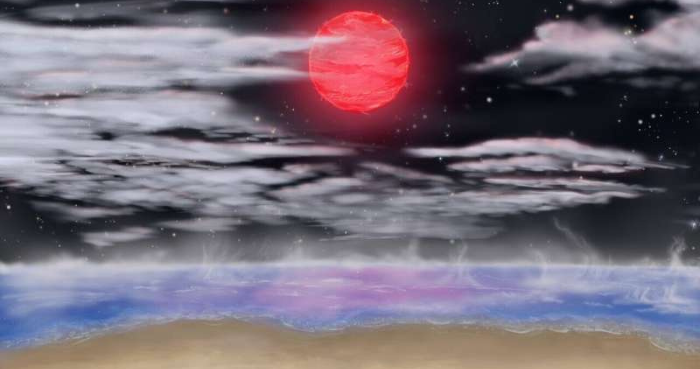
Exoplanet GJ 3378b emerges as a better candidate to host life than previously expected
Key takeaways
- Add ARY News on Google AAResize Astronomers using the Hobby-Eberly Telescope at Mc Donald Observatory have found that the nearby exoplanet GJ 3378b is much more Earth-like than previously thought.
- “Our mantra is ‘follow the water,'” stated Paul Robertson, an astronomer at the University of California, Irvine, and lead author of the study recently published in The Astrophysical Journal.
- The planet’s host star is a red dwarf, smaller, dimmer, and cooler than our sun.
Why this matters: local context for readers following news across Pakistan and the region.
Add ARY News on Google AAResize Astronomers using the Hobby-Eberly Telescope at Mc Donald Observatory have found that the nearby exoplanet GJ 3378b is much more Earth-like than previously thought. Situated only 25 light-years away in the Camelopardalis constellation, this rocky planet orbits a red dwarf star within its habitable zone, suggesting it could support liquid water.
“Our mantra is ‘follow the water,'” stated Paul Robertson, an astronomer at the University of California, Irvine, and lead author of the study recently published in The Astrophysical Journal. He emphasized that water is essential for life, making it a key focus for researchers exploring habitable planets.
The planet’s host star is a red dwarf, smaller, dimmer, and cooler than our sun. Michael Endl, an astronomer at the University of Texas at Austin and co-author of the study, noted that red dwarfs comprise about 70 percent of stars in the Milky Way, making them key in the search for extraterrestrial life.