The metaverse isn't a place: Why Animoca’s Yat Siu says the future is 100 billion AI agents
Key takeaways
- Siu said the metaverse maybe coming to us rather than being a place that humans go to, during his keynote at Consensus Miami 2026.
- “I think the point is that it’s going to be more agents than humans,” Siu said, predicting there could eventually be “50 to 100 billion agents roaming essentially on the internet.”
- That shift, he argued, could also solve one of crypto’s longest-running problems: onboarding ordinary users.
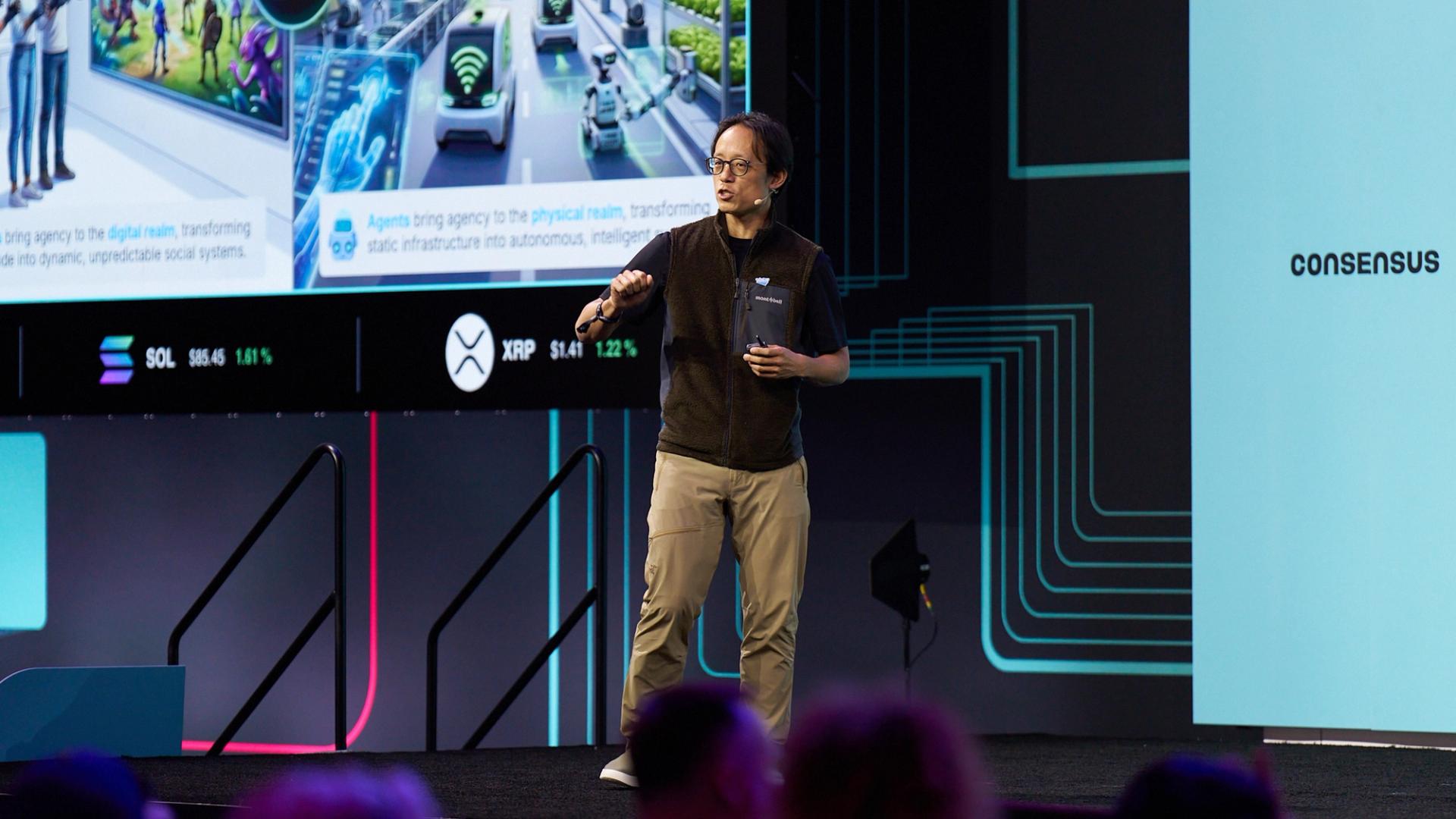
The metaverse isn't a place: Why Animoca’s Yat Siu says the future is 100 billion AI agents Yat Siu said the metaverse is evolving beyond immersive digital worlds, with AI agents increasingly handling commerce, payments and coordination through blockchain infrastructure in the background.By Sam Reynolds|Edited by Jamie Crawley Updated May 7, 2026, 9:37 a.m. Published May 7, 2026, 9:09 a.m. 2 min read Make preferred on Animoca Brands' Yat Siu speaks at Consensus 2026 in Miami (CoinDesk)What to know: Animoca Brands chairman Yat Siu argued that the metaverse’s next phase will be driven by fleets of AI agents transacting on blockchains rather than humans in immersive virtual worlds.Siu predicted tens of billions of autonomous AI agents will handle bookings, payments, and online transactions in the background, using blockchain as their financial and identity infrastructure.He said this “agent economy” could solve crypto’s user-onboarding problem and announced a $10 million Animoca Minds initiative to fund developers building AI agent applications.The crypto industry may have fundamentally misunderstood the metaverse, according to Animoca Brands chairman Yat Siu, who argues that the next phase of virtual economies would arrive not through VR headsets or immersive digital worlds, but through fleets of AI agents transacting across blockchain networks behind the scenes.
Siu said the metaverse maybe coming to us rather than being a place that humans go to, during his keynote at Consensus Miami 2026.
For Animoca, this marked a distinct pivot from the pandemic-era vision of the metaverse it once championed, in which users were expected to spend increasing amounts of their social and economic lives in immersive virtual worlds.