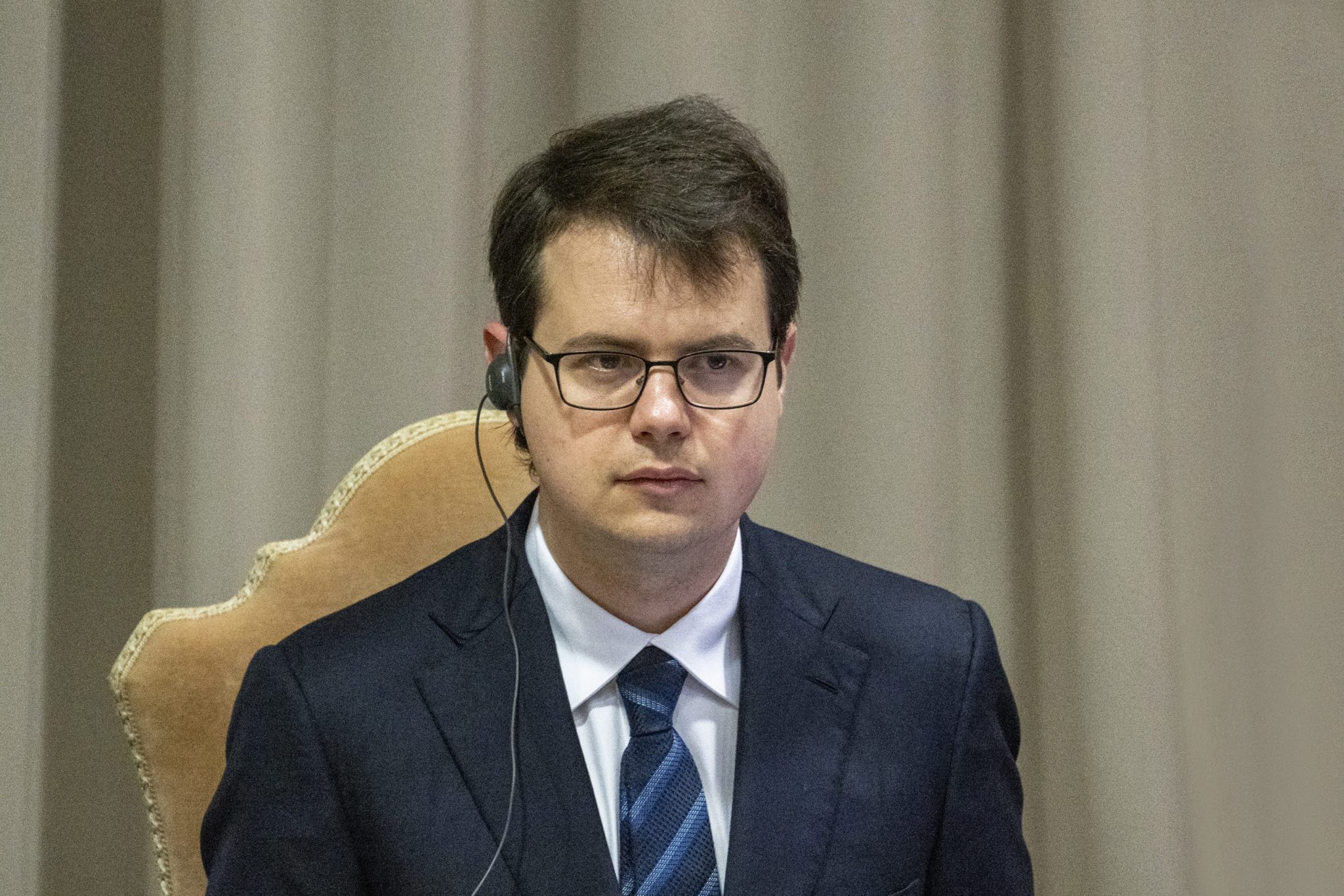
Who is Chris Olah? The atheist Anthropic cofounder the Pope chose to sit beside him at the Vatican and tell the tech industry it can’t govern itself
Sitting alongside Pope Leo XIV as he delivered his first encyclical on the dangers of AI was a curious speaker: a self-declared atheist and the billionaire cofounder of one of the most valuable AI companies in the world. Chris Olah, one of Anthropic’s cofounders and a prominent AI safety researcher who serves as the company’s interpretability research lead, acknowledged the peculiarity of his presence during the presentation at the Vatican last week. “I want to begin with something that may sound strange coming from the co-founder of an AI company,” he said in his prepared remarks. In an attempt to remain profitable and lead research while avoiding the pressure imposed by geopolitics, Olah said, AI companies must be sure they are “doing the right thing” as they continue to drive forward innovation. “No matter how sincerely any of us intend to do the right thing, and I believe many of us do, we will always be influenced by those incentives,” he said in his prepared remarks. As a result of that paradox between the reality of building a frontier AI company while also sticking to a value-driven mission, Olah sat alongside Pope Leo XIV and warned that outside critics, such as the Catholic Church but also scholars and governments, must supervise the industry and keep its moral obligations at the forefront. “Some might believe that matters of AI are best handled by computer scientists like myself,” he added during his remarks. “They are mistaken.” Who is Chris Olah? Olah’s presence at the Vatican was as unlikely as the journey that led him there. Raised in Toronto, Canada, Olah was a “devout evangelical Christian,” until he became an atheist at the age of 15. He attended the University of Toronto to study math, but dropped out only about a year into his studies. A year later, in 2012, he was awarded $100,000 through the Thiel Fellowship, a program created by PayPal cofounder Peter Thiel to help talented young people pursue other passions in lieu of a traditional four-year