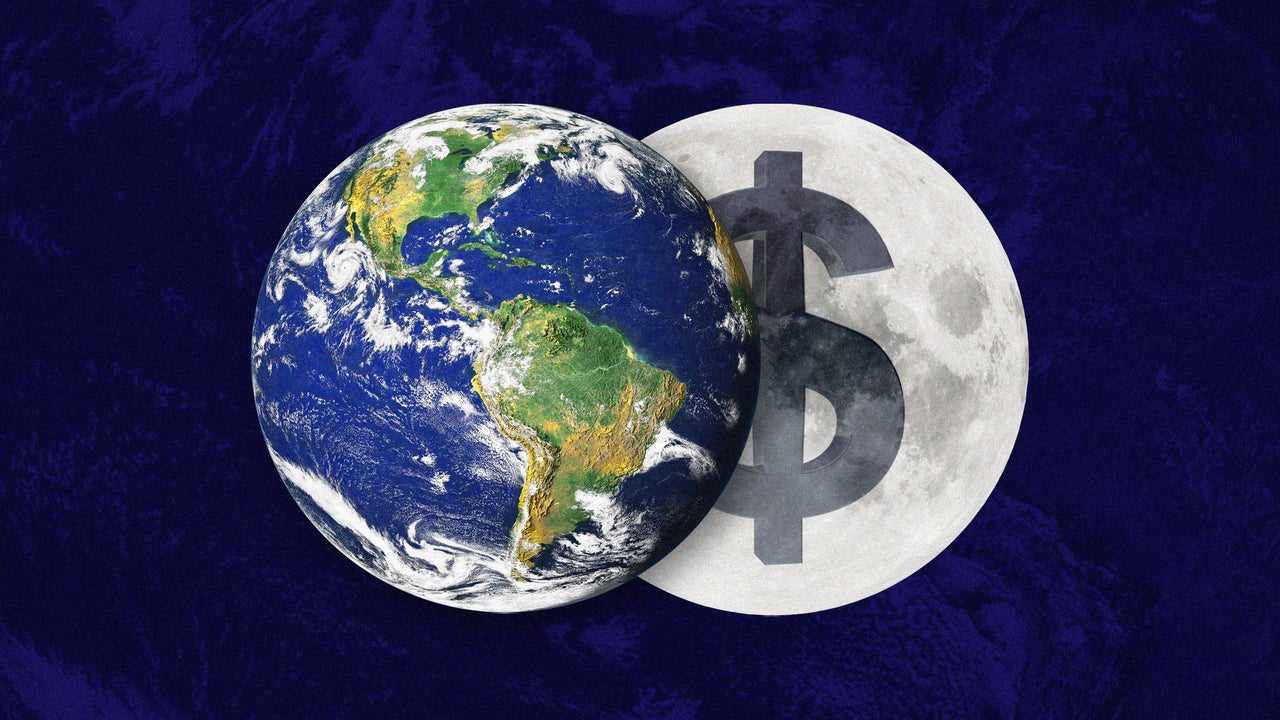
Forget mars: The real space fortunes will be made on the moon and earth
While Space X’s IPO captures global financial headlines, a high-stakes space ecosystem has been quietly emerging. By shifting the goalposts from Mars to the moon and low Earth orbit, a broad coalition of smaller players have been investing in and building the infrastructure for a new space economy, and they’re poised to profit from the next century in orbit. Mars is dead. It’s all about the moon Elon Musk was once obsessed with colonizing Mars. Now, like almost everyone else, he’s focused on the more-attainable moon. (SpaceX’s IPO prospectus mentions the Moon 74 times in; Mars, 63.) “We believe the development of a sustained human and commercial presence on the Moon has the potential to give rise to a new lunar economy,” the prospectus says. Establishing that presence “will enable terawatt-scale annual AI compute growth, support deeper space exploration and industrialization, and serve as a stepping stone to establishing a civilization on Mars.” There’s a good reason for this shift. SpaceX’s launch business has long relied on contracts with NASA, for which the company has flown 34 uncrewed resupply missions and 13 crewed flights to the International Space Station. Now, the traffic and funding are shifting toward building lunar infrastructure. First, there’s the business of getting to the moon. In April 2021, NASA awarded SpaceX a $2.9 billion contract to provide the landing vehicle—a modified version of its Starship—for the agency’s Artemis 3 mission, originally intended to land humans on the Moon in 2027. Since then, NASA has pushed the return of astronauts to the moon to the Artemis 4 mission, in 2028, and will instead use Artemis 3 as a low-Earth orbit practice run for connecting the launch vessel with the separately launched lunar lander. The agency also opened up the lander bidding to other companies, and now aims to test vehicles from both SpaceX and Blue Origin, which already holds a $3.4 billion contract for the Artemis 5 moon mission. NASA has earmarked an a