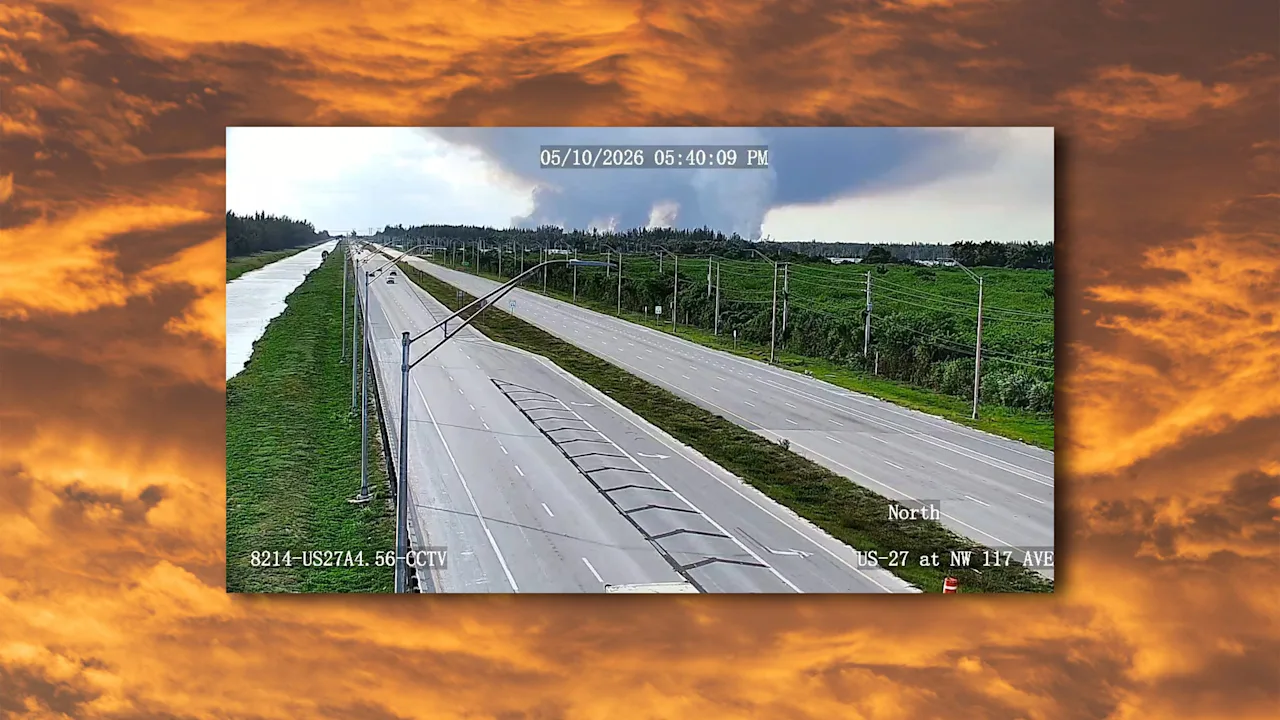
Everglades wildfire: Maps show devastation as 5,000 acres burn in the wake of an extreme Florida drought
After weeks of extreme drought across Florida, a wildfire has broken out in the Everglades, burning more than 5,000 acres. The fire, called the Max Road Miramar Fire, is located outside of Miami, and was first reported on Sunday. By Monday around 11 a.m., it had burned at least 5,600 acres, according to the Florida Forest Service, and was only 30% contained. In images and videos of the Max Road Miramar Fire, massive plumes of black smoke fill the sky; the smoke has caused low visibility on major roadways. Interactive wildfire maps provided by Watch Duty and Esri’s Wildfire Aware are tracking the fire’s spread in real time. Many may think of the Everglades as a swamp, and may wonder how such an environment can burn. Though Everglades National Park is a 1.5-million-acre wetlands preserve, it does experience a dry season from December to around mid-May. This year has been exceptionally dry. Florida is experiencing its worst drought in about 15 years. Most of the state is experiencing “extreme” drought, while counties in the panhandle are in an “exceptional” drought, according to the National Weather Service. These dry conditions have already fueled multiple wildfires this year. Since January 1, there have been nearly 2,000 wildfires across the state, burning more than 86,000 acres. Typically, Florida sees some 2,400 fires in a whole year. Wildfires have also been burning through Georgia, which is experiencing similar record drought; when adding in that state, fires have burned more than 120,000 acres this year—an area, Politico noted, that is four times larger than Disney World. “Not natural” This is not the first time the Everglades specifically have burned. Some regular burns are essential, experts have noted, helping to clear grass and fertilize the ground. But climate change, and the hotter, drier environment it creates, has also been a factor. “It’s natural for the Everglades to dry down, but not dry out,” Steve Davis, the Everglades Founda