Gold slips below 200-day moving average offering glimmer of hope for bitcoin bulls
Key takeaways
- A break below the 200DMA is often interpreted as a sign that long term bullish momentum has weakened and that a broader trend reversal may be underway.
- The decline follows a huge rally in which gold surged nearly 200%, climbing from below $2,000 per ounce in October 2023 to a record high of $5,600 in January this year.
- Gold has now entered bear market territory, having fallen more than 20% from its all time high.
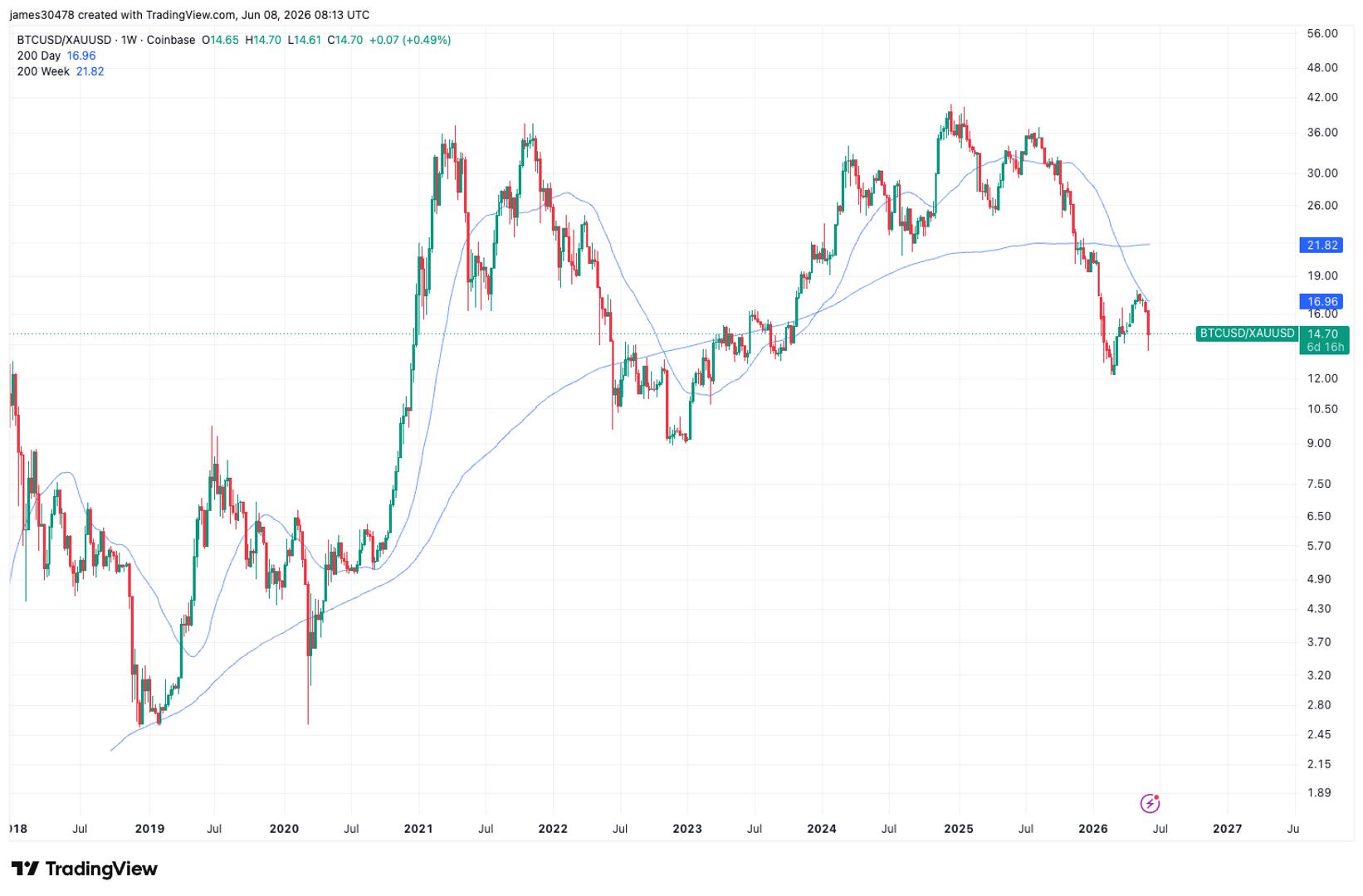
Delen Deel dit artikel Kopieer link X icon X (Twitter)Linked In Facebook E-mail Gold slips below 200-day moving average offering glimmer of hope for bitcoin bulls Gold falls into bear market territory, while a stronger U.S. dollar and rising rate expectations pressure risk assets.Door James Van Straten|Bewerkt door Jamie Crawley 8 jun 2026, 9:57 a..m.. 2 min read Vertaald door AIMake preferred on BTC/Gold Ratio (Trading View)What to know: Gold has dropped more than 20% from its January record high of $5,600 per ounce and is now trading below its 200 day moving average.A stronger than expected US jobs report has increased expectations of a Federal Reserve rate hike, while the US Dollar Index (DXY) has moved back above 100.The Bitcoin-to-gold ratio, which measures how many ounces of gold one bitcoin can buy, has climbed 3% over the past 24 hoursGold has fallen below its 200-day moving average (200DMA), a widely followed long term technical indicator that tracks the average closing price over the previous 200 trading days.
A break below the 200DMA is often interpreted as a sign that long term bullish momentum has weakened and that a broader trend reversal may be underway. This is the first time gold has traded below its 200DMA since October 2023, with prices now slipping beneath $4,300 per ounce.
The decline follows a huge rally in which gold surged nearly 200%, climbing from below $2,000 per ounce in October 2023 to a record high of $5,600 in January this year. Much of that advance was driven by the "debasement trade", the investment thesis that government spending, rising debt levels, and loose monetary policy would erode the purchasing power of fiat currencies, increasing demand for scarce stores of value such as gold.