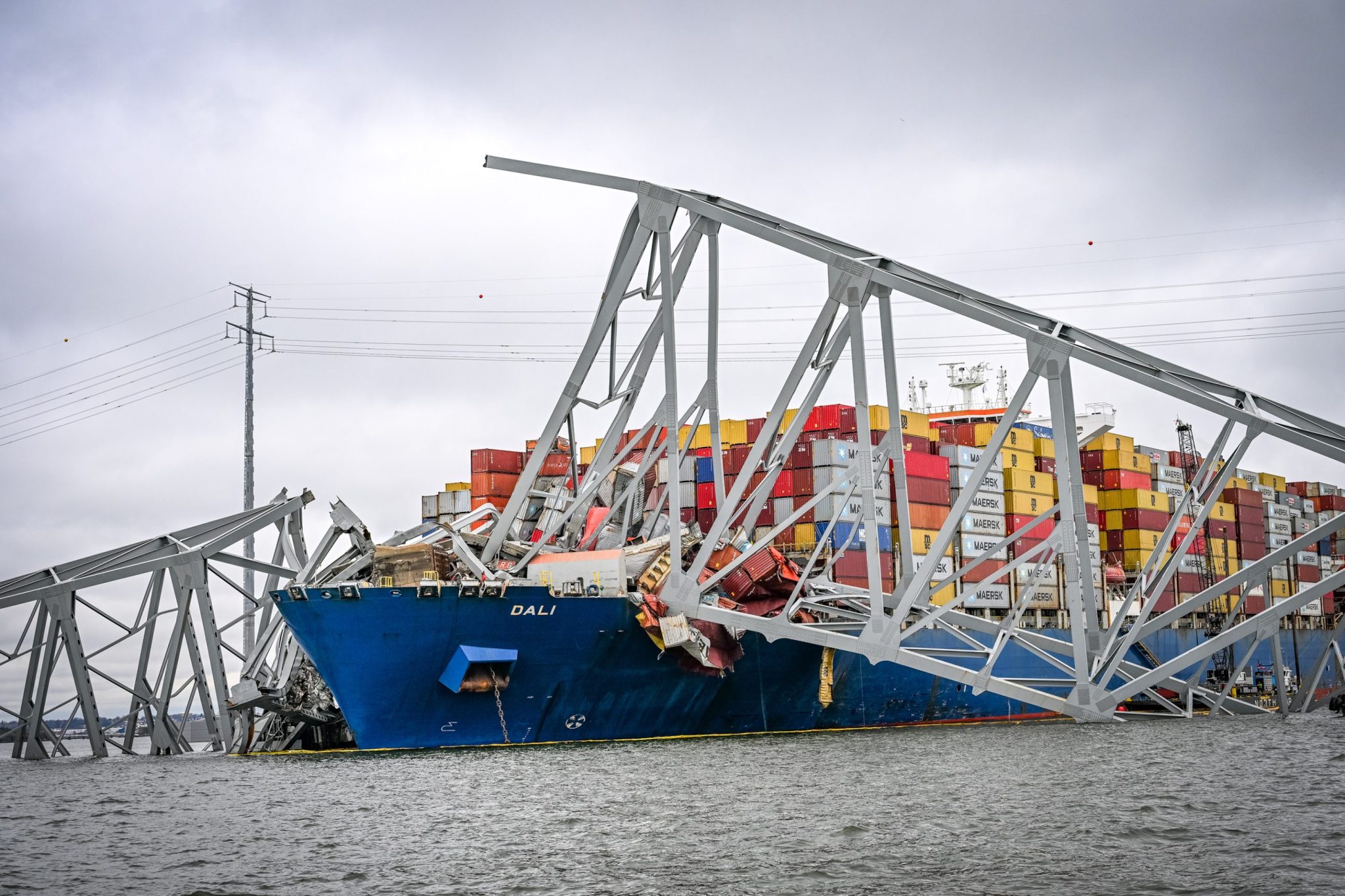
Federal prosecutors charge ship operator and employee in Francis Scott Key Bridge collapse that killed six
Federal prosecutors announced charges Tuesday in the 2024 collapse of Baltimore’s Francis Scott Key Bridge, accusing the Singapore-based operator of a ship and a key employee of making critical decisions that led to the disaster and the deaths of six people. The indictment names Synergy Marine Pte Ltd., based in Singapore, and Synergy Maritime Pte Ltd., based in Chennai, India. Radhakrishnan Karthik Nair, 47, an Indian national who was technical superintendent for the Dali container ship, was also charged. The Dali crashed into the Francis Scott Key Bridge on March 26, 2024, killing six construction workers who had been filling potholes. “The collapse of the Francis Scott Key Bridge was a preventable tragedy of enormous consequence,” said Acting Attorney General Todd Blanche. The companies and Nair are charged with conspiracy, willfully failing to immediately inform the U.S. Coast Guard of a known hazardous condition, obstruction of an agency proceeding and false statements. An FBI investigation into the crash focused on the vessel’s operations and whether the crew knew of critical systems issues before leaving port. The National Transportation Safety Board found last year that two electrical blackouts — one caused by a loose wire aboard the Dali and another by problems with a fuel pump — disabled the controls of the huge cargo ship before it crashed into the bridge. The Dali was leaving Baltimore bound for Sri Lanka when its steering failed because of the power loss. The ship crashed into a supporting column of the bridge at about 1:30 a.m. Maryland officials estimate it could cost between $4.3 billion and $5.2 billion to replace the bridge, which is expected to be open to traffic in late 2030. But the true cost of the collapse was far greater, according to the Maryland Attorney General’s Office. It halted shipping at the Port of Baltimore, disrupted the livelihoods of thousands, rerouted road traffic through communities already bearing disproportionate burdens and