U.S. senators urge Treasury not to leave states out of GENIUS Act stablecoin process
Key takeaways
- Senator Cynthia Lummis and other lawmakers asked the Treasury Department to give states a clearer GENIUS Act certification process.
- The Guiding and Establishing National Innovation for U.S.
- "The proposed principles were published by Treasury but did not address the timeline and procedural requirements related to state certification."
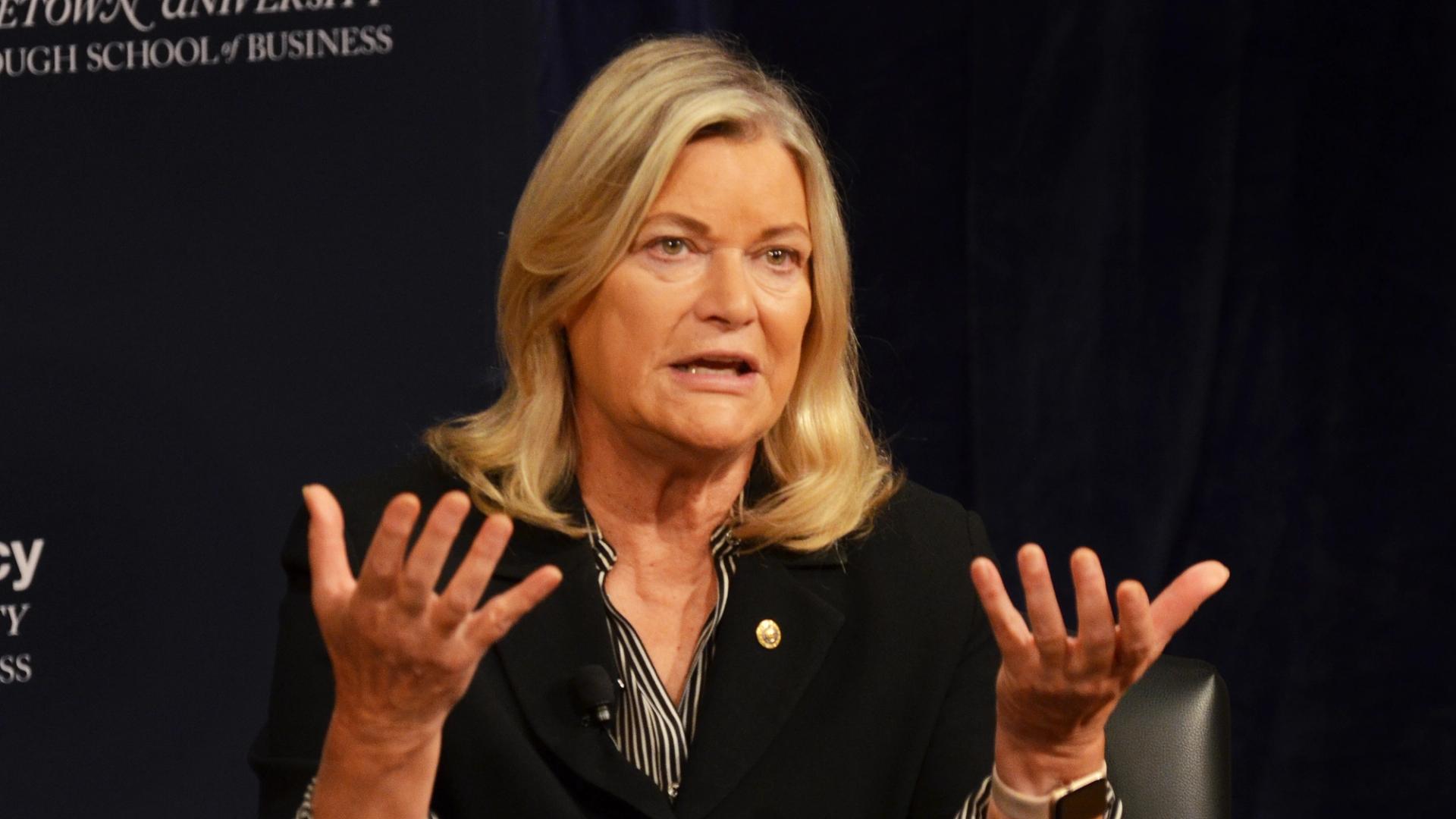
Senator Cynthia Lummis and other lawmakers asked the Treasury Department to give states a clearer GENIUS Act certification process. (Jesse Hamilton/Coin Desk)Summary Show States need to be given a fair chance to demonstrate that their stablecoin regulatory approach is at the same level as federal supervision, according to a letter from several senators that suggests the Treasury Department didn't provide a clear enough process for states in its most recent proposals.The GENIUS Act leaves room for some state-level oversight of stablecoins, as long as the states can demonstrate a certain level of proficiency.State regulators got sidelined in the U.S. Department of the Treasury's effort to implement the new U.S. stablecoin law, according to several senators from both parties who insist that the states need to be given an explicit process for proving their supervision and standards are on par with federal regulators'.
The Guiding and Establishing National Innovation for U.S. Stablecoins (GENIUS) Act to regulate stablecoin issuers is being translated into regulations across several federal financial agencies, including the Treasury. But the opening effort may not have satisfied state regulators who are trying to push their own GENIUS-related regulations, according to a Tuesday letter from the lawmakers, led by Republican Senator Cynthia Lummis, chair of the Senate Banking Committee's crypto subcommittee.
"Treasury’s finalized principles for assessing whether state regimes are substantially similar to the federal regulatory framework are critical in this process," according to the letter, also signed by fellow Republicans and a few Democrats, including Angela Alsobrooks, Catherine Cortez Masto and Kirsten Gillibrand. "The proposed principles were published by Treasury but did not address the timeline and procedural requirements related to state certification."