Veganism is Virtuous but not Obligatory
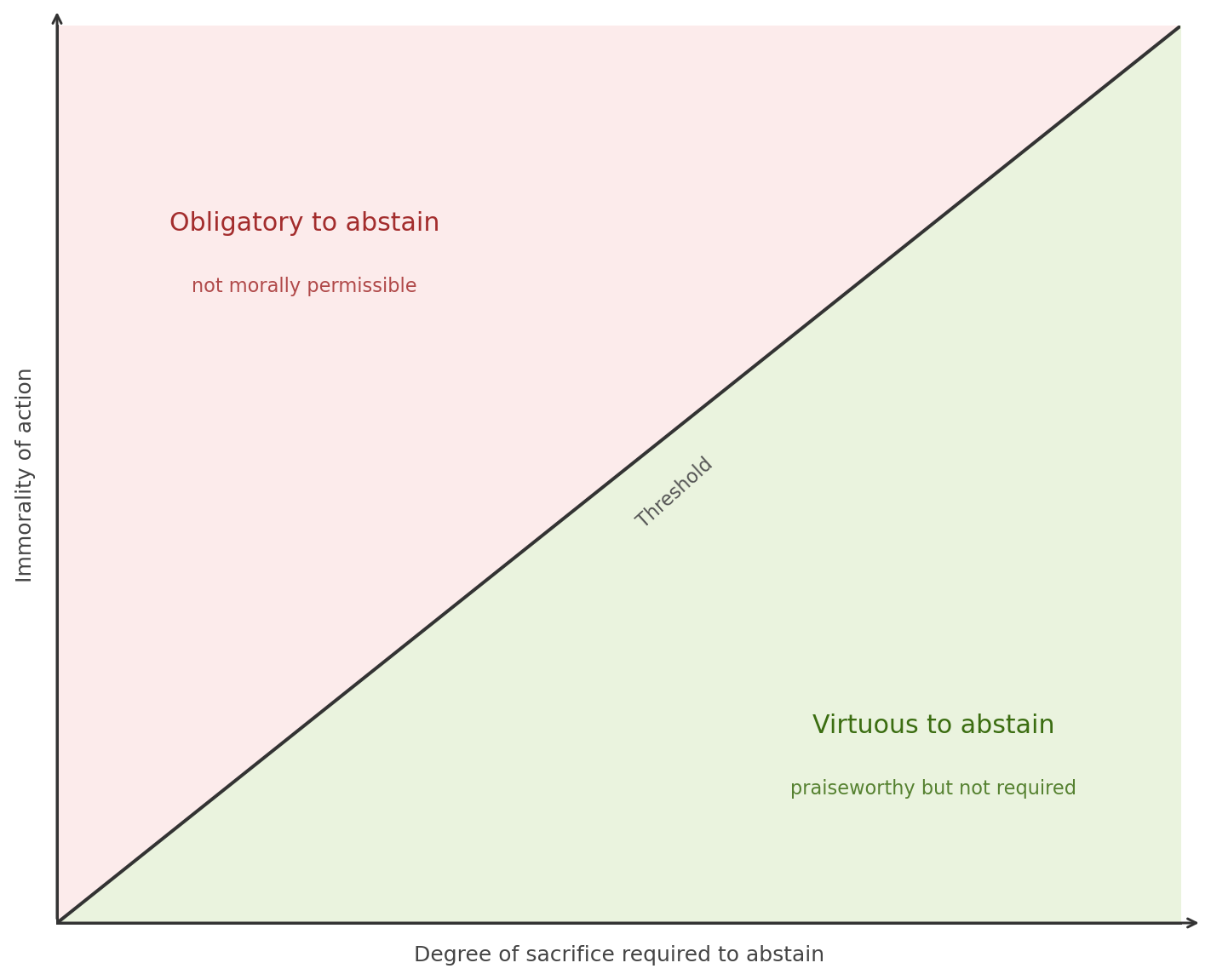
Veganism is Virtuous, but not Obligatory Tl;dr: Here, I argue that eating meat is morally acceptable. The central point is that every argument for abstaining from animal products being a moral obligation is also an argument for more extreme levels of obligatory abstinence. The “as far as is practicable” constraint vegans often assert either permits omnivorous diets, or entails extreme obligations that nearly all vegans fail to fulfil. I view abstaining from animal products as a virtuous, supererogatory act - similar to building free houses for the homeless. It is something that is beneficial and kind, but regarding it as obligatory seems indefensible under a consistent view of ethics.Upfront acknowledgments: Factory farming is despicable and I would gladly see it abolished. Animals have moral worth. I support vegans, particularly on policy. The animal industry is bad for the environment. Eating animal products is not necessary for a long, healthy life. Terminology: I use slightly nonstandard meanings of certain terms (eg: virtuous = supererogatory) in this essay, and have taken care to use terms consistently throughout. Definitions are available in the appendix.Obligation vs VirtueThere is a distinction between an obligatory action and a virtuous action. Obligation: Something you must (or must not) doVirtuous action: Something that is moral to do, beyond one’s obligations; supererogatory.The factors that determine whether abstaining from a practice is obligatory are twofold: the sacrifice it would impose on the abstainer, and the immorality of the action. These jointly determine which side of the obligation threshold an action falls on.There are many cases where an action causes substantial harm to moral patients, yet is permissible. Two actions can have equal expected harm, yet differ in permissibility.Consider the following hypothetical:Anne has one laptop. It contains treasured photographs and videos of her late family, who died in a car accident. The laptop is br