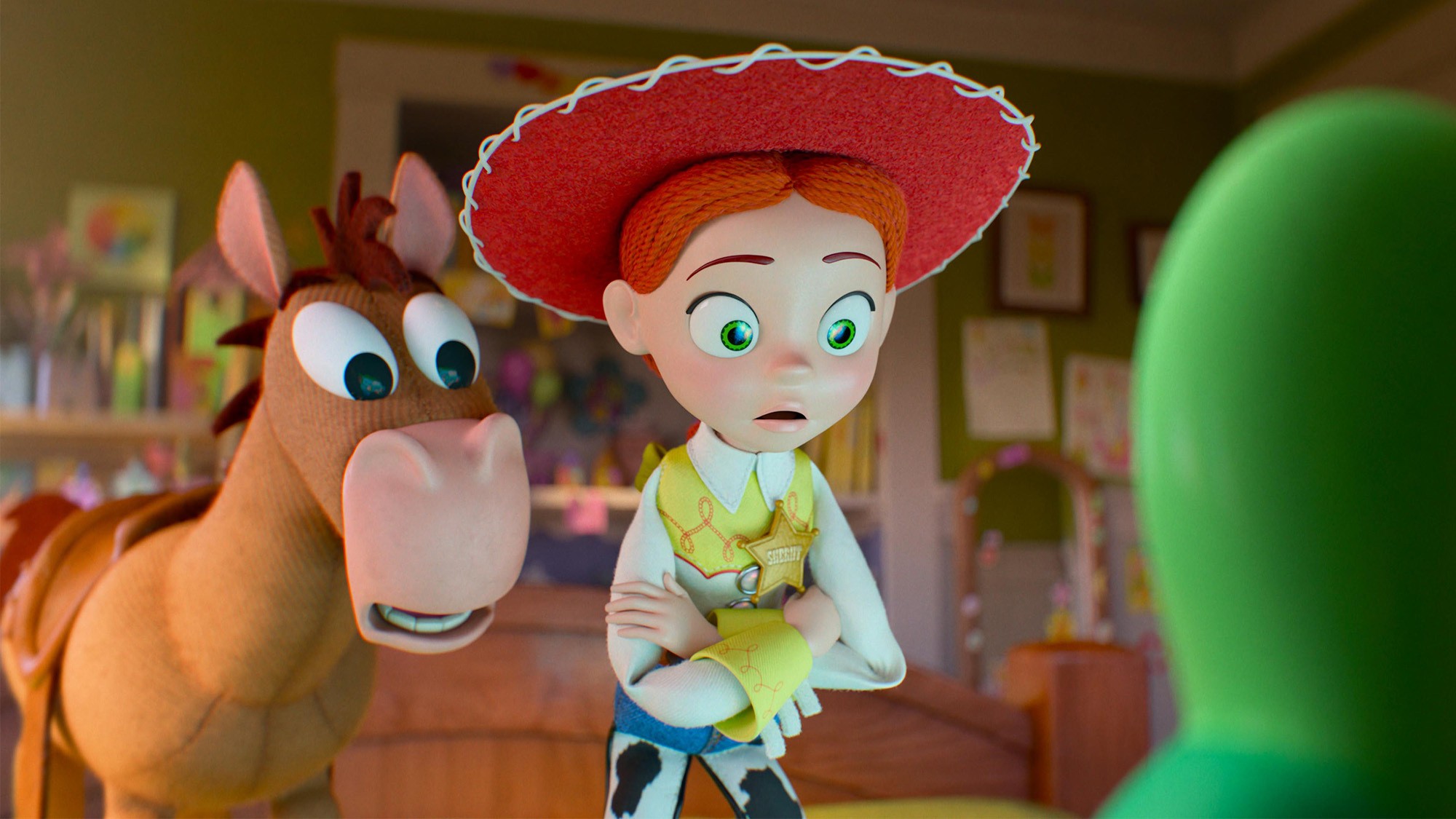
A Modern-Day Playtime Nightmare
Pixar’s cruelest and cleverest trick has been successfully convincing audiences, over several decades, that all kinds of creatures—even inanimate objects—can have rich inner lives. In Cars, vehicles talk and run a whole society; in Finding Nemo, fish feel imprisoned when they’re placed in a tank; Inside Out posits, through the use of anthropomorphized memories, that to be forgotten is a fate as bad as death. But no series ostensibly for children has worked harder to guilt-trip adults into taking better care of their pets or belongings than the Toy Story movies, in which the mere act of putting away playthings is tantamount to mass murder.Toy Story 5, the latest in a likely never-ending run of sequels to Pixar’s first-ever feature film, finds a new and rich angle to the franchise: the notion of growing up too fast. In the world of Toy Story, practically every item beloved by children has a secret consciousness; toys privately chat and organize in kids’ bedrooms, always with the goal of helping their owners have fun. Toy Story 5, directed by the Pixar mainstay and animation legend Andrew Stanton (who also made Finding Nemo and WALL-E), introduces a character that should send a chill down the spine of every parent watching—a sentient tablet computer, whose idea of encouraging elementary schoolers to interact is to get them addicted to mindless games and push them onto social networks.This is an innovative bit of horror for Toy Story, one that actually gets at the way children play today. That sense of modernity has sometimes felt absent from the movies’ sweetly old-fashioned world, which features pull-string cowboy dolls and a shiny spaceman action figure. Lilypad (voiced by Greta Lee) is a cutesy piece of tech gifted to the series’ human protagonist Bonnie, who is 8 years old and painfully shy. Ostensibly intended to bring her closer to more friends via the web, “Lily” instead zombifies Bonnie, a familiar syndrome that the other toys note is happening worldwide. Figur