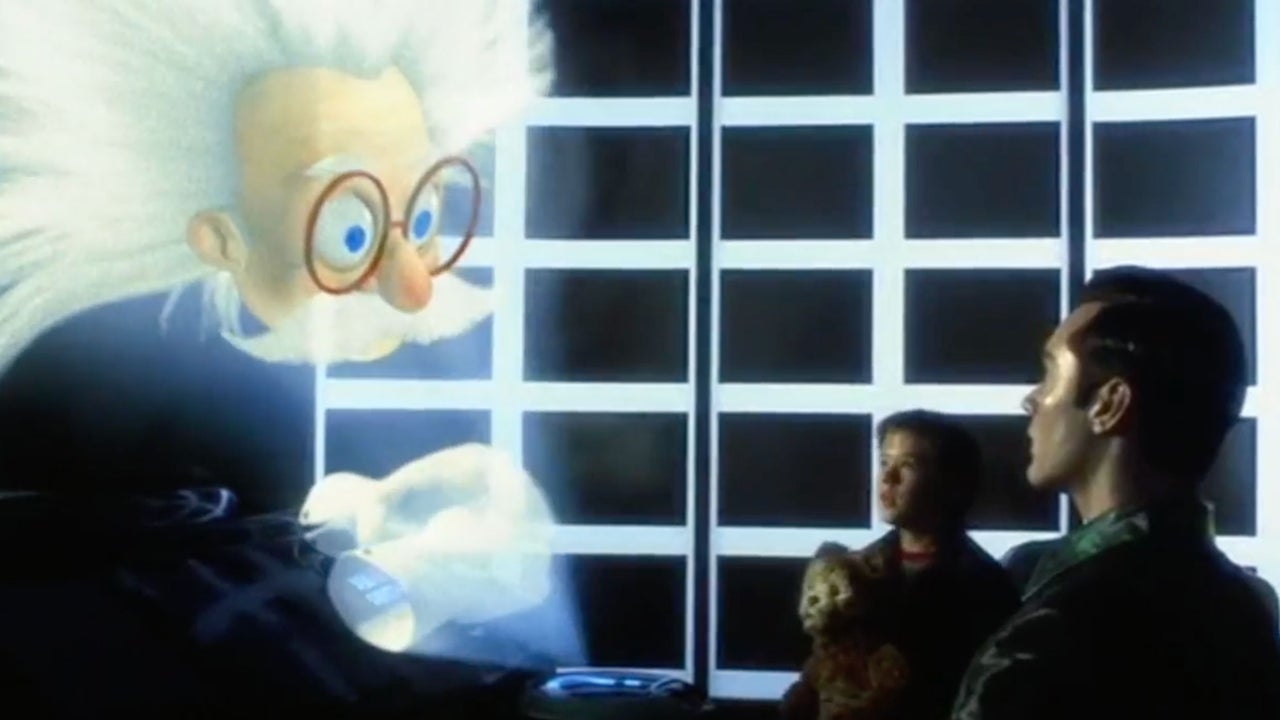
25 years ago, this scene from Steven Spielberg’s ‘A.I.’ predicted the collapse of objective reality
Humanoid robots are not very punctual. Sci-fi movies have been warning of their impending arrival for decades, and yet clankers with faces so far remain stuck on the fringes of the AI era. Of course, not all sci-fi films promise too much too soon, only to end up looking silly when the future becomes the present. By setting his 2001 opus, A.I.: Artificial Intelligence, in the comfortably distant 22nd century, Steven Spielberg avoided incorrectly predicting how technology would unfold in his lifetime. As the film turns 25 on Monday, it makes perfect sense that we haven’t yet invented, for instance, a robot that can seamlessly pass as Haley Joel Osment. Unfortunately for humanity, another tech prediction from A.I. didn’t need a full century to come true—and it’s already proven more profoundly harmful than even Spielberg might’ve imagined. Combining fairy tale and flat fact A.I. tells the story of David (Osment), a “mecha” prototype who presents as a little boy and is programmed to exude a child’s love. David was made for the purpose of providing consolation to grieving parents and those who can’t conceive. If it sounds unethical to create a robot child inflexibly attached to a parental figure who might decide one day they no longer need such a thing, rest assured: A.I. unpacks this conundrum exhaustively. In doing so, it also explores the meaning of love, the essence of humanity, and the various roles AI might come to occupy. Though the film was mostly a critical success, audiences greeted it coolly. A.I. made just $78 million at the domestic box office, despite its positioning as a tentpole summer blockbuster, and had little cultural impact at the time. Only in the years since has the project (which was actually first conceived by Stanley Kubrick) become more widely recognized as a cinematic achievement. Many aspects of the future as depicted by A.I. are still far away, while others appear to be lurking around the corner. Something like the film’s Flesh Fair, where un