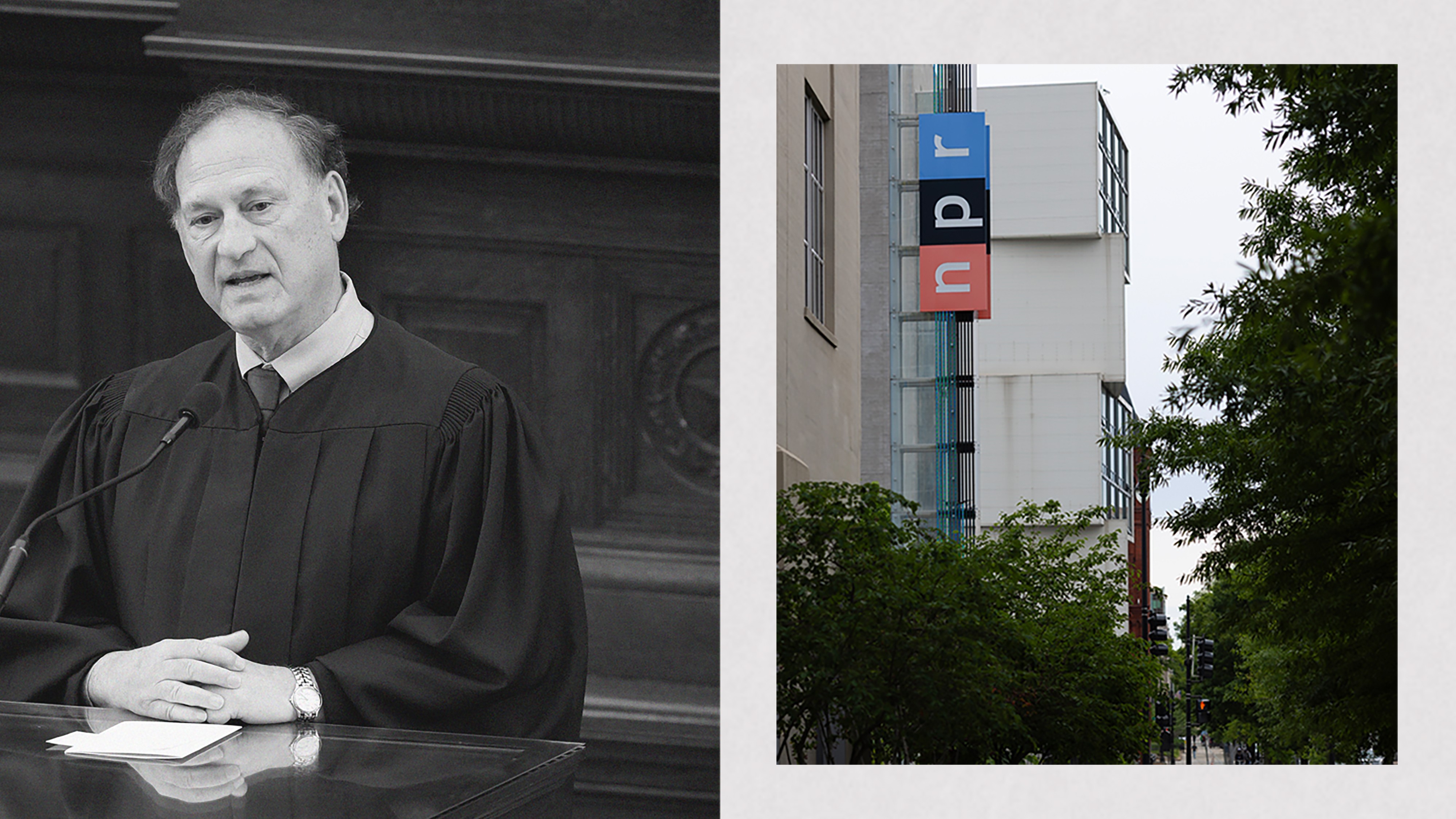
A Tough Day for NPR
It was all a “misunderstanding.” That’s the word that NPR editor in chief Thomas Evans used to describe why, on Tuesday, the outlet erroneously published a report by the veteran Supreme Court reporter Nina Totenberg that Justice Samuel Alito had retired. According to an archived copy, available on the Wayback Machine, the 1,186-word story was published at 10:51 a.m. eastern time. In the story, Totenberg attributed her reporting to the Court itself, not an anonymous source. Minutes later, the Supreme Court’s public-information office said that the Court had not made any such announcement.NPR, to its credit, quickly retracted the story, issued a correction, and apologized. Because NPR syndicates its reporting to hundreds of public-radio affiliates across the country, the incorrect news of Alito’s retirement was picked up by numerous stations before needing to be retracted by them as well. At least one publication—Vox—followed NPR’s reporting and also had to retract a story. The result: roughly an hour of speculation and unnecessary chaos on what was already an intense day of rulings for the Court, including a decision allowing states to bar transgender athletes from girls’ and women’s sports and a rejection of President Trump’s executive order on birthright citizenship.So what really happened here? NPR’s public editor, Kelly McBride, wrote this afternoon that Totenberg had listened to Chief Justice John Roberts announcing retirements at the Court and misheard the statement. She then contacted her intern at the Court and the NPR executive editor who published the story. (NPR and the Supreme Court press office did not respond to a request for comment.) The New York Times reported that the story lacked extra steps of verification because it cited an announcement instead of an anonymous source.According to McBride, much of the story had been prewritten in anticipation of Alito announcing retirement. This is a common practice for reporters who cover a specific beat; in som