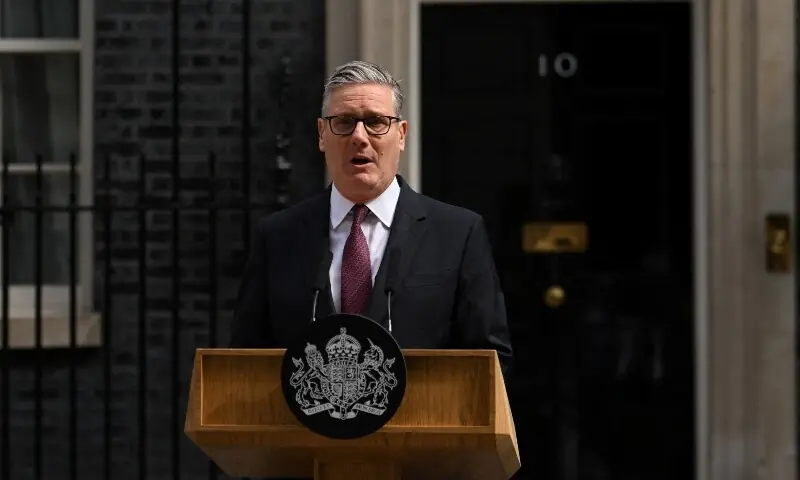
Starmer steps down as UK PM amid mounting pressure
Why this matters: local context for readers following news across Pakistan and the region.
Prime Minister Keir Starmer on Monday resigned from his position, paving the way for Britain’s seventh leader in a decade. Addressing the press outside 10 Downing Street, Starmer said he would accept his party’s decision with “good grace”. Less than two years after Starmer won a landslide election victory that promised to end Britain’s chaotic politics, one source said he had spent the weekend considering whether to step aside or fight a leadership contest. “Keir likes to think about things,” said the source on condition of anonymity. Pressure building for months The threat to Starmer, which has been building for months, increased sharply on Friday when Burnham, the Greater Manchester mayor, decisively won a parliamentary election to return to Westminster, beating a candidate from Nigel Farage’s Reform UK party which has led national opinion polls for more than a year. That victory gave hope to Labour lawmakers that Burnham, a career politician known for his communication skills, could transform the fortunes of a party that has lost support under Starmer, whose popularity ratings have sunk to the lowest for any British leader. But the widely expected change of leader is not without risk. Beyond saying that the country needs fundamental change and to bring down the cost of living, Burnham has yet to make clear his approach to foreign affairs, the economy and defence. Like Starmer, he could find he has little room to manoeuvre, hemmed in by bond market investors opposed to any additional borrowing, and confronted by an angry electorate who believe the country is not working properly. Britain already has the highest borrowing costs in the Group of Seven wealthy nations due to its high debt and interest payments, years of anaemic economic growth, its struggles to cut spending and the need to invest in areas like defence. Investors spoken to by Reuters were divided over whether Burnham, who said last September that Britain had to get “beyond this thing of being in hock t