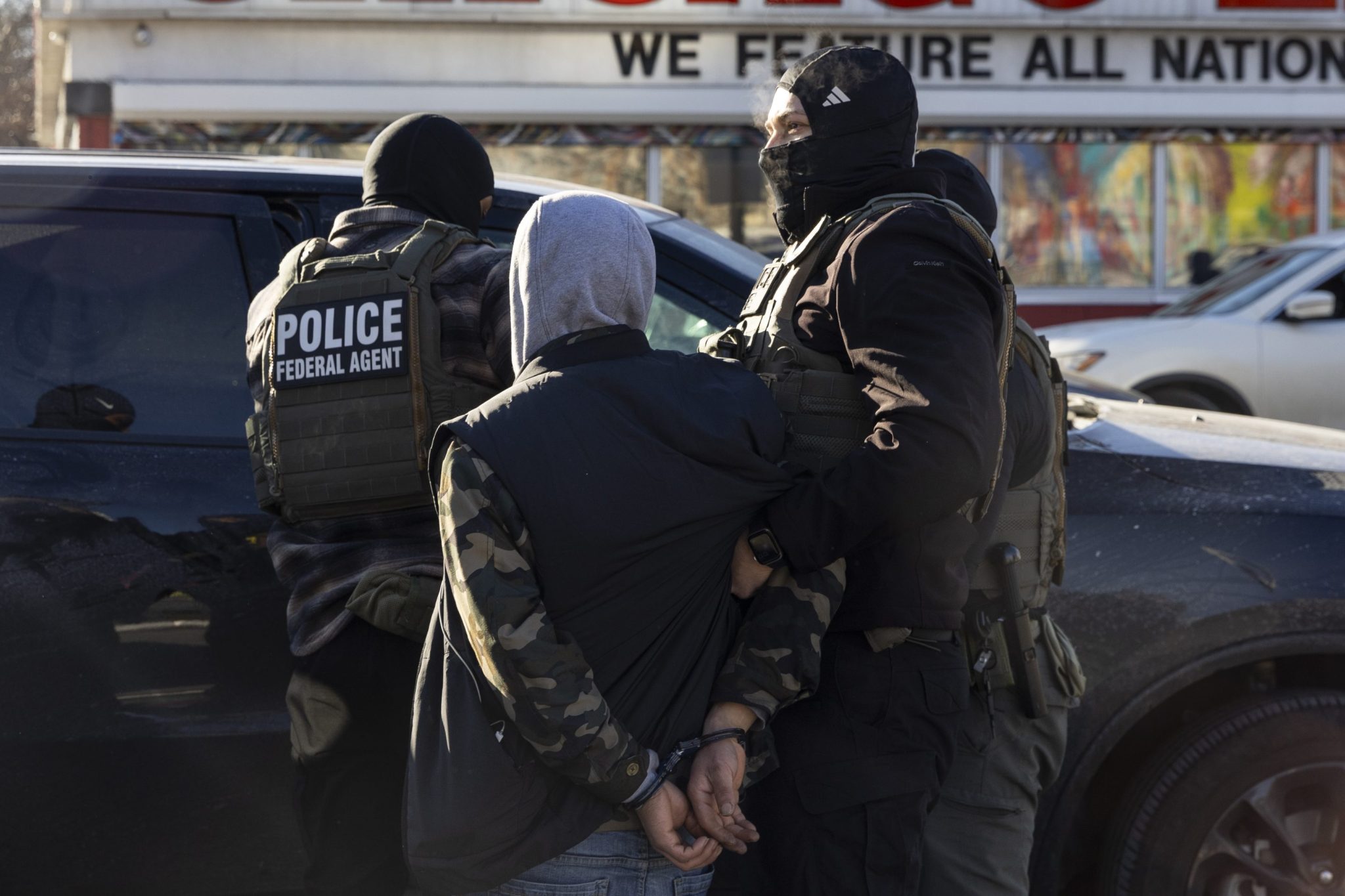
Trump promised deportations would protect American jobs. Brookings said ICE raids have cost the economy over 668,000 of them
After campaigning to enact mass deportations on what he said would be “day one” of his second administration, President Donald Trump seems to have largely kept his promise to remove undocumented immigrants from the country. He began the crackdown by targeting primarily Democratic-run cities, leading to the deportation of more than 105,000 people between Jan. 1 and June 11 of this year alone. Permanent residents and U.S. citizens soon got caught up in Immigration and Customs Enforcement (ICE) and were arrested and detained for weeks, just as Trump was touting the measures were necessary to bring more jobs to Americans and ending the presumed cycle of immigrants taking so-called “Hispanic” and “Black jobs.” But a recent Brookings study shows that ICE operations had the exact opposite effect. The campaigns have cost the U.S. economy 668,000 jobs for both U.S.-born and foreign-born workers, researchers found. Job losses in cities with the highest ICE activity grew over time, leading to 30 jobs lost for every arrest. The researchers found that job losses following ICE operations in American cities extended far beyond the number of people arrested. While the U.S. unemployment rate has been creeping up since April 2023, the researchers were able to isolate the effect of ICE activity by focusing on the cities that saw the most ICE arrests. ICE operations lead to more job losses over time ICE arrested about 52,000 people across 86 cities with the most ICE enforcement activities between January and June 2025. For example, Laredo, a city on the Southern border, experienced an average of 803 ICE arrests a month after ICE operations began, up from a monthly average of 6 arrests. On the whole, ICE street arrests increased by a factor of 11 times during the first year of Trump’s second administration, according to the Deportation Data Project. Employment fell 0.73% on average across the top quarter of cities that experienced the most intense ICE actions, including Knox