NASA’s Dryden Aeronautical Test Range Supports Flight, Space Missions
Why this matters: new research or scientific developments with potential real-world impact.
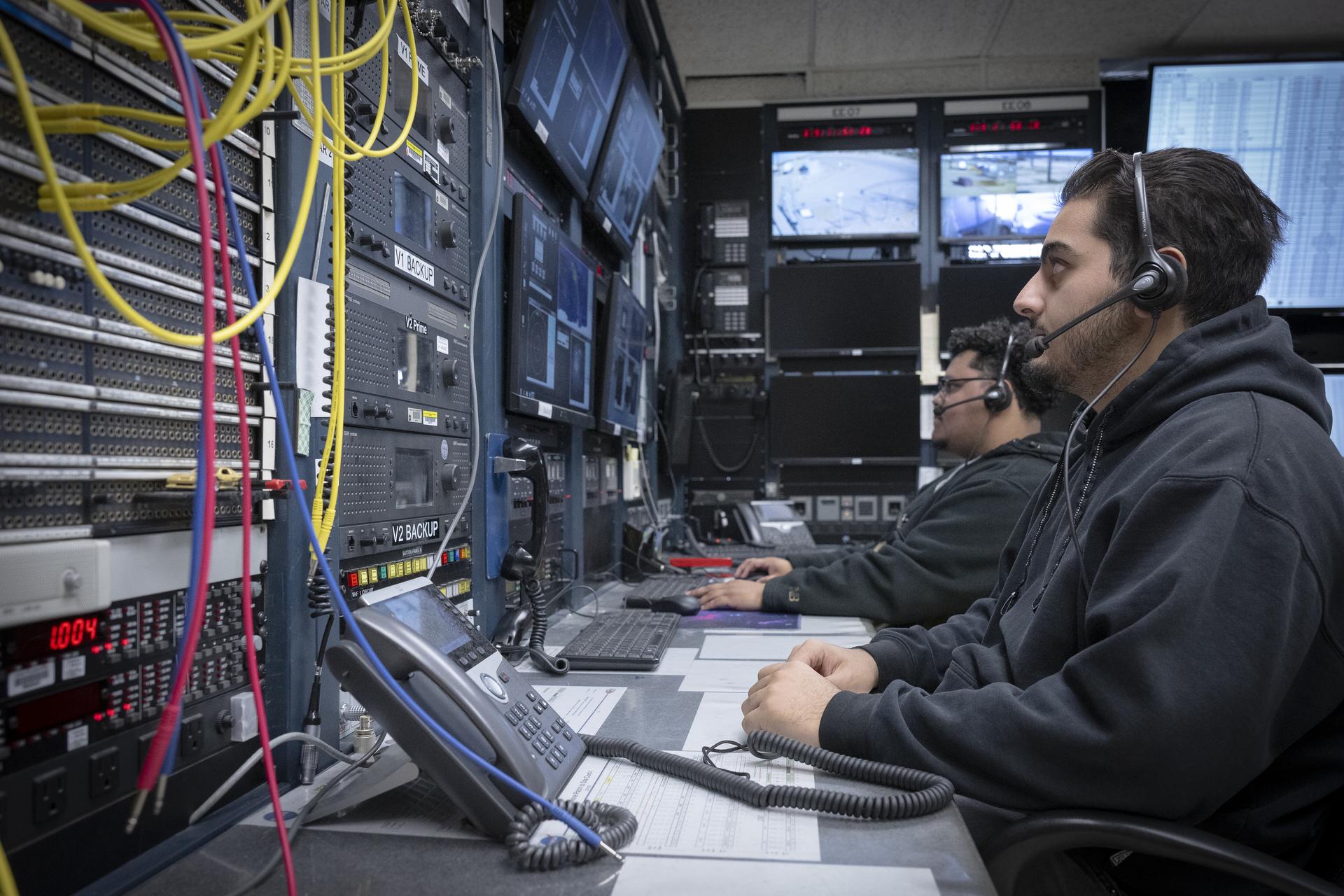
In this Friday, Dec. 6, 2025, photo, Alex Oganesyan, left, and Deming Ingles are at their workstations, where they support communications backup for space station missions.NASA/Christopher LC Clark NASA advances aeronautics and space technologies through experimental aircraft and flight research at the agency’s Armstrong Flight Research Center in Edwards, California. Behind those efforts is the Dryden Aeronautical Test Range (DATR), which provides the communications, tracking, and data services that enable safe and effective missions. For most NASA Armstrong research flights, the DATR supplies communications, radar, and telemetry. The range’s video capabilities can also capture ground footage as well as long-range coverage for flights. Modernization efforts started in the early 2020s expanded those capabilities and prepared the range to support efforts such as test flights of NASA’s X‑59 quiet supersonic research aircraft, as well as spaceflight communications. “The DATR provides real‑time data, tracking, and situational awareness that help keep flight research safe and efficient,” said Tara McCoy, acting deputy director for DATR Mission Operations at NASA Armstrong. “The range also supports science missions, works with industry partners, and provides capabilities used for International Space Station operations.” Ongoing upgrades include new very high frequency (VHF) ground antennas, updated electronic components, and software improvements for tracking the International Space Station and visiting spacecraft. NASA installed additional antennas to ensure backup coverage. The range’s ability to processes and display real‑time radar, telemetry, and video data is critical for monitoring research flights, s