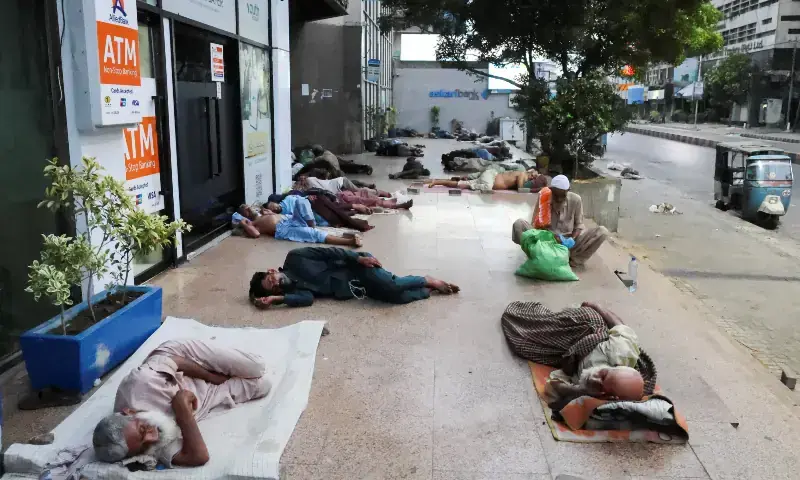
Oppressive heat and humidity drain Karachi’s life and energy
Why this matters: local context for readers following news across Pakistan and the region.
The scorching June sun, coupled with high humidity and feels-like temperatures exceeding 45 degrees Celsius, has created conditions that are difficult to escape, whether at home or outdoors. Nearly every resident appears affected by the extreme weather, which experts increasingly link to climate change. Office workers, labourers and daily wage earners alike are struggling to cope with it. For many, it feels as though nature itself has turned hostile. Those compelled to go outdoors after 11am are often seen shielding their faces and heads with scarves or pieces of cloth. Yet some people have little choice. Construction workers, delivery riders, street vendors, and homeless individuals remain exposed to the blazing sun, working through conditions that leave them visibly exhausted. The persistently high heat index is no longer merely a weather statistic; it is leaving visible marks on the city’s streets and on those who depend on them for their livelihoods. Millions of Karachiites earn a living by selling goods on pushcarts, pavements and roadsides. Already burdened by difficult economic conditions, they now face the twin challenges of extreme heat and humidity. One perspiration-soaked pushcart vendor was seen dragging his cart along a sun-baked road, seemingly searching for a patch of shade where he could briefly rest. Finding none, he eventually stopped and sat in the narrow shadow cast by his own cart, trying to regain his breath before moving on. The heat is affecting motorists. Drivers of older vehicles, in particular, complain of rising cabin temperatures a