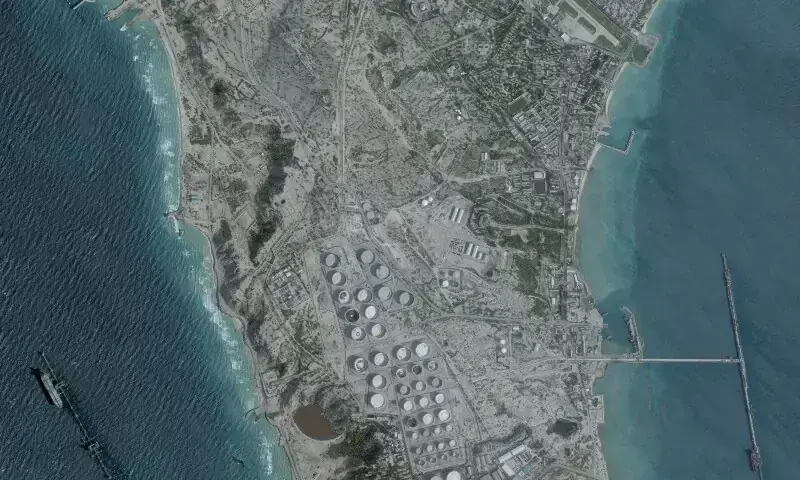
Alarm and scepticism follow Trump’s Kharg Island threat
Why this matters: local context for readers following news across Pakistan and the region.
WASHINGTON: The US and global media on Thursday reacted with a mix of alarm, scepticism, and market-watch caution after President Donald Trump escalated tensions by threatening to seize Kharg Island, Iran’s critical offshore oil export hub. Across Washington, the dominant theme in reporting is the gap between rhetoric and military feasibility. Jonathan Swan, a White House correspondent for The New York Times, framed the administration’s posture as one defined by repeated escalation and limited strategic clarity. “Trump has repeatedly said he would attack Kharg during the war, as he has ramped up his threats to try to compel Iran to agree to his demands to shutter its nuclear programme. Iran has consistently called his bluff,“ he wrote. Swan’s assessment also highlights internal constraints shaping the discussion in Washington. “Trump has few easy options,” he wrote, pointing to depleted long-range weapons stockpiles and the operational complexity of any attempt to physically seize the island. “The US is dangerously low on long-range weapons stocks, and seizing Kharg would involve a substantial risk of American casualties, and most of Trump’s advisers oppose a full-blown ground operation to try and topple the Iranian government. “But he continues to make bellicose threats and in recent days has launched waves of military strikes,“ Swan noted. That caution is echoed by The Washington Post, which has emphasised the logistical and human costs of any attempt to occupy the island. According to the paper, “actually seizing and holding Kharg Island carries a significant risk of American casualties and requires substantial US troop deployments,” underscoring that the scenario would quickly move beyond limited strikes into a large-scale regional war footing. A US FA-18 fighter jet prepares for takeoff from an aircraft carrier in the Middle East, in this photo released on May 29, 2026. — X/@CENTCOM/File NBC News Chief Foreign Correspondent Richard Engel described the escalatin