Curiosity Blog, Sols 4886-4892: Ingenuity and Perseverance, Curiosity Style
Why this matters: new research or scientific developments with potential real-world impact.
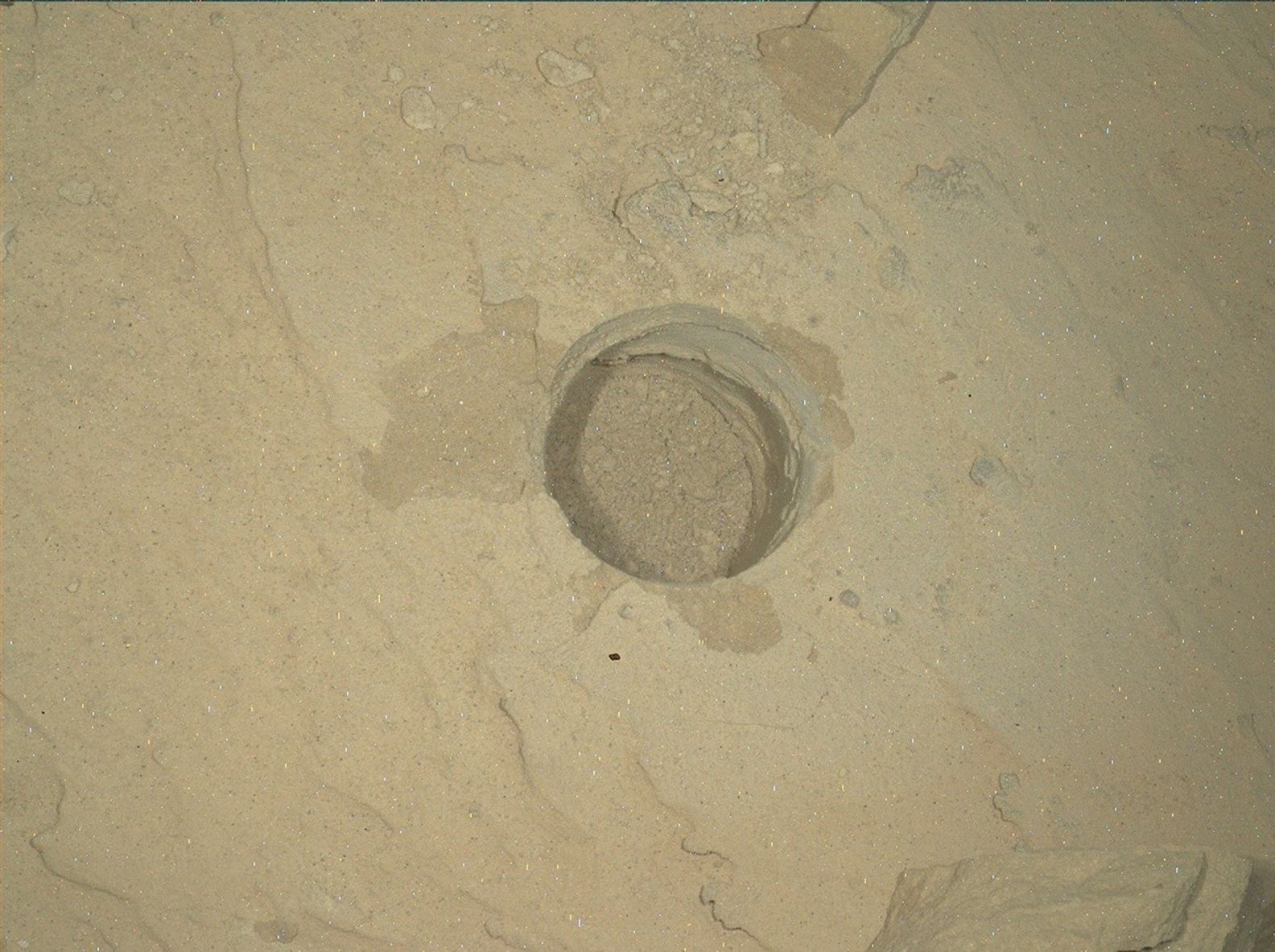
Curiosity Navigation Curiosity Home Mission Overview Where is Curiosity? Mission Updates Science Overview Instruments Highlights Exploration Goals News and Features Multimedia Curiosity Raw Images Images Videos Audio Mosaics More Resources Mars Missions Mars Sample Return Mars Perseverance Rover Mars Curiosity Rover MAVEN Mars Reconnaissance Orbiter Mars Odyssey More Mars Missions Mars Home 3 min read Curiosity Blog, Sols 4886-4892: Ingenuity and Perseverance, Curiosity Style NASA’s Mars rover Curiosity acquired this image showing an oblique view into the “Atacama” drill hole, where the rover’s drill was briefly lodged. Curiosity created the image using its Mars Hand Lens Imager (MAHLI), a close-up camera located on the turret at the end of the rover’s robotic arm, and an onboard focusing process that merges multiple images of the same target at different focus positions, creating a composite that brings as many features into focus as possible. Curiosity performed the focus merge on May 6, 2026 — Sol 4887, or Martian day 4,887 of the Mars Science Laboratory Mission — at 01:39:34 UTC. NASA/JPL-Caltech/MSSS Written by Michelle Minitti, MAHLI Deputy Principal Investigator Earth planning date: Friday, May 8, 2026 While we know the monikers Ingenuity and Perseverance are attached to our sister helicopter and rover on the Mars 2020 mission, those characteristics were in full force with Curiosity over the past week. The science we achieved this week was enabled by the ingenuity of the Curiosity engineers and scientists manifested in this extraordinary time lapse. It demonstrates the careful dance of arm motions employed — each one diligently planned by the team — to free Curiosity’s drill from the “Atacama” target. Watch the arm twist, bend, and turn with a rock slab attached, and be amazed. The highest-priority activities after liberating the drill included imaging the drill with Mastcam and ChemCam RMI, and imaging into the now-empty drill hole with MAHLI (the image abov