In Spectrum: Memory, migration and making of Lahore’s urban soul (Part-I)
Why this matters: local context for readers following news across Pakistan and the region.
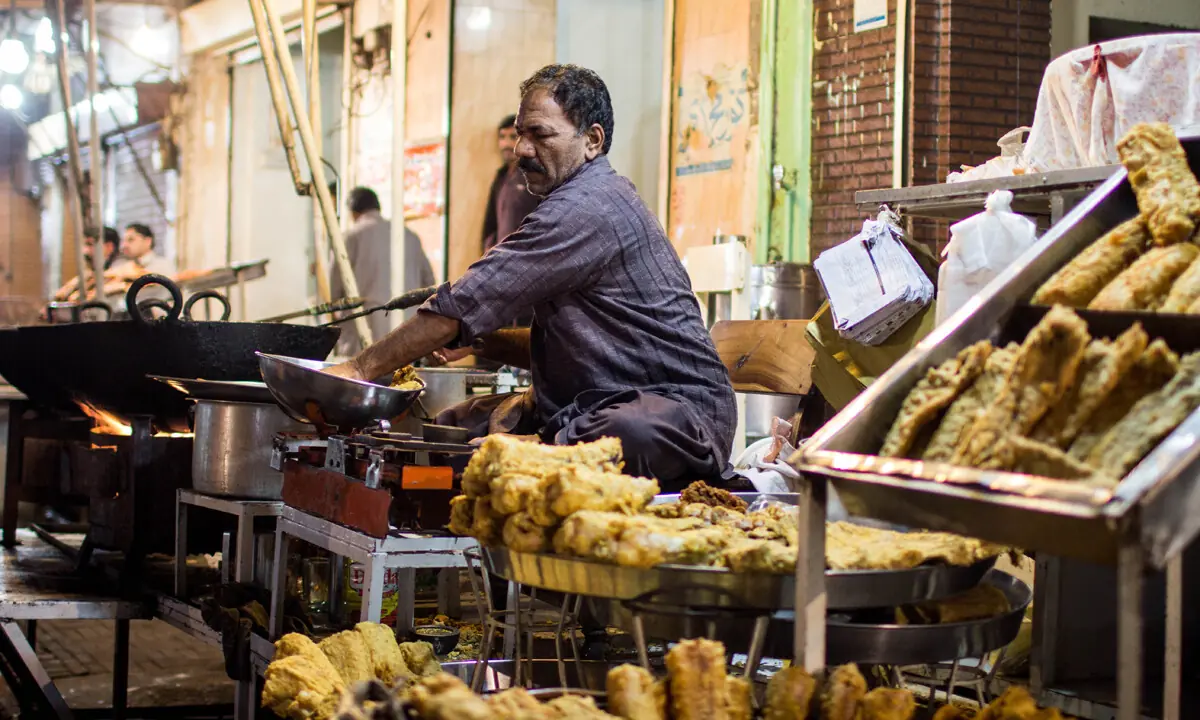
In Lahore, food is never merely food. It is memory, migration, performance, class, longing and history carried on the tongue. Few places embody this truth more vividly than Gawalmandi, the dense and storied neighbourhood in central Lahore whose narrow streets, smoky grills, old facades and crowded eateries became inseparable from the cultural imagination of the city. To speak of Gawalmandi is to speak of Lahore itself: a city built through displacement, improvisation, coexistence and reinvention. Until recently, Gawalmandi has been celebrated primarily for its famous Food Street, for sizzling kebabs, fragrant hareesa, fried fish, doodh-jalebi and late-night crowds that gather under strings of lights. Yet reducing Gawalmandi to a culinary destination alone would flatten its layered historical significance. The neighbourhood is also a site through which one can understand urban modernity in South Asia, the social consequences of Partition, and the transformation of everyday life in postcolonial cities. Through the writings of historians and theorists such as Gyan Prakash, Ash Amin and Arjun Appadurai, Gawalmandi can be read not simply as a neighborhood but as an urban text — a space where memory, mobility, intimacy and commerce converge. The literary recollections of A. Hameed, Ahmad Shuja Pasha and Pran Neville further illuminate how Lahore’s cultural worlds were built through ordinary people, shared spaces and everyday encounters. The name “Gawalmandi” itself reveals much about its origins. Derived from the wordsgawala (milkman) andmandi (market), the locality emerged as one of the largest buffalo milk production and distribution hubs in Punjab. Before it became associated with restaurants and food culture, it was a working neighbourhood shaped by cattle, dairy trade and the rhythms of everyday commerce. The area developed substantially after 1911, during the late colonial period, when Lahore was expanding beyond the Walled City. Its roads — Nisbet Road, Chamberlain