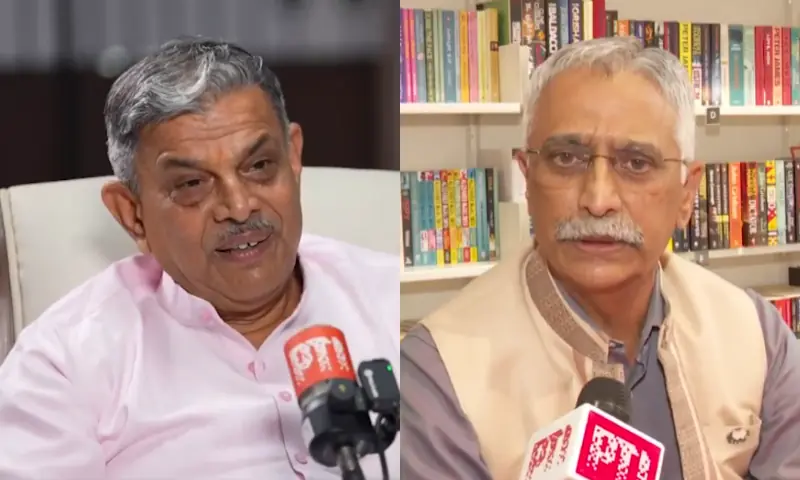
Former Indian army chief backs RSS leader's call for engaging in dialogue with Pakistan
Why this matters: local context for readers following news across Pakistan and the region.
Former Indian army chief Gen (retired) Manoj Naravane has supported the Rashtriya Swayamsevak Sangh (RSS) secretary general’s remarks calling for keeping the window for dialogue between Islamabad and New Delhi open. In an interview with Press Trust of India aired on Tuesday, RSS Secretary General Dattatreya Hosabale said there “should always be a window for dialogue” between Pakistan and India, terming people-to-people contacts as key to breaking the deadlock in ties. Responding to a query about how India should deal with Pakistan, Hosabale said, “If Pakistan is like a pinprick trying to create incidents like Pulwama, etc, we have to answer appropriately according to the situation because the security and self-respect of a country and nation have to be protected.” Over 40 Indian paramilitary troops were killed in the Pulwama attack in occupied Kashmir in 2019. India alleged that those who planned the attacks had links with the Pakistani state — a charge that Pakistan has vigorously denied. The RSS secretary general went on to add, “But at the same time, we should not close the doors. We should always be ready to engage in dialogue. That is why diplomatic relations are maintained, trade and commerce continue, and visas are being given. So we should not stop these.” Agreeing with the RSS leader’s stance, Naravane on Wednesday told PTI, “One important point is that people-to-people connections and contacts are extremely important. Ordinary people live on both sides of the border, and common people everywhere have the same concerns: food, clothing, shelter, and daily life. “Ordinary citizens generally do not have much to do with politics. When friendship develops between the people of two countries, it naturally helps improve relations between the countries themselves,” he observed. The ex-army chief stressed that people-to-people contact, “whether through Track-II diplomacy or through sporting events, is very important”. Naravane highlighted that while India had always