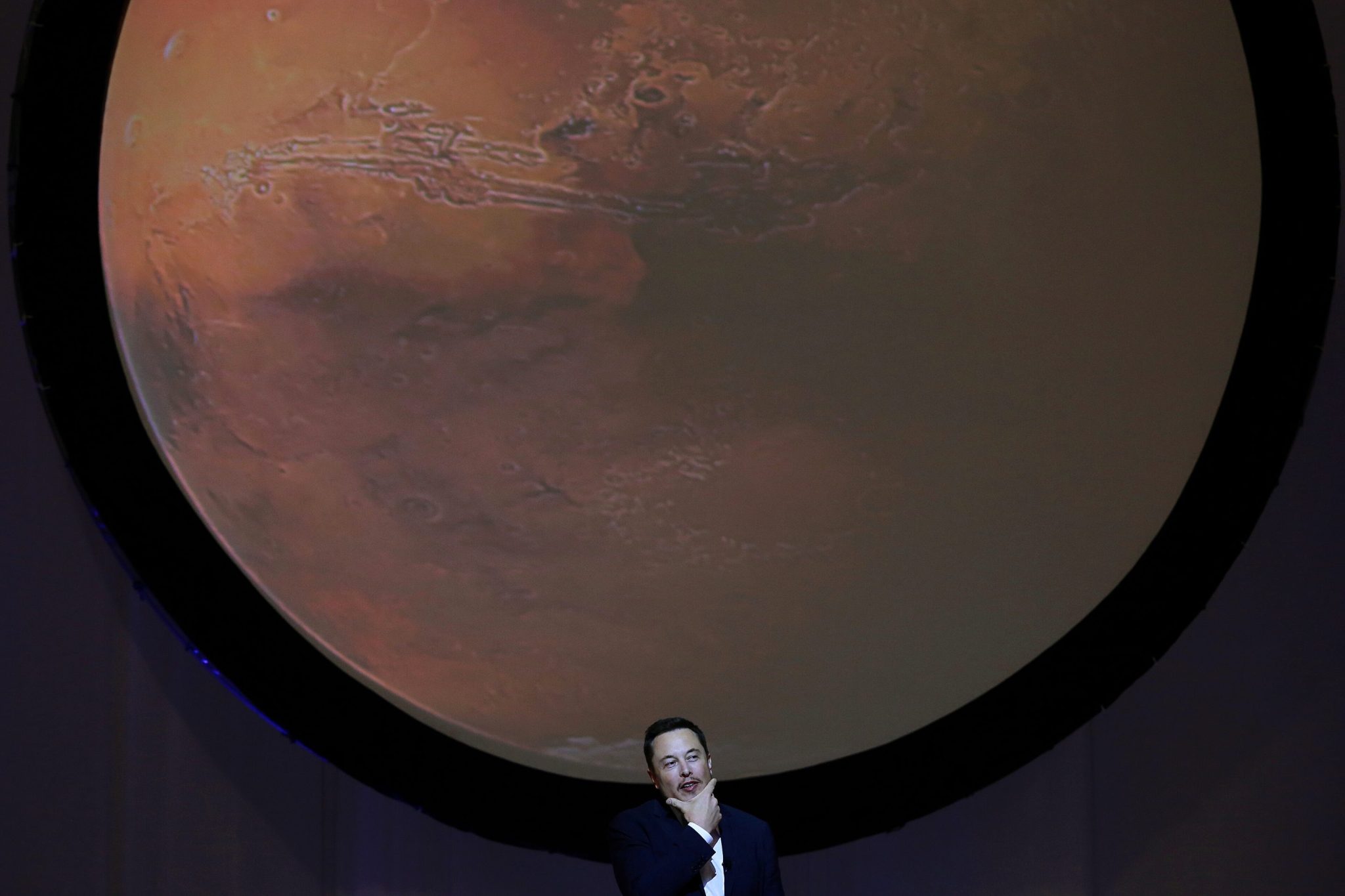
Elon Musk to get a billion shares of SpaceX if he can settle a million humans on Mars
When Space X published its S-1 on May 20, investors got what they expected: a landmark filing for a company planning the largest IPO in history. What they may not have been ready for was the compensation structure buried inside it, which reads less like a corporate pay package and more like science fiction. The Space X board will grant CEO and founder Elon Musk 1 billion restricted shares of Class B common stock on one condition: he has to hit 15 market capitalization milestones up to $7.5 trillion and establish a “permanent human colony on Mars with at least 1 million inhabitants.” This is on top of his existing stake of roughly 5 billion shares, worth approximately $825 billion now. The new shares, potentially worth several hundred billion dollars more, come with conditions that have no precedent in the history of executive compensation. And the science fiction-ness of the whole condition appears constant throughout the filing. The word “Mars” appears 63 times in the document, including under the “executive compensation” section. The prospectus is structured, in part, around the argument that getting to Mars isn’t a vanity project but the company’s reason for being. “For the entirety of its existence, human civilization has lived on a single celestial body: Earth,” the filing read. “The current paradigm, in which human civilization is confined to one planet, exposes humanity to existential threats that are unpredictable and uncontrollable on a planetary scale.” “We do not want humans to have the same fate as dinosaurs,” the filing added. The pay package is by design. SpaceX’s stock-based awards consist of 1.3 billion super-voting Class B shares with 10 votes per share, structured to preserve Musk’s near-iron grip over the company. Consolidating of power Three months before filing, Musk merged his AI company xAI and his social media platform X into SpaceX, in a deal that v