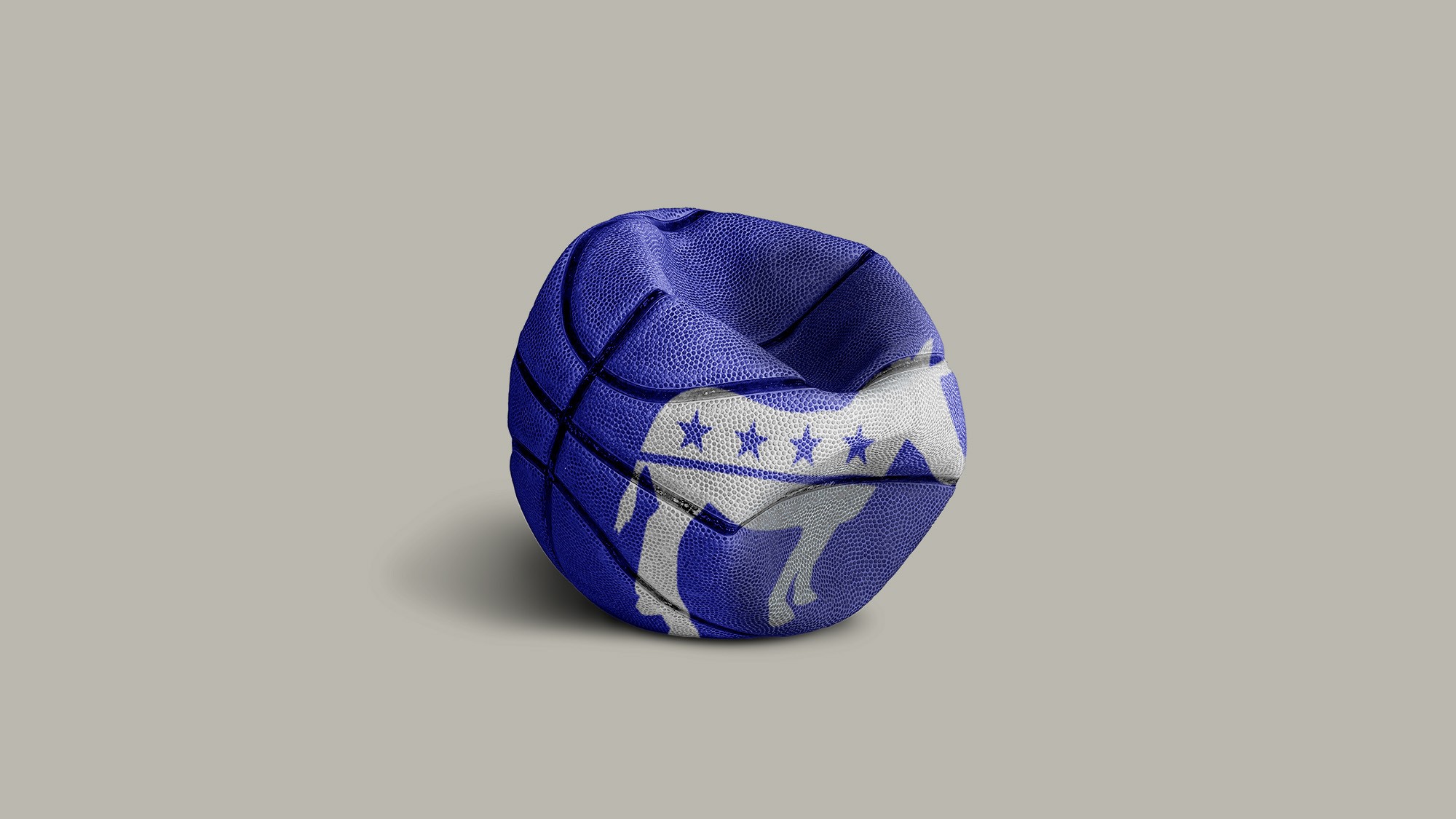
Democrats Must Learn to Talk Sports
For the first time since 1999, the New York Knicks will appear in the NBA Finals. It’s a momentous occasion for a city and fan base starved for basketball success. President Trump, never missing an opportunity to insert himself into the discourse, has suggested that he’ll attend a game in Madison Square Garden. When asked about the president’s ambitions to attend a game, New York Governor Kathy Hochul challenged him to name the starting lineup of the “1993 championship team.”But the Knicks didn’t win the championship in 1993. They did make the finals in 1994, but lost to the Houston Rockets. The most recent Knicks championship was, in fact, in 1973. Hochul’s press office has since said on X that Hochul slipped up on purpose: She “was baiting Trump into pretending that team won the finals. A classic 4D chess move.” The likelier explanation is that the Democratic governor, presented with the opportunity to score a couple of easy political points, had missed the layup.That would certainly fit the pattern. Democratic politicians are decades into an authenticity problem. Fairly or not, voters—especially men—tend to perceive Democrats as unrelatable, scripted, and disconnected from the population they seek to govern. The solution seemingly favored by Democratic consultants is for anyone with presidential aspirations to appear on as many manosphere podcasts as possible or play footsie with edgy streamers. But appearing on this or that platform is not really what matters. Rather, the game is to get as much attention as possible, as frequently as possible, while seeming as relatable as possible. A cheat code exists to hit all three objectives: sports talk.The contemporary sports-media landscape is designed to take ruthless advantage of the fact that nothing generates attention more reliably than controversy. Personalities such as Stephen A. Smith and Skip Bayless have made fortunes because they understand that sparking disagreement equals clicks and attention. Their debates