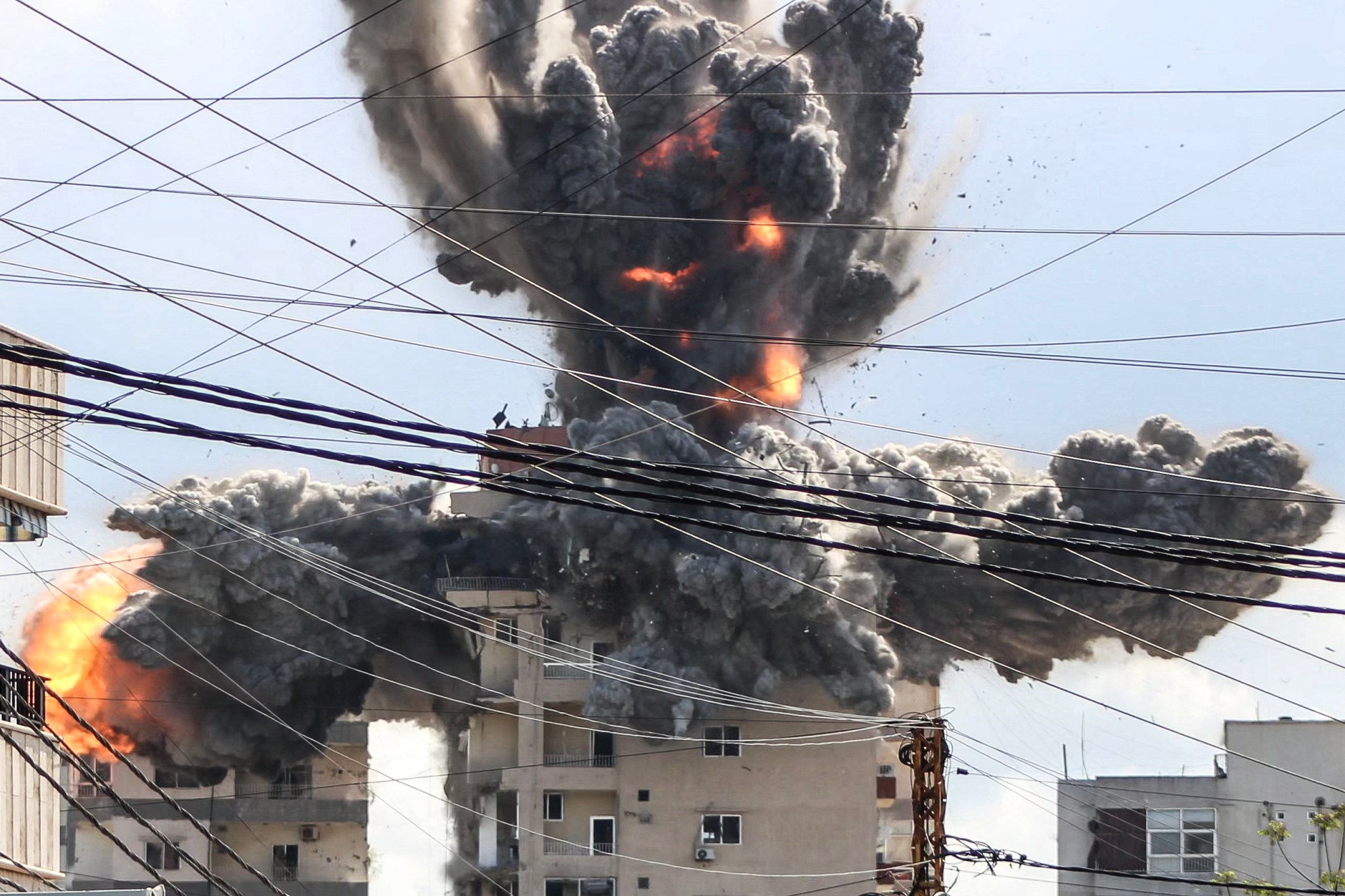
Wall Street is gaining access to new catastrophe models to help predict wars
As Wall Street races to incorporate war into its risk scenarios, the same people modeling natural catastrophes are now adapting their methodology to help investors, banks and insurers predict military conflicts. Since 2008, the number of countries engaged in external conflicts has nearly doubled to just over 100, while the economic impact of violence now stands at almost $22 trillion, according to the Institute for Economics and Peace. That’s equivalent to more than 10% of the world’s gross domestic product. Wars are upending the finance industry’s ability to predict everything from the price of oil to the cost of a mortgage, and Wall Street has had to acknowledge that some long-standing risk models may no longer be fit for purpose. Citigroup Inc. warns against relying on “rear-view mirror” models built on historical data, while Morgan Stanley says it’s time to “rethink” the status quo of geopolitical risks more broadly. “Instead of looking back, insurers and investors increasingly want to know what might happen and where,” Sam Haynes, head of data and analytics at Verisk Maplecroft, a global risk consultancy, said in an interview. “They want a predictive forward-looking view.” Verisk, which is best known for its work on natural catastrophe models for insurers and cat-bonds investors, has just unveiled a model it says would have helped financial professionals predict the Iran war. The firm’s Predictive War Index, released to clients in late May, uses a machine learning algorithm to forecast the likelihood of war occurring in a country over the next 12 months. It was trained on political, economic, and social datasets from 1995-2022 and therefore doesn’t take the current Iran war into account. Even so, back-testing showed that had the model been ready in early January, it would have shown a 66% probability of war breaking out in Iran 1 1/2 months later, according to Verisk. The firm’s other new model, the Geopolitical Relations Index, tracks the changing level of ten