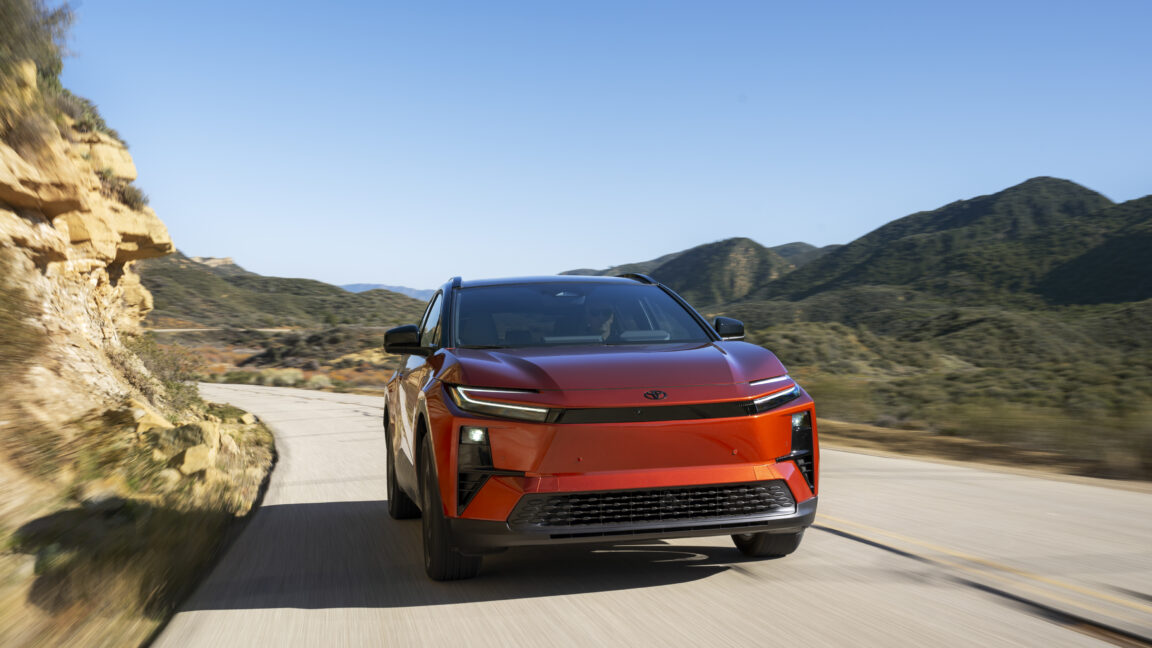
A curious crossover: The Toyota C-HR review
After a slower start than its major rivals, Toyota has been making up for it with a flurry of new electric vehicles for the North American market. Its first attempt, the b Z4x, was an also-ran, but a new battery pack, more efficient motors, and a NACS charging port transformed the face-lifted b Z into an EV I happily recommend. Then, earlier this year, it followed up with some b Z-related variants. For those who miss the vibe of a station wagon, there is the b Z Woodland, and an all-electric Highlander is nearing the showroom, too. But today's focus is the C-HR, and I'm still not entirely sure what to make of it. It's the smallest of the bunch, some 6.7 inches (170 mm) shorter than the bZ. But it's still as wide and only a little more than an inch shorter. So if you're put off by the bZ's size, and are looking for something diminutive—and based on reader feedback, there are many of you out there—this small SUV will probably still fail to pass muster. It's not any cheaper than the bZ until you consider that the C-HR is only available with one choice of powertrain: a twin-motor AWD setup with a combined 338 hp (252 kW) powered by a 74.7 kWh battery pack. That same arrangement, with a 223 hp (167 kW), 198 lb-ft (268 Nm) front motor and 118 hp (88 kW), 125 lb-ft (169 Nm) rear unit, costs almost $3,000 more in a bZ than the $37,000 starting price of the C-HR.Read full article Comments