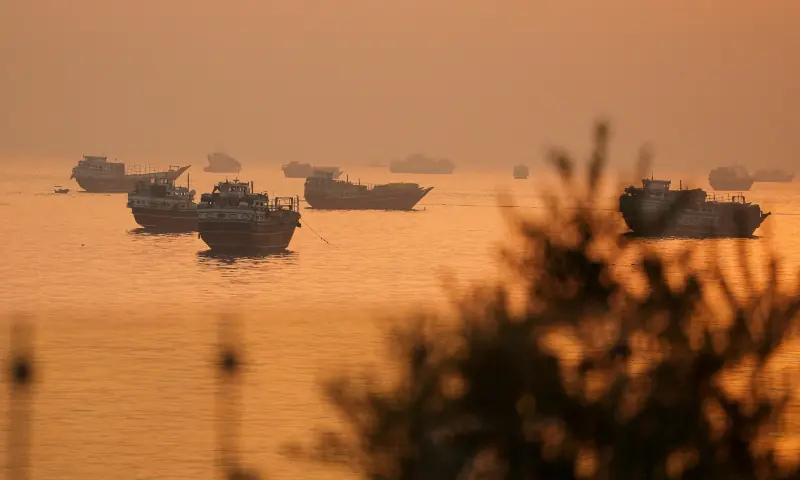
What happens when the Strait of Hormuz reopens?
Why this matters: local context for readers following news across Pakistan and the region.
The vital Strait of Hormuz shipping lane is expected to reopen on Friday after nearly four months, following the signing of a US-Iran agreement to end the Middle East war. AFP examines how the reopening could work and why a return to normal is likely to take time. Are ships ready? Once formal approval is given to reopen, stranded ships could theoretically begin to move through the strait almost immediately. Crews that have been idle for months will most likely have “performed regular onboard drills and maintained the ships’ machinery, technical installations and equipment”, Jakob Larsen, head of security at shipowners’ association Bimco, told AFP. However, some ships may require underwater hull cleaning to remove barnacles and other marine growth accumulated during the shutdown. The strait, through which roughly 20 per cent of the world’s crude oil supply normally transits, was effectively closed by Iran after it came under fire from the United States and Israel. About 500 ships and 20,000 seafarers have been stranded in Gulf waters, according to the International Chamber of Shipping, a maritime industry group. Who can pass? Operators are expected to proceed cautiously and insurers may even require naval escorts, according to Hugo Rousse of maritime tracking group AXSMarine. The first to cross the strait could be “shipowners who operate their own fleet” and those “not listed on a stock exchange”, he told AFP. “Given the elevated earnings still prevalent in the tanker sector, higher war risk insurance is unlikely to be an obstacle,” said Tim Smith, a director at maritime industry analysis firm MSI. Tankers linked to Kuwait, Iraq, the United Arab Emirates and Saudi Arabia are likely to be among the first to resume transits, said Arne Lohmann Rasmussen, an analyst at Global Risk Management. Must mines be cleared first? Iran has designated the central area of the strait as a mine danger zone. Until mines are cleared, “ships can use the coastal traffic zones which are mi