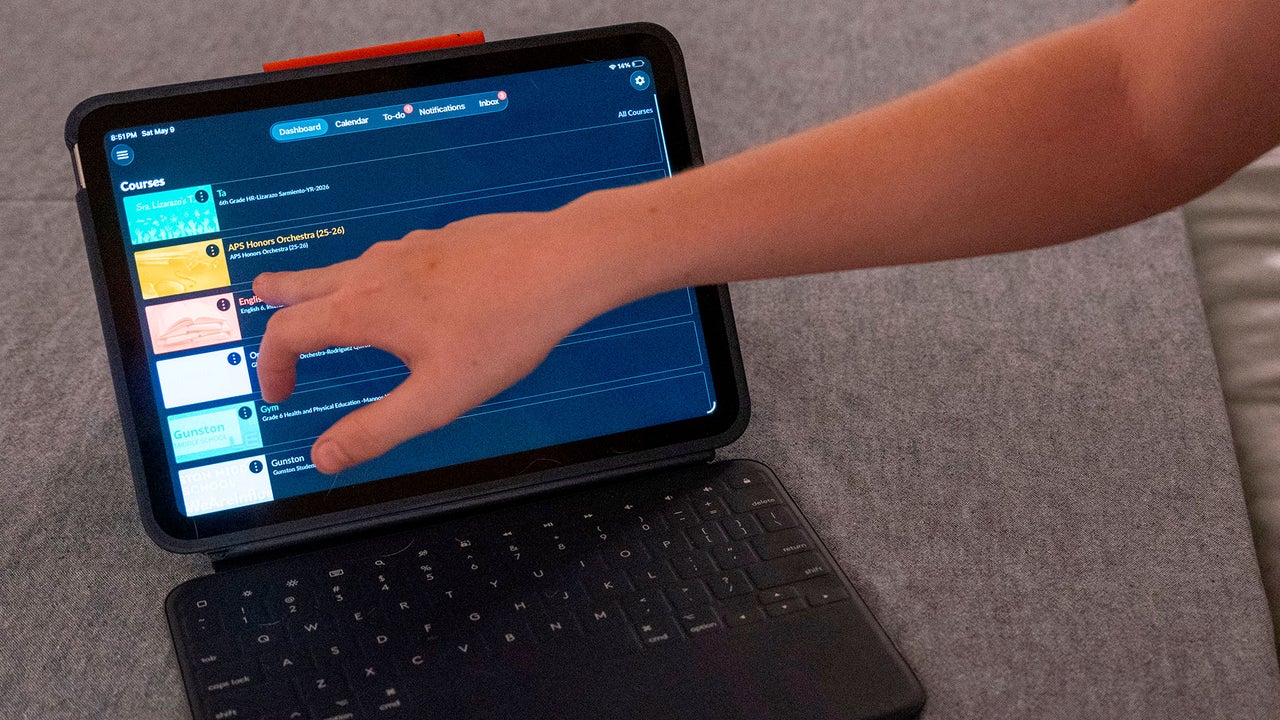
Screens are saturating U.S. classrooms, fueling a backlash on school-issued devices
Just a few years ago, America’s public schools were rushing to get every child a laptop. Los Angeles middle school teacher Anna Soffer remembers it well: “The idea was that technology is the future, so we need to put tech in every child’s hands.”Now, the conversation has flipped. After pouring billions of dollars into laptops, tablets and learning apps, many schools are facing a digital reckoning. Classrooms have become saturated with screens, and a growing number of parents, teachers and school districts are saying it is time to scale back.“The Chromebook is just a world of distraction,” says Soffer, who teaches 6th grade English and history. She favors pen-and-paper assignments but is required to use laptops and online apps for certain activities. “Every day, I’m battling, ‘Who would you rather listen to, Ms. Soffer or Minecraft?'”The Los Angeles Unified School District, where Soffer teaches, recently became the first major school district to say it will stop giving devices to its youngest students. It is part of a new screen-time policy taking effect in the fall across the country’s second-largest school system.A sweeping resolution passed last month by the Los Angeles school board requires the district to eliminate devices until second grade; set daily and weekly screen limits for all higher grades; block YouTube on school devices; and ban the use of devices at lunch and recess in elementary and middle school. The district will also audit its education technology contracts, which the teachers union says amount to $1.6 billion.The Los Angeles crackdown is adding momentum to calls for reform emerging around the country. In many cases, parents lobbied a few years ago for school cellphone bans, which have now become the norm. Realizing phones weren’t the only classroom distraction, they pivoted to a new target: school-issued devices.The campaign for change is becoming a public policy issue. At l