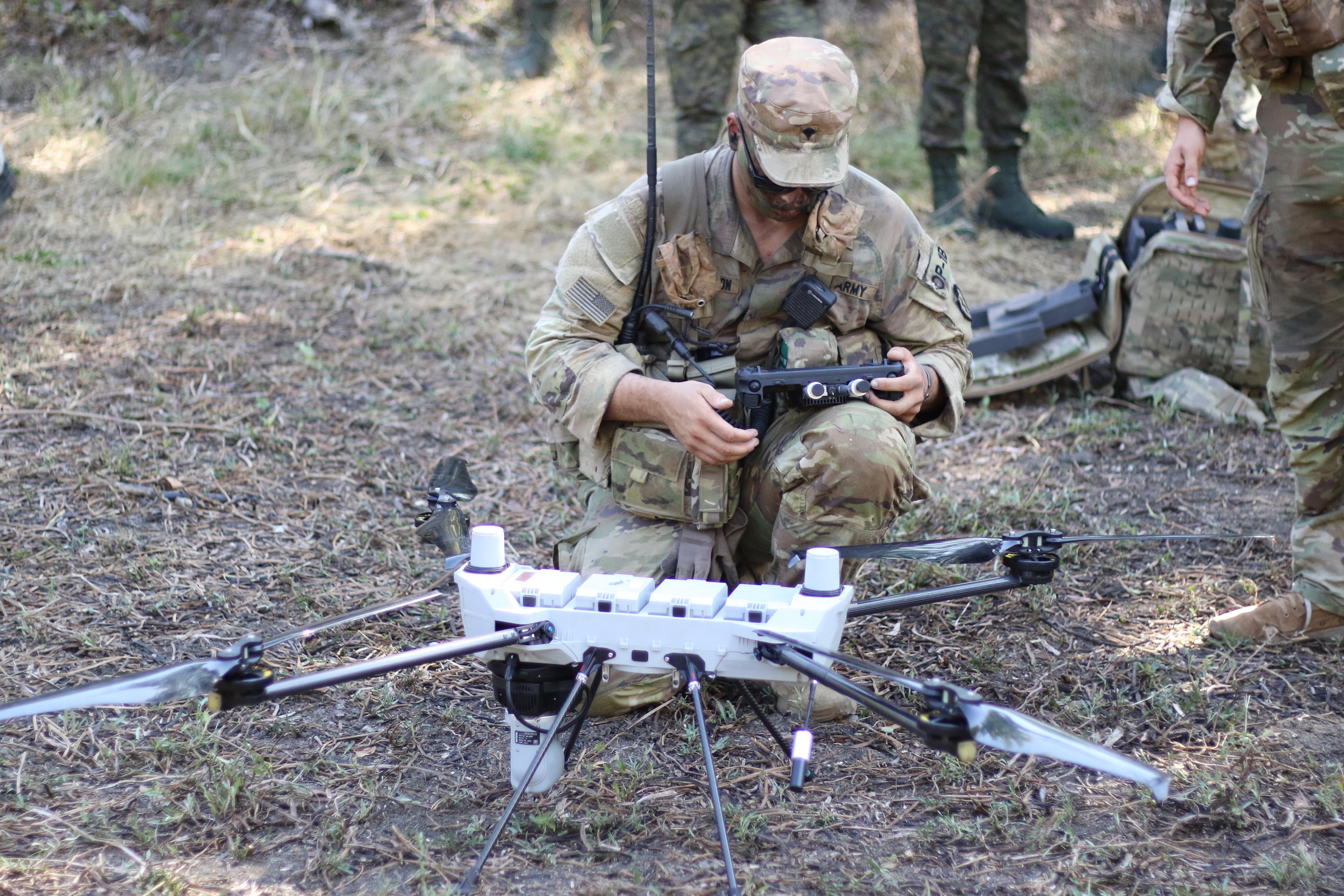
US Army tests fresh drones, 3D printers at ‘Balikatan’ drill in the Philippines
Why this matters: an international story with cross-border implications worth tracking.
FORT MAGSAYAY, Philippines — As an American reconnaissance drone hummed overhead, soldiers of the U.S. and Philippine armies stormed forward through the jungle terrain, laying down suppressive fire on enemy positions.Finishing off the foe’s stubborn resistance, a Kestrel first-person-view (FPV) drone carrying an explosive payload slammed into the enemy bunker. Afterwards, sweating profusely in the 97ºF heat, the Americans and Filipinos secured the area.This jungle patrol in the thickly vegetated training area of Fort Magsaysay, located 75 miles north of Manila, was just one of many events taking place across the Philippines in Exercise Balikatan 2026.More than 17,000 troops from seven countries are participating in this multilateral exercise being held from Apr. 20 to May 8.The major U.S. Army contingent in Balikatan is the 3rd Mobile Brigade of the Hawaii-based 25th Infantry Division. The soldiers conducting this realistic drill were from Alpha Company, 2nd Battalion, 27th Infantry Regiment, alongside troops from the Philippine Army’s 1st Brigade Combat Team.This engagement integrating new tech underscored how the “Tropic Lightning” division is transforming and adopting new technologies as one of the Army’s two original Transformation in Contact divisions. It is required to do so by the changing nature of modern warfare.Col. Adisa King, the 3rd Mobile Brigade commander, told Defense News that technology does help: “It reduces risk a little bit, but it allows you to see farther.”“The challenge is how do you mass that? What if I had ten of those [drones]?” King asked. “They go up to disrupt or they go up to help me see, and we push them all the way down to lower levels. But sustainment is the issue.”Indeed, the technology can be fickle, King pointed out: Drones can overheat in the tropical climate, soldiers have to lug extra equipment around, jungles are often too thick for FPVs, and recharging batteries is another challenge.Yet King listed three things his brigade g