Q&A: How the UK government aims to ‘break link between gas and electricity prices’
Why this matters: environmental and climate reporting with long-term consequences.
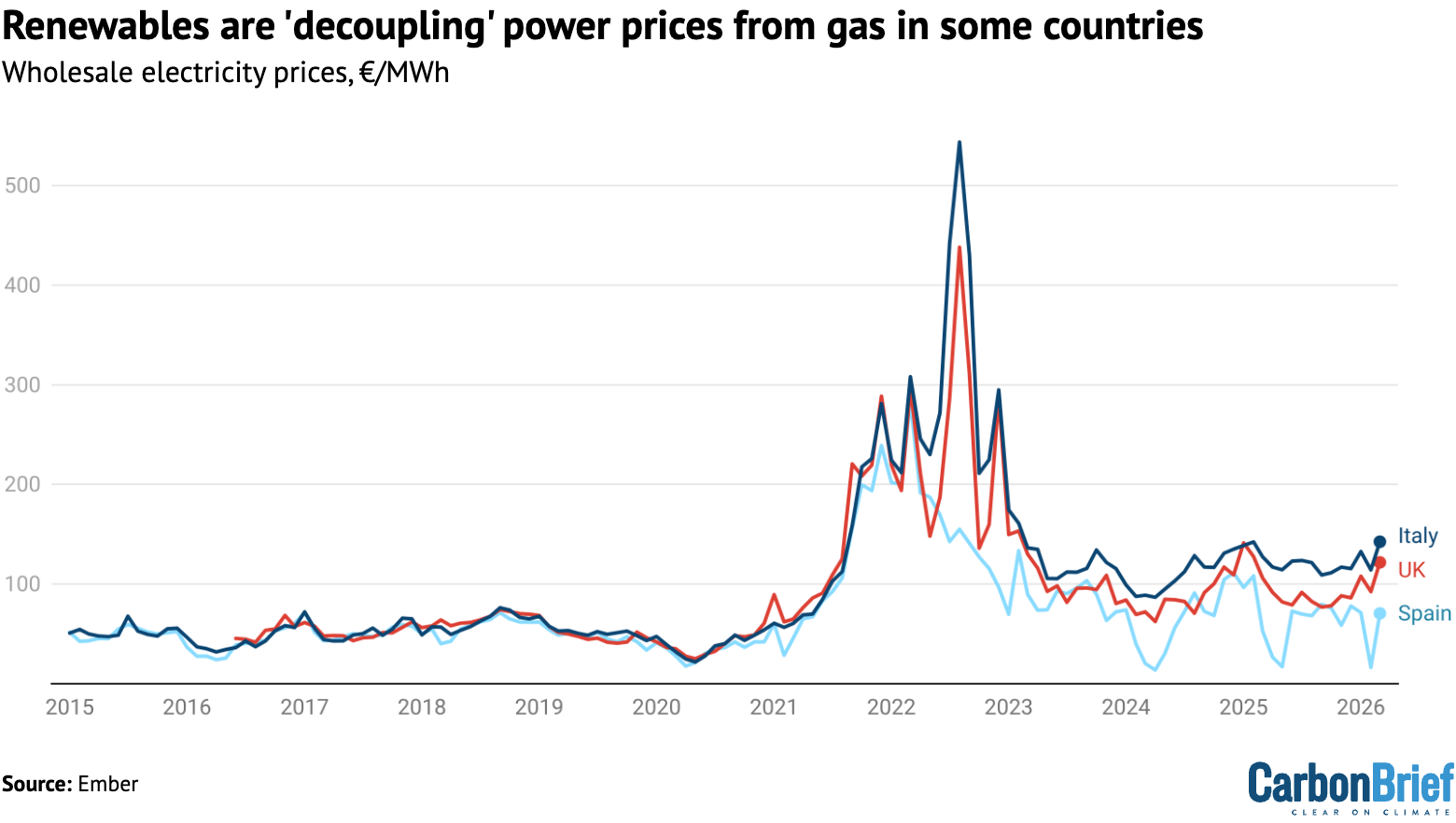
The UK government has announced a series of measures to “double down on clean power” in response to the energy crisis sparked by the Iran war. The conflict has caused a spike in fossil-fuel prices – and the high cost of gas is already causing electricity prices to increase, particularly in countries such as the UK. In response, alongside plans to speed the expansion of renewables and electric vehicles, the UK government says it will “move…to break [the] link between gas and electricity prices”. Ahead of the announcement, there had been speculation that this could mean a radical change to the way the UK electricity market operates, such as moving gas plants into a strategic reserve. However, the government is taking a more measured approach with two steps that will weaken – but not completely sever – the link between gas and electricity prices. From 1 July 2026, the government will increase the “electricity generator levy”, a windfall tax on older renewable energy and nuclear plants, using part of the revenue to limit energy bills. The government will encourage older renewable projects to sign fixed-price contracts, which it says will “help protect families and businesses from higher bills when gas prices spike”. There has been a cautious response to the plans, with one researcher telling Carbon Brief that it is a “big step in the right direction in policy terms”, but that the impact might be “relatively modest”. Another says that, while the headlines around the government plans “suggest a decisive shift” in terms of “breaking the link” between gas and power, “the reality is more incremental”. Why are electricity prices linked to gas? What is the government proposing? What is not being proposed? What will the impact be? Why are electricity prices linked to gas? The price of electricity is usually set by the price of gas-fired power plants in the UK, Italy and many other European markets. This is due to the “marginal pricing” system used in most electricity markets gl