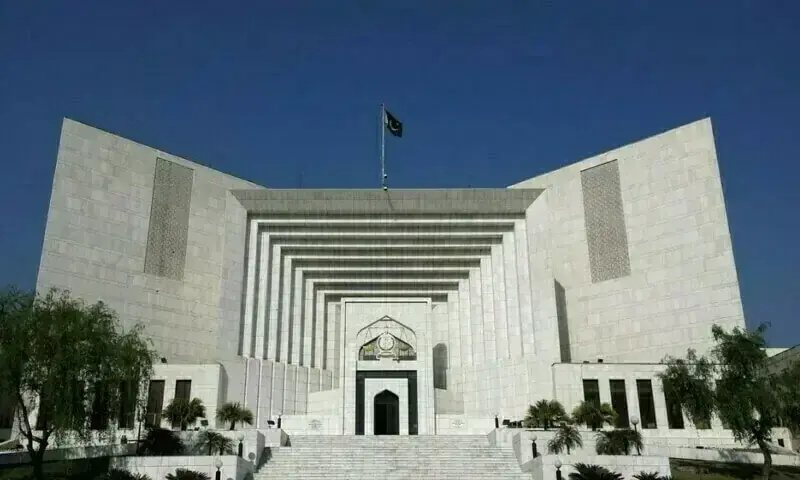
SC overturns its own conviction of ex-minister Anwar Saifullah in graft case
Why this matters: local context for readers following news across Pakistan and the region.
ISLAMABAD: The Supreme Court on Monday overturned its own 2016 judgement convicting former federal minister for petroleum and natural resources Anwar Saifullah in a corruption reference, observing that an appellate court should not substitute its own view merely because another conclusion on the same evidence was possible. “Where a trial court has convicted an accused, but an appellate court later reassesses the entire record and acquits him, the presumption of innocence is not only reinstated, but reinforced with greater strength than in an ordinary acquittal by a trial court at first instance,” emphasised Justice Salahuddin Panhwar in a verdict he authored. Justice Panhwar was a member of a three-judge SC bench headed by Justice Muhammad Hashim Khan Kakar. The bench heard a review petition filed by Mr Saifullah against the Jan 1, 2016 judgement upholding his conviction through a majority decision of the SC. Saifullah was originally convicted in 2000 by an accountability court under the National Accountability Ordinance (NAO) 1999 for allegedly misusing his authority to facilitate and approve temporary appointments at the Oil and Gas Development Com-pany (OGDCL) by relaxing applicable rules. Rules appellate court’s acquittal carries greater strength The Lahore High Court acquitted him in 2002 after a full reappraisal of the evidence. However, in 2016, a majority SC bench reversed the LHC’s decision and restored the conviction, sentencing him to one year’s imprisonment and a fine. Saifullah later filed a review petition under Article 188 of the Constitution before the SC, challenging the 2016 judgement. “It is a well-settled principle that the power of the Supreme Court to review a judgement in a criminal case is limited, though not toothless,” observed Justice Panhwar. “To attract correction in review, the error must not only be manifest, it must also have a material bearing upon the ultimate outcome of the case,” the verdict added. “Unless there is [a] clear misre