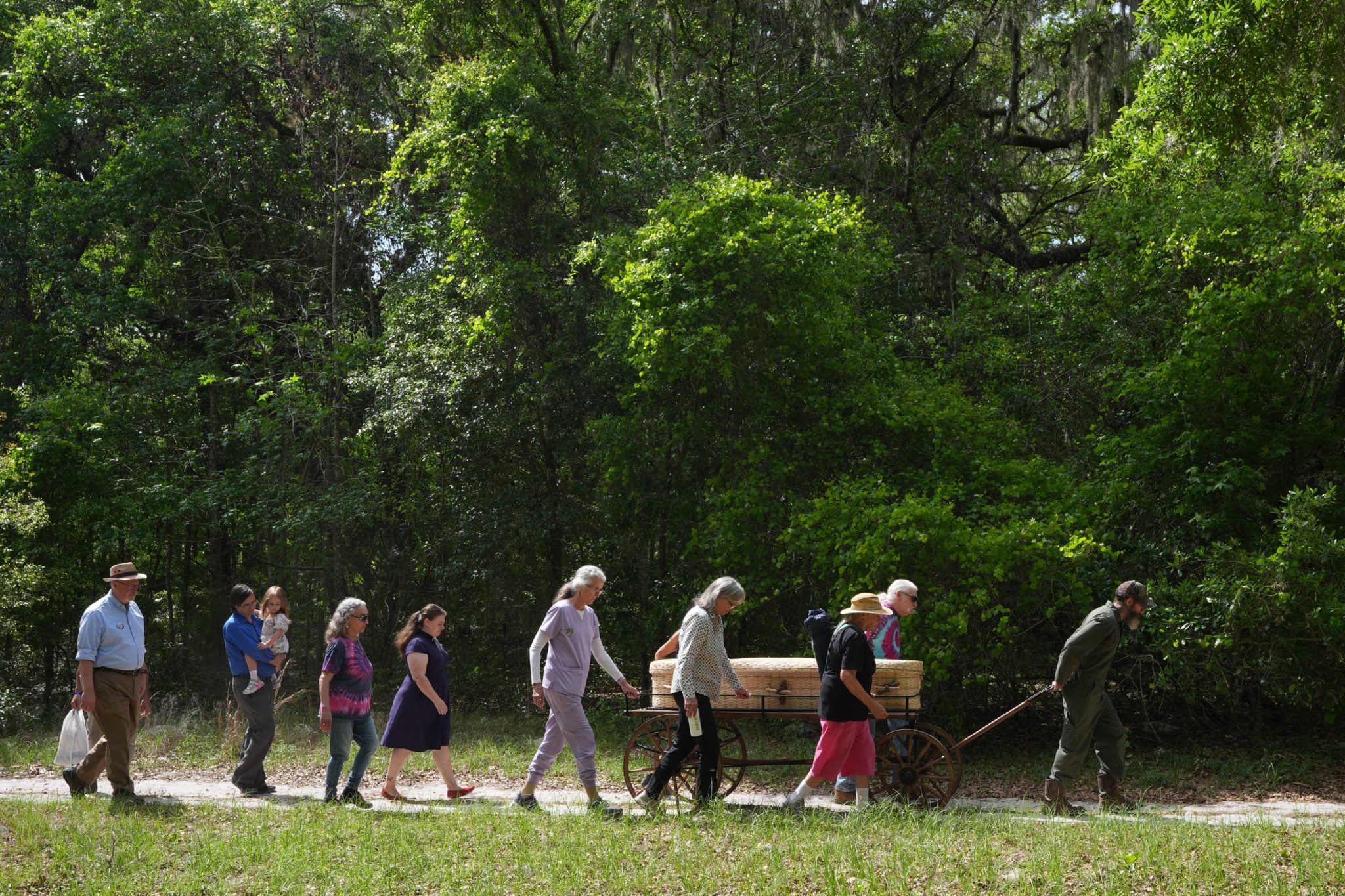
Meet ‘Green Death’: the burial practices for activists worried about climate change and carbon footprint
After Moira Cathleen Delaney was diagnosed with an aggressive form of intestinal cancer, her thoughts eventually turned to her eventual death and what she wanted done with her body. Delaney’s love of gardening, birds and the forest inspired her decision to be transformed into soil — literally — through a process known as natural organic reduction. When she died in October at age 57, her family sprinkled some of her remains under her favorite backyard tree and gave some remains to her closest friends and relatives in glass jars to keep or plant things with. “For her, it was a very comforting thought to be able to return to the earth in that kind of way, and to have her final physical act contributing to the life process,” said Marcos Moliné, her son. Interest in body disposal options that are better for the planet has risen in recent years, according to research commissioned by the National Funeral Directors Association. Researchers and industry experts said people worry about how conventional death practices such as embalming, fire cremation and casket and vault burials affect the climate, environment and people’s health. Others simply want their final resting place to be in their cherished outdoors. “How we die does lead to a substantial impact on not only the people around us and our communities, but the earth itself,” said Mark Shelvock, a psychotherapist and lecturer at Western University in Canada, who co-wrote a paper on green death practices. What’s legal and available varies by country, state and province. Here are some common options. Conventional body disposal practices Embalming, the process of slowing down a body’s decomposition, involves known carcinogens like formaldehyde that get injected into veins to preserve the body for viewing and services. The Environmental Protection Agency determined the gas poses an “unreasonable risk” to public health, with people who work in settings where it’s used at greates