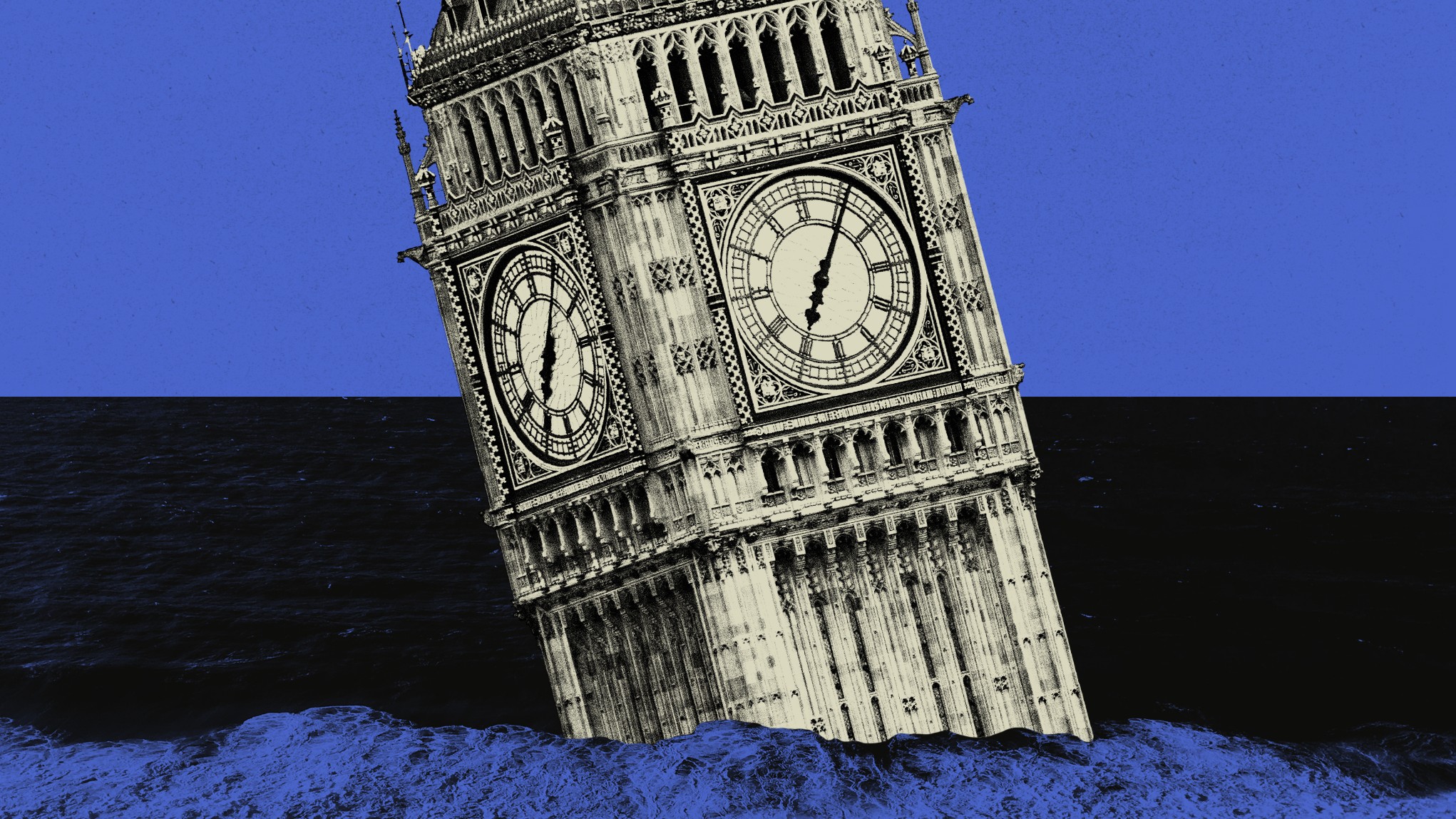
How Britain Became as Poor as Mississippi
Illustrations by Joan Wong Who broke Britain? Someone—or something—must have. The past 18 years, enough time for a whole lost generation to be born and brought up, have yielded nothing but stagnation and mass disillusionment. In 2007, before the global financial crisis, Britain was at its postimperial zenith. Median household income had just surpassed that of Germany. A pound was worth more than $2, and London was arguably displacing New York as the center of international banking.But since then, Britain has been left behind. The country’s output per person is now only just above that of Mississippi, America’s poorest state—and that slight lead is only achieved thanks to London. Outside the capital, in places where tourists do not visit, living standards fall well below Mississippi’s. Brits visiting the United States find that their currency has depreciated to the point where the pound today buys only about $1.35. British wages have lagged well behind those in the U.S., and also those in Germany, France, the Netherlands, Denmark; once you account for inflation, they’ve barely grown at all. Within the next decade, the typical Pole will have a standard of living equal to the typical Brit, if current trends continue.[Douglas Carswell: Is Mississippi really as poor as Britain?]One generation ago, Britain was a major global power; today, it is a middling one, gripped by sclerosis. Taxation is at the highest level since World War II, yet public services have deteriorated. The National Health Service, the celebrated pillar of the British cradle-to-grave welfare state, has a backlog of 6 million patients—almost a tenth of the population—waiting for treatment. The health service now has to spend more money settling maternity-malpractice claims than it does on actually providing maternity care. Many Brits can neither obtain an appointment with a publicly funded dentist nor afford a private one; in a 2023 survey, one in 10 reported doing DIY dental work, in extreme cases extrac