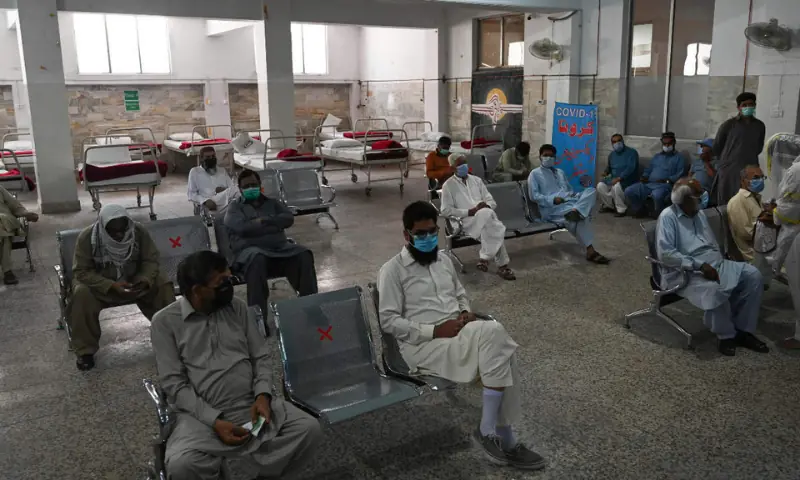
Rawalpindi’s healthcare crisis deepens amid population surge
Why this matters: local context for readers following news across Pakistan and the region.
A quiet crisis is unfolding in the heart of Rawalpindi. It rarely makes headlines, yet it affects the lives of thousands every day. It is not about roads, housing schemes or real estate development. It is about healthcare — and who can afford it. Step into any of the public hospitals, and you’ll see queues of the patients that begin at dawn and stretch into the evening. You will find some cradling infants, others leaning on relatives, wait patiently for their turn that may never come as these facilities can’t cater to the growing needs of the expanding city and it’s increasing population. “Our OPD remains crowded everyday and we fail to keep count of the number of patients we encounter on a daily basis. There simply aren’t enough doctors or beds,” says a junior doctor at Benazir Bhutto Hospital, requesting anonymity. “Most patients need time, tests, and follow-ups for complete recovery but we don’t have resources to deal with the current number of patients,” he added. For those who don’t want to bear the wait, there’s always the private sector but it comes at a punishing cost due to lack of regulations. Its alarming that in city’s private hospitals and clinics, there are no standard consultation fees. A visit to a general physician may cost Rs1,500 at one facility and Rs3,000 at another. A specialist can charge anywhere between Rs4,000 to Rs7,000 sometimes more, and often without a receipt. “There is no regulation. Everyone charges what they want and it varies in different parts of the city,” says Mohammad Azeem, who works in a private company, and has recently borrowed money to get his mother treated for a kidney infection. “It’s not just the fee, it’s the tests, the medicines, the follow-ups. Health has become a luxury”, he added. The people with lower-income, including domestic workers, daily wage earners and small shopkeepers, often avoid seeking medical help unless absolutely necessary. Even the middle class is finding it difficult. “We first try home remedies