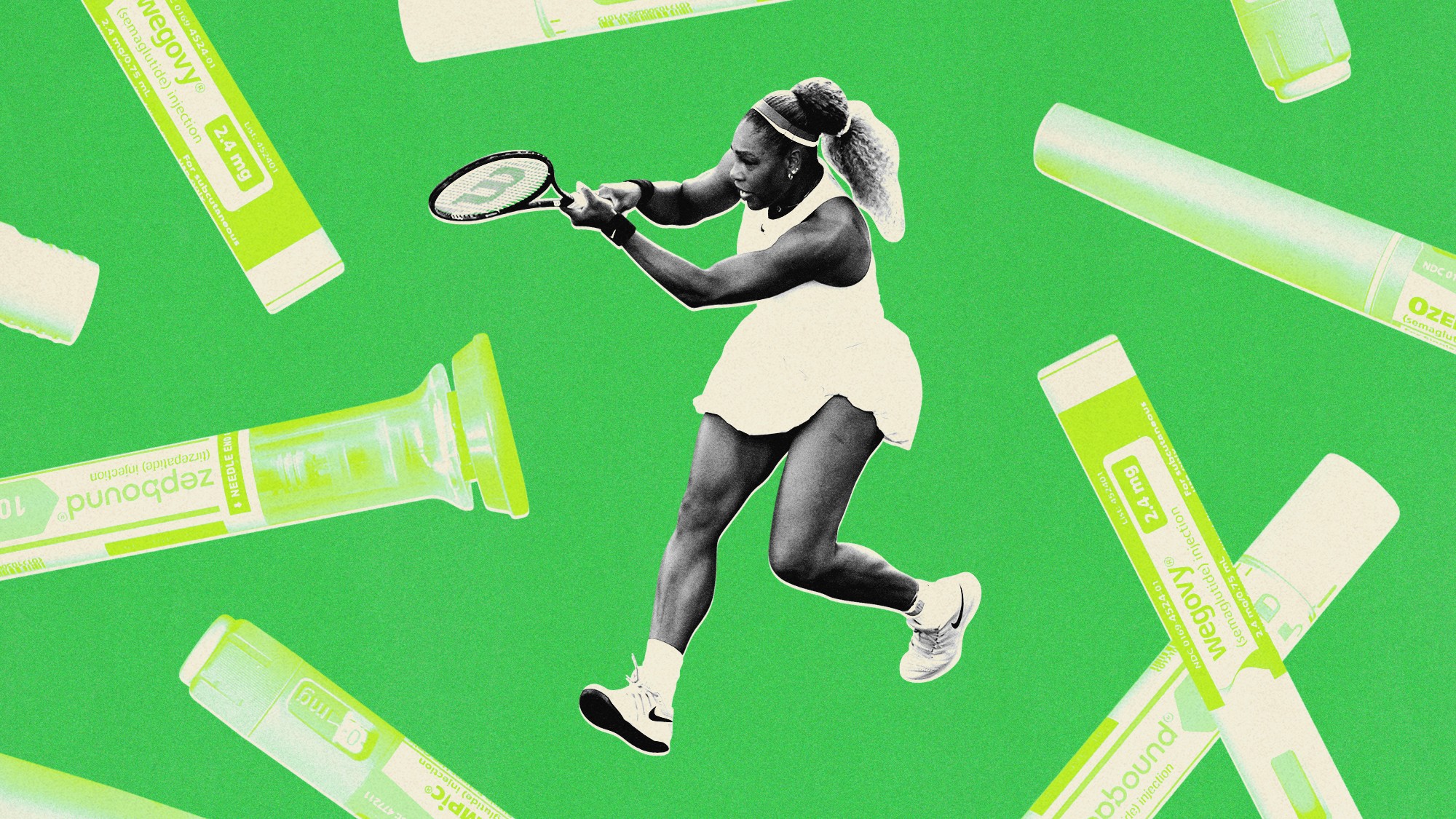
Are GLP-1s Performance-Enhancing Drugs?
Before Serena Williams picked up her racket at London’s Andy Murray Arena last week, two questions hung over her return to tennis.First: How would she do? She answered that, in her first competition in nearly four years, by winning. The 44-year-old and her doubles partner, the 19-year-old Victoria Mboko, ended up besting the third seed in their opening match of the Queen’s Club tournament. Their victory was sealed by a 116-mile-an-hour serve from Williams that her opponents couldn’t return.The second will take longer to answer: Did a GLP-1 weight-loss drug enhance her performance?Williams is a paid spokesperson for Ro, a telehealth company that specializes in such medications. In ads, she says that she lost 34 pounds with the help of GLP-1s. It’s unclear whether Williams is still on her drug of choice, tirzepatide (her publicist declined to comment), which has helped her lose stubborn baby weight and manage her cholesterol. Although there’s no indication that she took it to gain a competitive advantage, Williams has also said that the medication improved her training and her game. The drug “helped me enhance everything that I was already doing—eating healthy and working out, whether it was as a professional athlete at the top level of tennis or just going to the gym every day,” she told People magazine in August.With her comeback, Williams is the first active elite athlete to publicize her use of GLP-1s. But the world of sports is full of whispers that she is not the only one. The more athletes who follow Williams’s lead, the more urgent the question of whether GLP-1s should be treated as performance-enhancing drugs will become.The World Anti-Doping Agency, which sets rules adopted by most international sporting leagues, has said that it is keeping a close eye on whether GLP-1s are being abused; for now, athletes are free to take them. (A Ro spokesperson told me that “any patient who receives a GLP-1 prescription through Ro has been determined to be clinically eligi