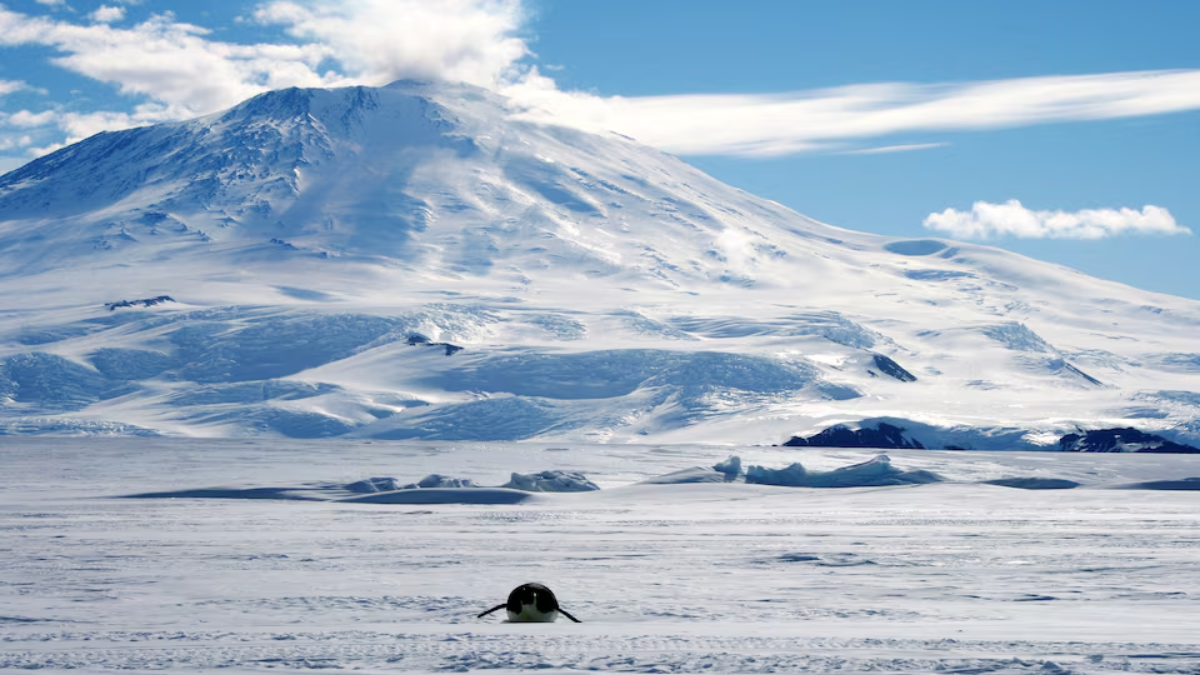
Here’s why the South Pole froze over before the North Pole
Key takeaways
- By contrast, the planet’s northernmost realm, the Arctic region, did not freeze over for another 25 million years.
- This polar asymmetry long has puzzled scientists, but researchers now may have solved the mystery.
- They assessed the Antarctic region’s topography and used computational models to reconstruct how the surface evolved over many millions of years.
Why this matters: local context for readers following news across Pakistan and the region.
Add ARY News on Google AAResize While it once was temperate and lush, Earth’s southernmost continent Antarctica, froze over about 34 million years ago, covered by an ice sheet that today is up to around 3 miles (5 km) thick. By contrast, the planet’s northernmost realm, the Arctic region, did not freeze over for another 25 million years.
This polar asymmetry long has puzzled scientists, but researchers now may have solved the mystery.
They assessed the Antarctic region’s topography and used computational models to reconstruct how the surface evolved over many millions of years. They found that a powerful geological process drove the renewed uplift of a mountain range in eastern Antarctica that eventually passed an elevation threshold crucial for letting mountain glaciers form and expand and for permanent ice to take hold.