NASA’s Roman Poised to Transform Hunt for Elusive Neutron Stars
Why this matters: new research or scientific developments with potential real-world impact.
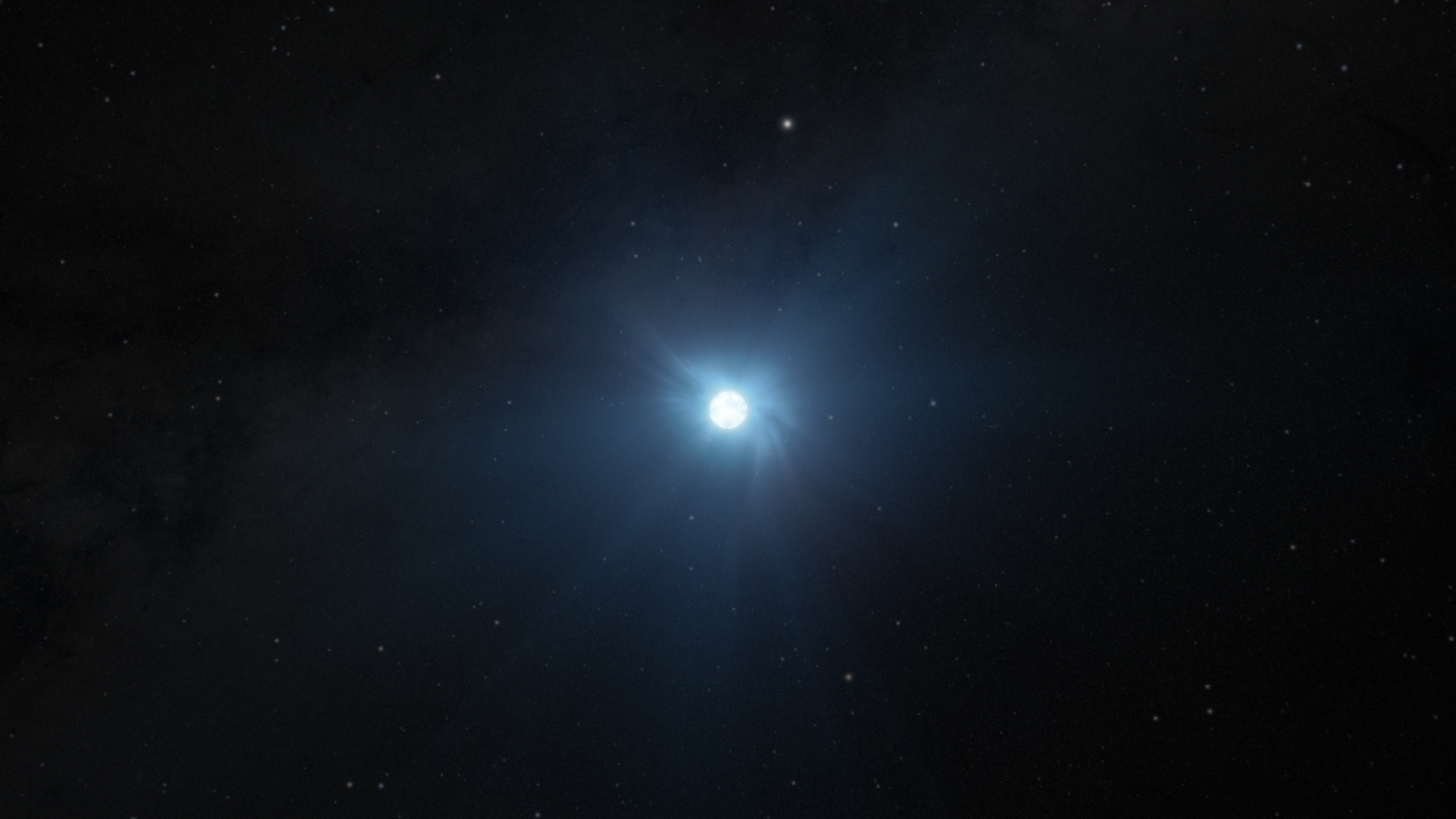
This artist’s concept shows an isolated neutron star as an ultra-dense stellar remnant, packing more mass than the Sun into a city-sized sphere and radiating energy as it slowly cools in the depths of space. NASA’s upcoming Nancy Grace Roman Space Telescope will search for, and could measure the mass of, isolated neutron stars using astrometric microlensing.NASA, STSc I, Ralf Crawford (STSc I) Astronomers have long known that neutron stars, the crushed cores left behind after massive stars explode, should be scattered throughout the Milky Way galaxy. However, most of them are effectively invisible. A new study published in Astronomy and Astrophysics suggests NASA’s upcoming Nancy Grace Roman Space Telescope could spot them anyway. Using detailed simulations of the Milky Way and Roman’s future observations, researchers showed the flagship observatory may be able to identify and characterize dozens of isolated neutron stars through a subtle effect called gravitational microlensing. “Most neutron stars are relatively dim and on their own,” said Zofia Kaczmarek of Heidelberg University in Germany, who led the study. “They are incredibly hard to spot without some sort of help.” Finding what’s invisible Neutron stars pack more mass than the Sun into a sphere about the size of a city. Studying them helps us understand how stars live, die, and spread heavy elements throughout the universe. They also provide a chance to study what happens under the most extreme conditions (pressures and densities) imaginable. Yet, unless they are pulsars that beam in radio wavelengths or glow in X-rays, they can remain hidden from even the most powerful telescopes. Roman can search for them in a different way. When a massive object like a neutron star moves in front of a distant background star, its intense gravity warps spacetime and deflects the background star’s light. This microlensing effect briefly makes the background star brighter and appear offset from its true position in the sky. Wh