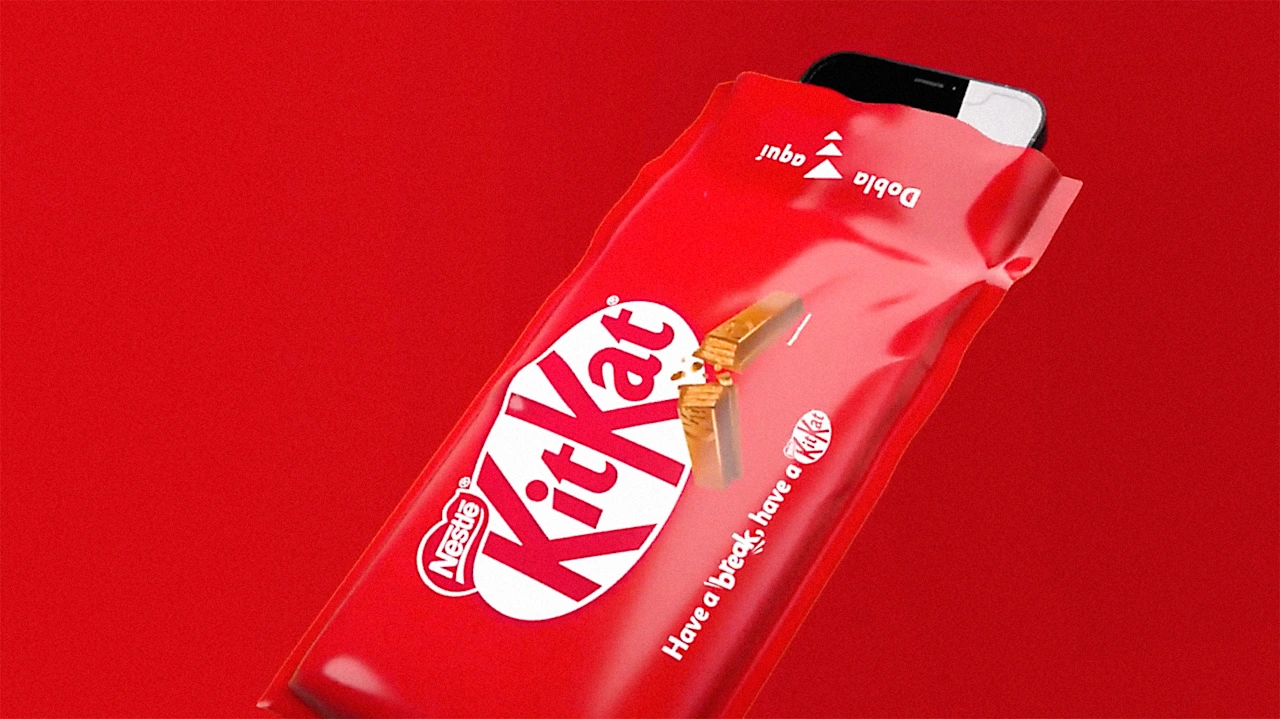
KitKat’s newest product is . . . a Faraday cage?
Kit Kat’s newest invention isn’t a chunky bar, or an F1 car-shaped chocolate, or even a branded ice cream. It’s a Kit Kat wrapper that blocks your cell phone signal. The product is called “Break Mode,” and it was produced via a collaboration between Kit Kat Panama and the creative agency Ogilvy Colombia. It looks like an oversized Kit Kat wrapper, but it’s actually a Faraday cage, or a conductive enclosure designed to block electromagnetic fields. While Faraday cages are most commonly used in medical labs, data security applications, and to protect electrical equipment, KitKat’s spin on the tech turns it into a pouch that renders your cellphone unusable. KitKat and Ogilvy are positioning this invention as an IRL manifestation of KitKat’s iconic “Take a Break” slogan. One video describing the campaign posted to Ogilvy’s Instagram reads, “In a world that never disconnects, how can a brand’s promise of a ‘break’ become a reality? You reinvent the packaging.” Gastón Potasz, chief creative officer of Ogilvy Andina, says that the packaging’s commercial viability is “still under evaluation.” Lofty aspirations aside, what this campaign really shows is that brands have identified the growing desire for digital disconnection as a marketing opportunity—one that, paradoxically, they’re probably hoping you’ll come across while doomscrolling. [Photo: Kit Kat Panama] Why digital detoxing has become a brand opportunity Over the past few years, reliance on cellphones and addiction to social media has led consumers to seek out alternatives, like dumbphones or phone bricks. This “appstinence movement” spawned a subcategory of more creative solutions for tech addiction, most of which were designed by individual creators: see Logan Ivey’s six-pound phone case, Hank Green’s sentient bean app, and Rhys Kentish’s app that makes you literally touch grass before you can scroll on TikTok. Given the speed at which marketers are expected to catch on to digitally-driven