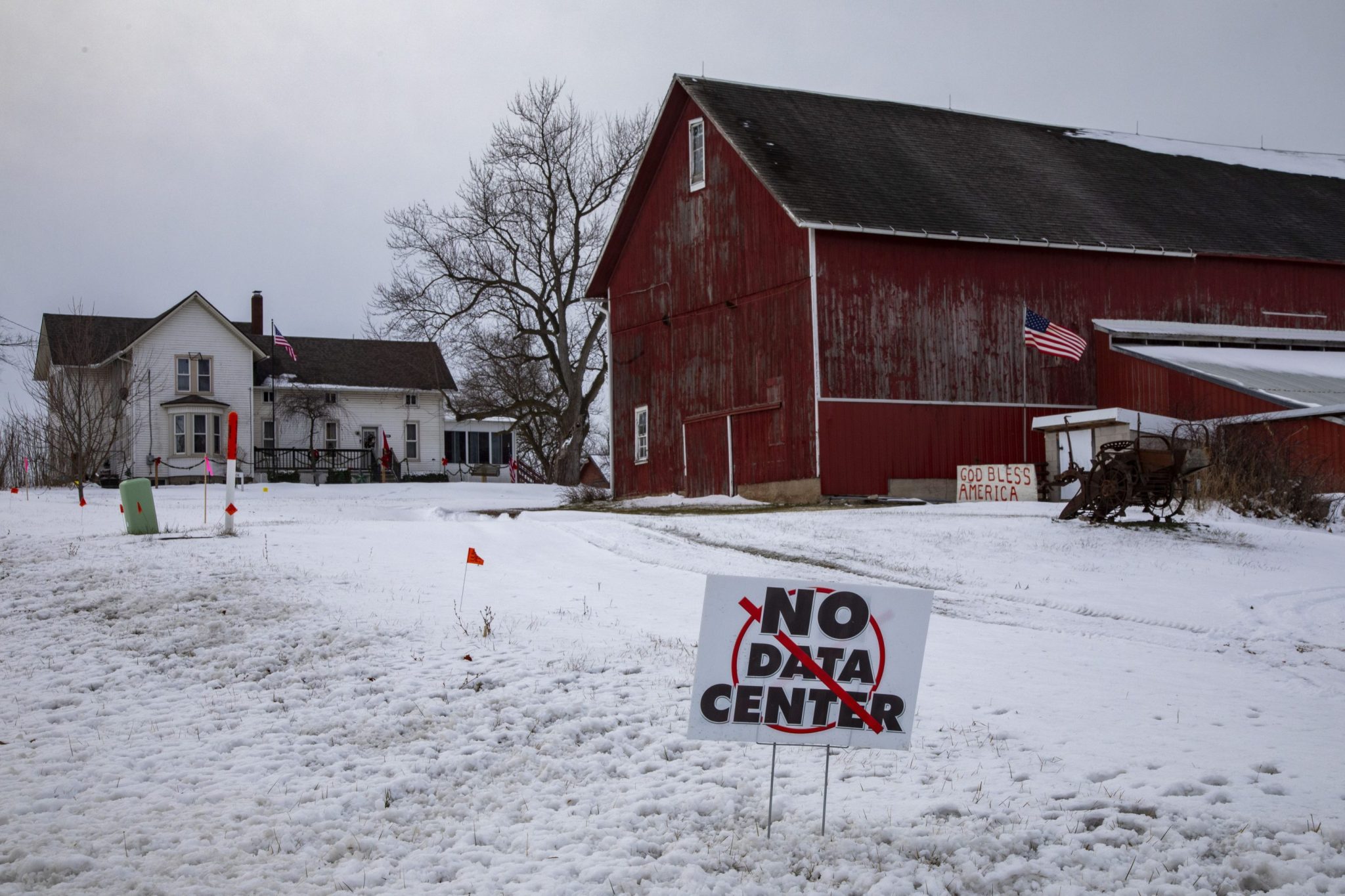
A Michigan farm town voted down plans for a giant OpenAI-Oracle data center. Weeks later, construction began
In Saline Township, Michigan, as in most municipalities, homeowners who want to build a new house know what a complicated and lengthy process it can be: Navigating permit requirements, zoning changes, or variance requests for even a small construction project can take weeks or months. An error in the paperwork, a challenge from a neighbor, or a resistant local official can slow things even further, or kill a project entirely. So it surprised many in this agricultural community of red barns and dirt roads that an enormous AI data center—at 21 million square feet, the largest construction project ever undertaken in the state and one almost universally opposed by local residents—seemed to race through the process from application in late summer to groundbreaking in November. Even more surprising: The $16 billion data center for OpenAI and Oracle’s Stargate AI infrastructure initiative, which will fundamentally reshape the area with its construction, traffic, electricity demand, and environmental impact, was flat-out rejected by both the town’s board and its planning commission in September. But those votes turned out to be only minor bumps on the project’s path: The developer quickly sued, the town settled, and the construction vehicles rolled in. The story of how the mega AI data campus became an unstoppable inevitability—over the vocal objection of residents who picketed the vote and posted “no data center” signs outside their homes—reveals a broader dynamic of the nationwide AI data center boom: Once projects of this scale are underway, local governments often have limited leverage to block them. They are constrained by zoning laws, financial risk, and the realities of negotiating with developers backed by deep-pocketed AI companies, with formidable legal teams and plenty of political clout. These pressures are only intensifying as the AI boom moves from software into physical infrastructure, and demand for computing capacity grows exponentially. The Trump adm