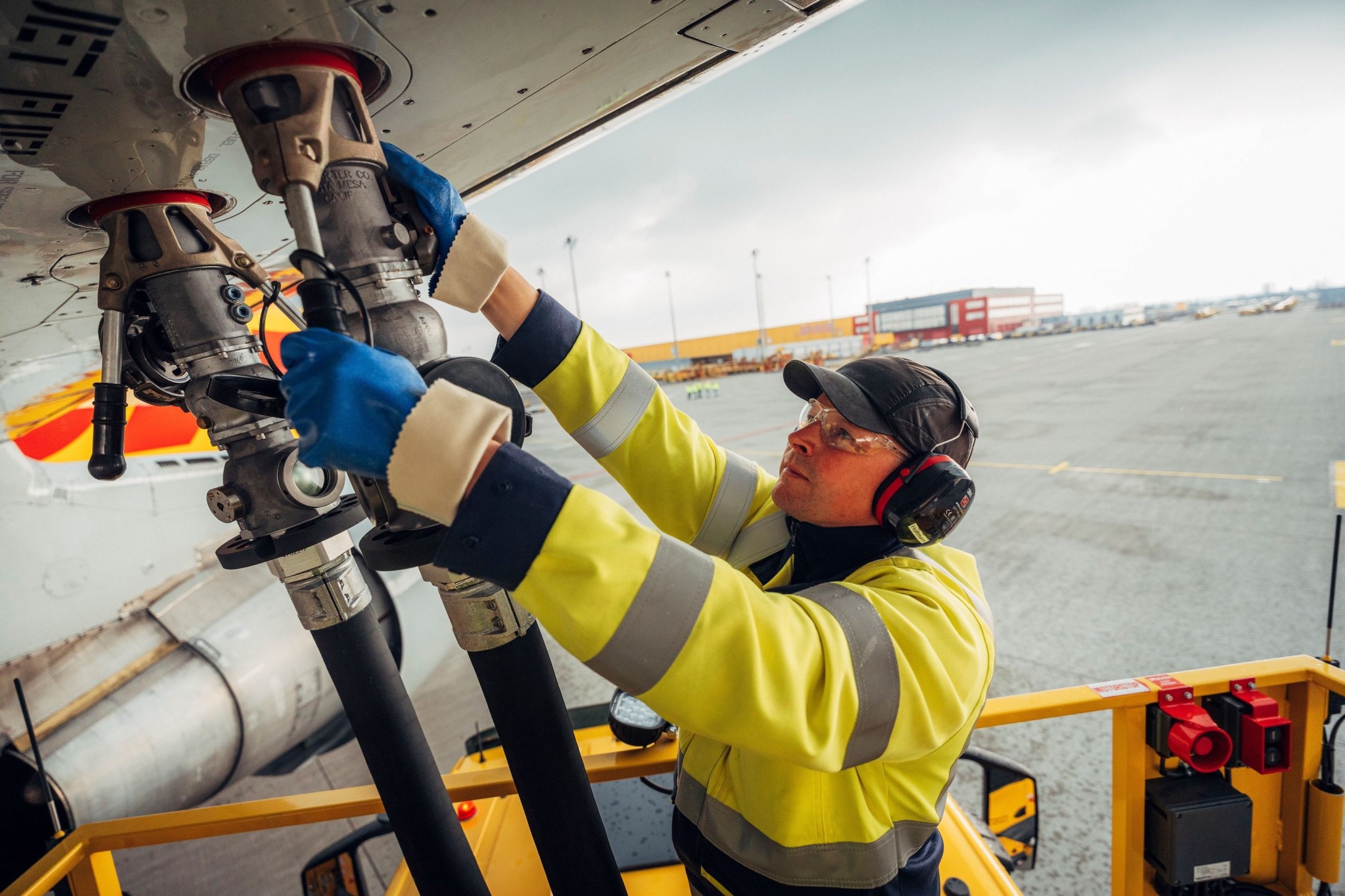
The Iran conflict saw jet fuel prices soar—when you use 1.88 million tonnes a year, how you respond really matters (just ask DHL)
Since the start of the U.S.-Iran conflict and the closure of key shipping lanes in the Strait of Hormuz, businesses have been affected by supply chain issues and rising fuel prices. Jet fuel became a particularly expensive commodity, more than doubling in price from $800 per tonne prior to the conflict to a peak of $1,903 in April. The current price of kerosene stands at $918 per tonne, according to latest figures from Argus Media and airlines have had to scramble to secure fuel supplies. Among the companies feeling the pressure is German delivery company DHL, whose extensive air freight operations make it particularly exposed to disruptions in air fuel supplies. DHL Express Europe, its international shipment division, operates one of Europe’s largest aircraft fleets. Its 295 planes, which include third-party aircraft and charters, ship packages to 220 countries and delivered 248 million shipments worldwide last year. Its European CEO, Mike Parra, says that DHL’s diversified approach has helped the company navigate the fuel crisis and secure its kerosene supplies through the summer months. There have been three key elements of the strategy. Firstly, DHL has diversified the markets where it purchases fuel, with the U.S., South Korea and Nigeria increasing their air fuel production. Tankering—where aircraft are intentionally loaded with extra fuel to avoid the need to refuel at a destination where prices are higher—has also allowed DHL Express to be more cost-effective in its operations. And lastly, it’s built up its sustainable fuel supply. DHL Express is one of the largest purchasers of sustainable aviation fuel, which is derived from waste and residue oils and fats. One-tenth of its air fuel is sustainable and it has set a target for 30% to be sustainable by 2030. “We can’t predict the volatility, but we can manage the complexity that goes around it”Mike Parra, DHL EUropean ceo DHL Express’s network planning team, which Parra describes as the “cen