Superintelligence vs. The Second Strike
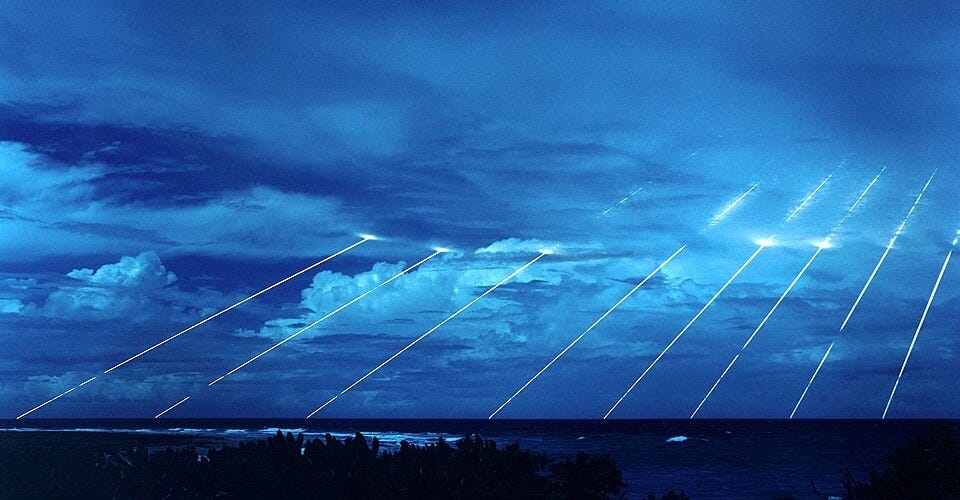
Crosspost of my substack piece, covering quick thoughts on AI overcoming nuclear deterrence. TLDR: Nuclear deterrents likely only buy time to further invest in more resilient second-strike guarantees: without a comparable AI base, this will not happen fast enough and even nuclear states will eventually be disempowered.Historically, plenty of new military technologies have stress-tested nuclear deterrence. ICBMs made it possible to annihilate enemy cities from the safety of the homeland, MIRVs let a single rocket threaten multiple targets, and thermonuclear staging allowed weapons designers to reach functionally unlimited yield. In the already volatile climate of the Cold War, the U.S. and Soviets reached such mastery over missile technology that remote annihilation of an entire country was, quite literally, a button press away.For decades, even a single rocket has been able to hold more than 10 warheads--each enough to destroy a city on their own. Peacemaker reentry tests pictured above.The fact that the ability to remote detonate Moscow never translated into a nuclear war is a function of modern deterrence theory, dumb luck, and most importantly, the speed of progress. As effective as a modern ICBM is, each piece of it was individually low-impact enough, and introduced slowly enough, that there was never a point at which deterrence could be fully overturned. For comparison, imagine if the U.S. had acquired a fully realized ICBM in the mid 50s, back when the Soviets were still using bombers and hadn’t yet fielded a nuclear submarine. The U.S. would have been dearly tempted to strike first before the Soviets managed to diversify their nuclear forces, much as the Soviets would have been tempted to lash out before America decided to drop the guillotine.Fortunately, the march of progress has always been slow enough to let rival states proactively invest in their second strike assurances. Unfortunately, the march is about to turn into a sprint.Like all good essays, this