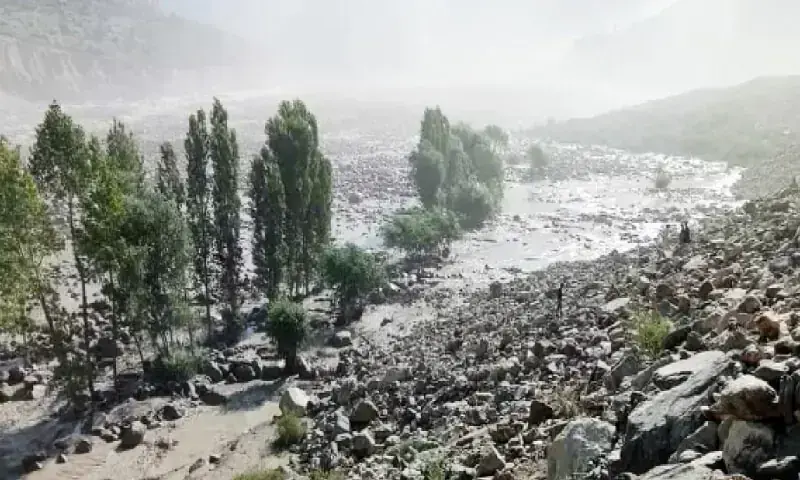
Suparco puts 130 glacial lakes on danger watch
Why this matters: local context for readers following news across Pakistan and the region.
Suparco has been conducting regular surveillance of PGDLs using satellite imagery and sharing updates with relevant authorities, including the Ministry of Climate Change’s technical committee. The most recent analysis is based on satellite images captured on May 31 and June 1, 2026. Of the 130 identified glacial lakes considered potentially hazardous, only 24 are currently unfrozen and clearly observable. These lakes have been closely examined, with their surface extents measured to assess possible risks. The findings indicate that the majority of lakes remain frozen. The accompanying satellite-based mapping highlighted both frozen and unfrozen lakes using distinct colour codes, providing a comprehensive overview of their spatial distribution. The map also identified nearby populations that could be vulnerable in case of glofs, a recurring hazard in mountainous regions. Population exposure has been estimated using a grid-based approach, which shows the number of people living within each 100-by-100-metre area surrounding the monitored lakes. This method offered insight into downstream communities that may face potential risks if a glacial lake were to burst. Suparco noted that the identification of high-risk glacial lakes relied on data from provincial disaster management authorities, including the Provincial Disaster Management Authority (PDMA) of Khyber Pakhtunkhwa and the Gilgit-Baltistan Disaster Management Authority (GBDMA). Earlier monitori