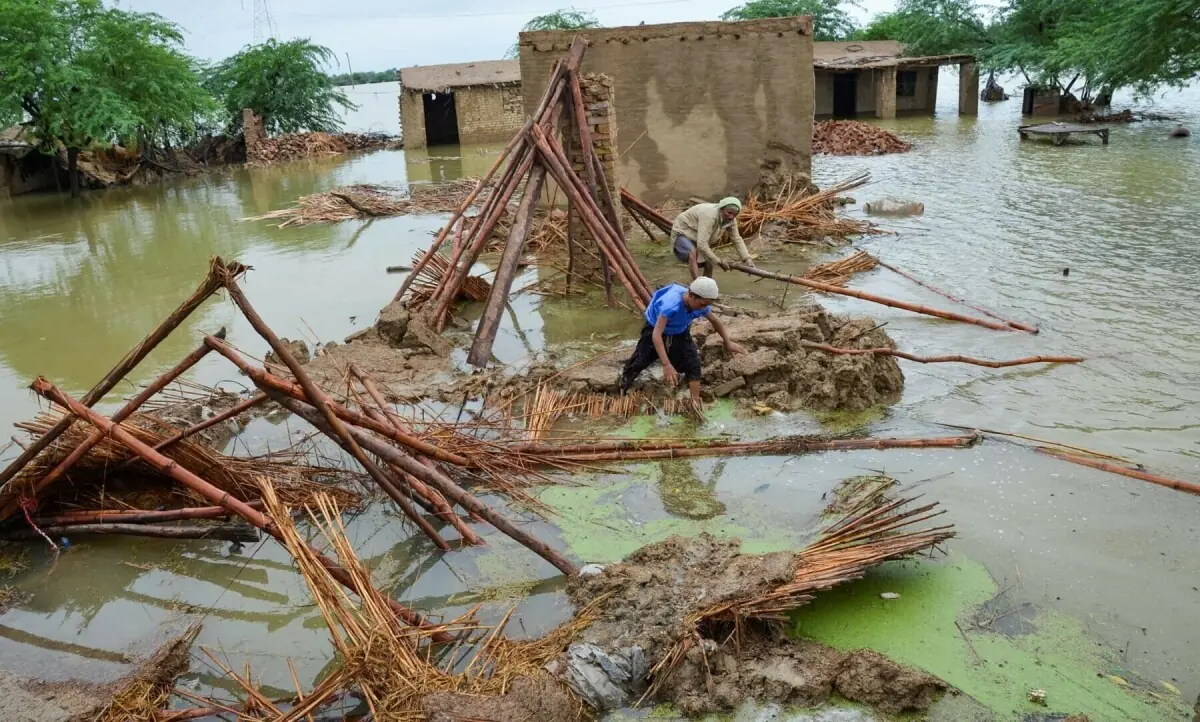
Governance gaps weaken Pakistan’s climate disaster response, report warns
Why this matters: local context for readers following news across Pakistan and the region.
ISLAMABAD: Persistent governance failures and weak community-level systems continue to undermine Pakistan’s ability to prepare for and respond to climate disasters, a new report has warned, calling for urgent reforms to build long-term resilience across vulnerable districts. The findings, compiled by the think tank Jinnah Institute, come in the wake of the devastating 2025 floods, which submerged entire districts, displaced millions, and wiped out livelihoods, exposing critical gaps in preparedness despite years of policy frameworks, institutional reforms, and international commitments. The report argued that reliance on reactive disaster management has proven insufficient in the face of intensifying climate stress. Based on insights from more than 330 participants, including 36 focus group discussions and 24 key informant interviews conducted nationwide, the study highlighted how communities experienced, coped with, and recovered from climate shocks. It shifts the focus from traditional vulnerability assessments to a more comprehensive understanding of resilience rooted in lived experiences. A key feature of the report is Pakistan’s first district-level Resilience Index, which ranks 130 districts across five dimensions: human capital, economic well-being, standard of living, urbanisation, and digital access. The index revealed stark disparities, with Lahore scoring 0.72 compared to just 0.14 for Lehri in Balochistan. These findings underline deep regional inequalities and provide a baseline tool for policymakers and development partners to monitor progress over time. Communities identified seven core drivers of resilience, including access to education and vocational skills, women’s ownership of assets, digital literacy, strong community networks, social protection programmes such as the Benazir Income Support Programme (BISP), availability of public services, and proximity to urban centres. Notably, respondents described resilience in practical terms as a gradual