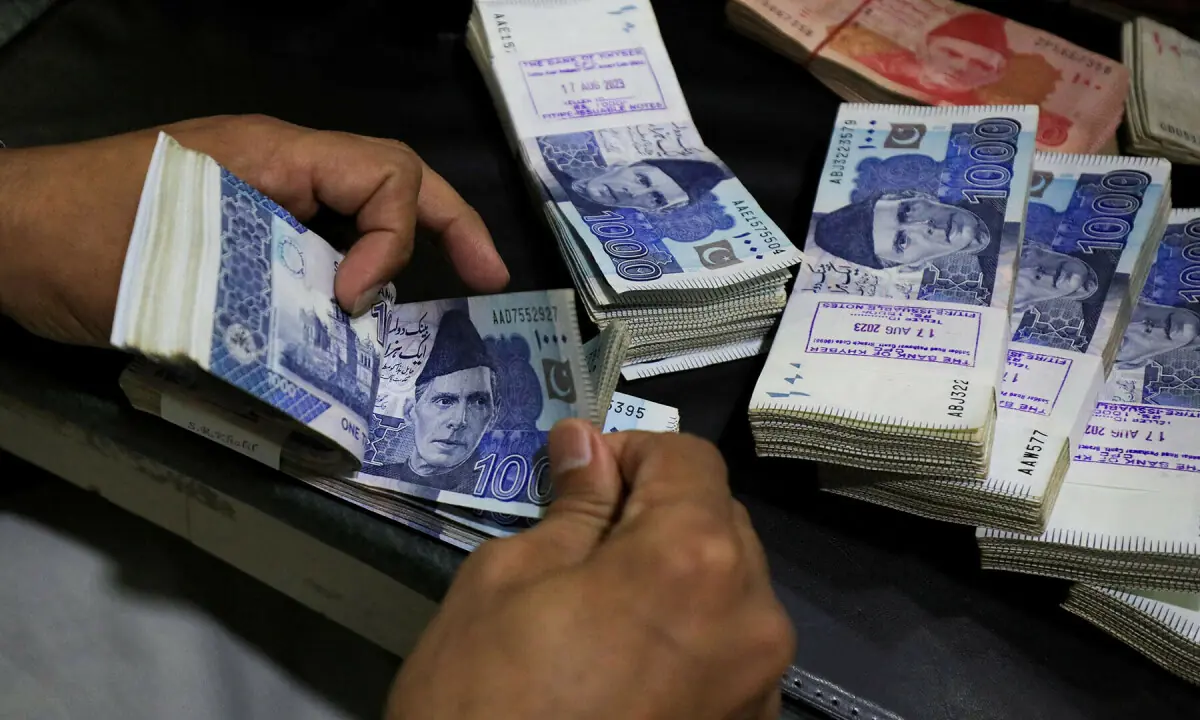
Analysis: BUDGET 2026-27: Budget battles: who really shapes country’s finances?
Why this matters: local context for readers following news across Pakistan and the region.
THE budget is a tug-of-war between different interest groups. On one hand, there is explicit lobbying by various business groups and industry bodies that commission reports, hold events and engage policymakers. These organisations, explains Dr Ali Hasanain, associate professor of economics at Lums, also meet political party leaders and bureaucrats in both formal and private settings to communicate their concerns and policy preferences. This is broadly in line with how businesses operate globally. For example, US President Donald Trump’s top backer in the last election was investor Timothy Mellon, who gave $150 million to Make America Great Again, Inc., followed by Elon Musk, who gave $118.6m. But while lobbying and formal influence exist everywhere, the distribution of power is far less orderly in Pakistan. No single player is all-powerful, though wealth is concentrated in relatively few hands. Instead, policy becomes outcome of fragmented pressure from multiple directions. The big boss may be IMF, but Pakistan remains a sovereign nation, not a subject of the Fund In Pakistan’s case, this fragmentation is further constrained by an external anchor: the IMF. Under successive programmes, Pakistan is required to meet a long list of targets. Yet within those constraints, governments tend to follow the path of least resistance, typically raising taxes on those already in the tax net rather than expanding it. This tendency is reinforced by a deeper structural weakness: the lack of strong feasibility studies for projects. Plans are often undertaken without adequately accounting for inefficiencies, bureaucratic incompetence, weak political leadership and changing political equations, he says. ‘Noise’ from lobbies On the one hand, there are concentrated lobbies; on the other, there is the politics of visibility, the ‘noise makers’. Take retailers and wholesalers, for instance. They remain among the country’s most undertaxed sectors and have repeatedly been identifie