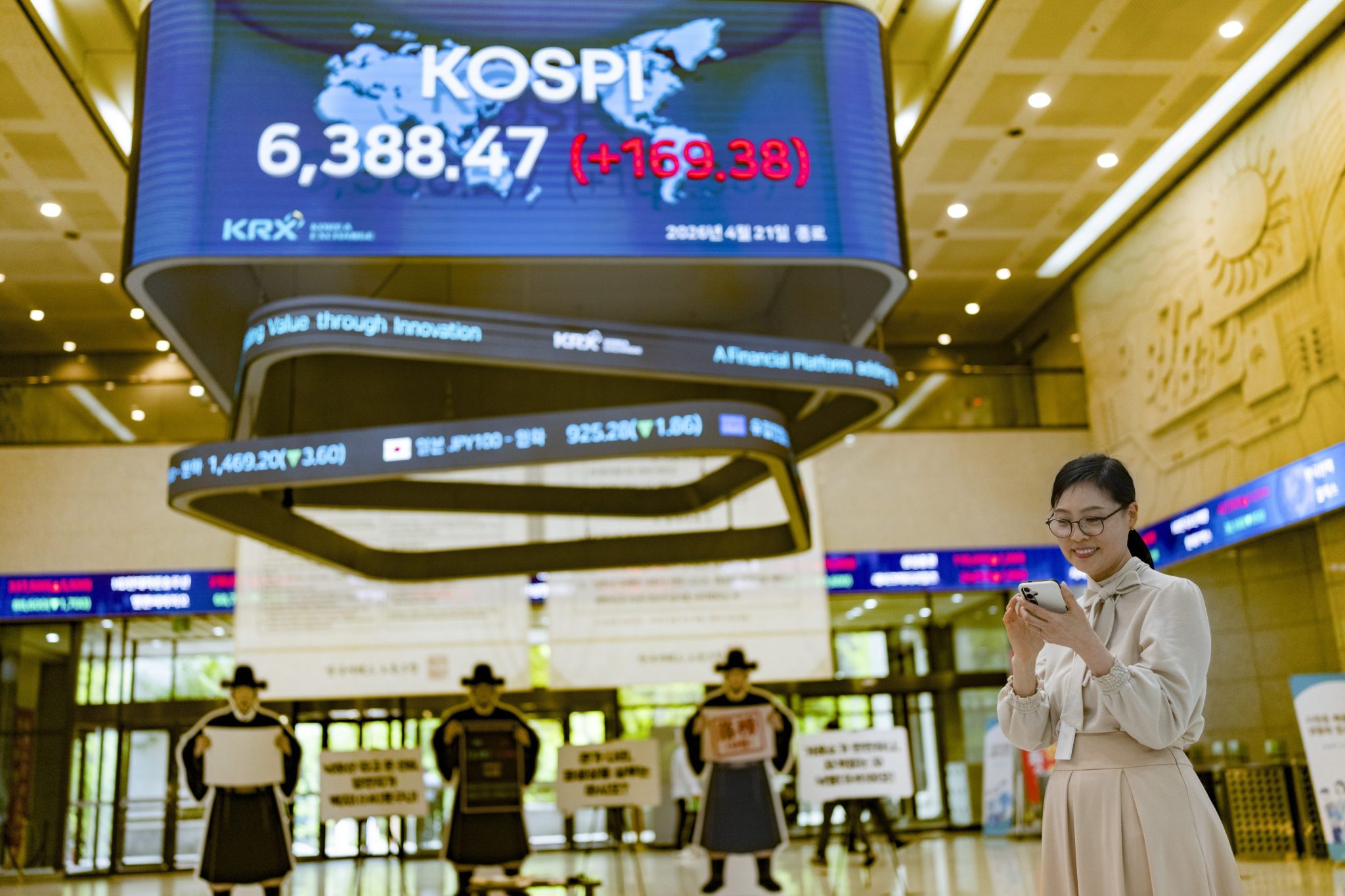
Global investors are shrugging off Iran worries and returning to markets in Asia, the ‘backbone of the whole AI value chain’
Asia’s stock markets have rebounded since the outbreak of the Iran war over two months ago, as the AI boom lifts the fortunes of manufacturing economies like China, South Korea, and Japan. “Asia was outperforming global markets before the Iran conflict started,” Charu Chanana, Saxo Bank’s Singapore-based chief investment strategist, tells Fortune. While there was an initial pullback following the war’s outbreak, “things have started to recover in the last two weeks and Asia is outperforming again”. One reason is growing demand for AI and its related infrastructure. Asia houses three-quarters of the world’s semiconductor manufacturing, so a global surge in demand for AI processors and memory chips is lifting the fortunes of chip and chip-related companies. JPMorgan analysts, in a 2025 market review, noted that tech-related growth is now spreading globally following a decade of U.S. overperformance. South Korean firms like SK Hynix and Samsung are cashing in on the high-bandwidth memory (HBM) market, while TSMC dominates in logic chip manufacturing. East Asia holds nearly all of the world’s production capacity for chips smaller than 10nm, which are essential to cutting-edge AI technology and other electronics. “Asia is the backbone of the whole AI value chain,” Chanana explains. “Nvidia needs components from Asia to make its chips, and even if the U.S. wanted to set up something to replace inputs from TSMC, it would still take years.” At the same time, the Middle East conflict is stoking fears of de-dollarization, sending investors in search of alternatives like the Chinese yuan. “This whole conflict—even if it ends tomorrow—does add a lot of budget pressure to the U.S.,” Chanana notes. “They have to spend to rebuild their defense, and that adds to de-dollarization fears.” (The American Enterprise Institute estimates that the Iran war has already cost the U.S. between $25 and $35 billion, while the Pentagon told Congress that the first six days of the war alone